




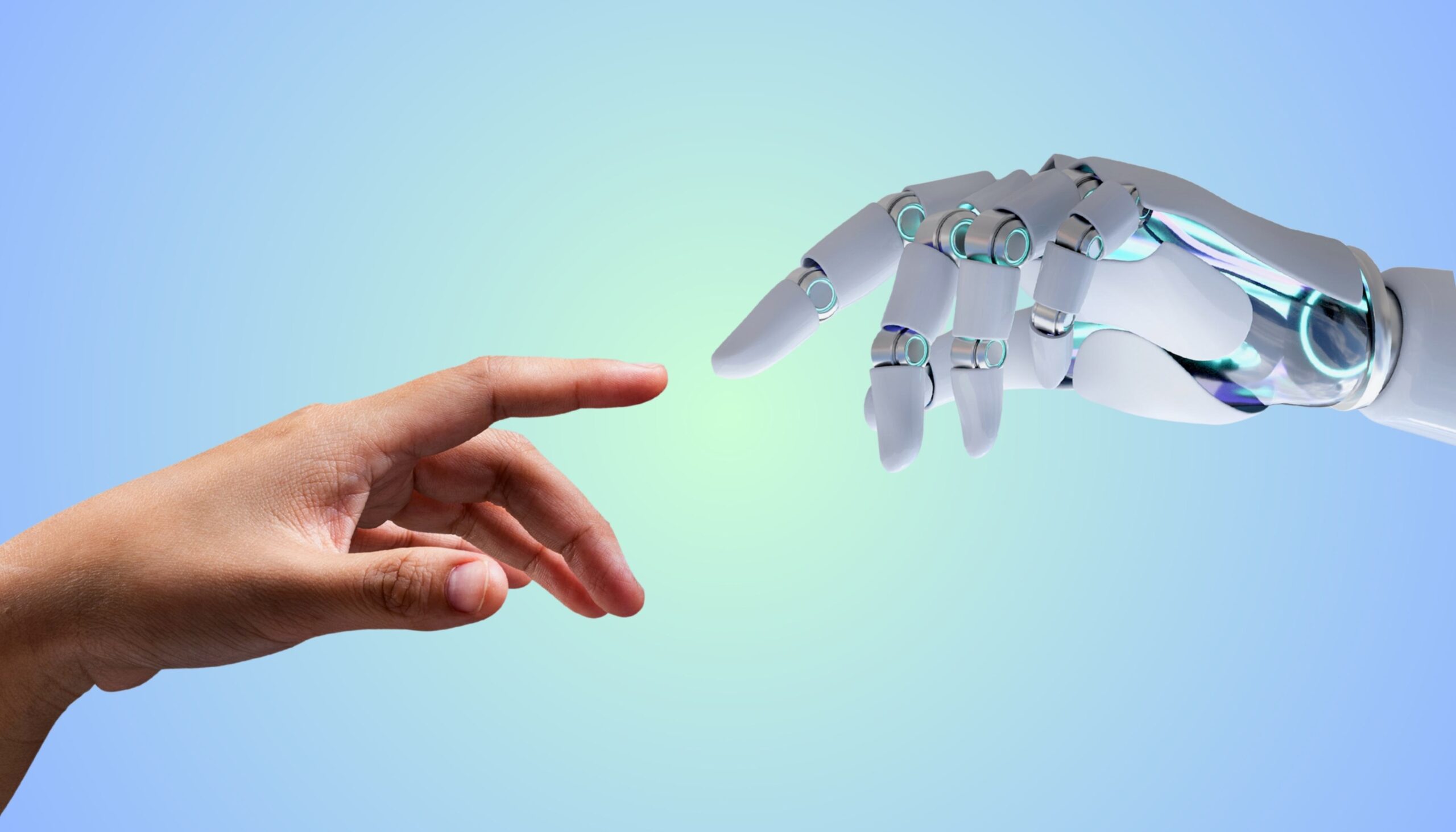
AI has officially outperformed the average human in a test of creativity. While that might be humbling news for the general public, the more interesting result lies elsewhere: how did the AI fare against the study’s most exceptionally creative human participants? That’s where the results get complicated.
The most creative humans, about the top 10% of participants, still consistently outperformed every AI model tested, including GPT-4, Claude and Gemini. Not by a small margin, and not in isolated cases – across creative writing tasks including haiku composition, short story generation and film plot summaries. The strongest human performers cleared the AI ceiling.
What Does “Creativity” Actually Look Like To A Scientist?
Before drawing any conclusions, the definition of creativity being used here is worth pinning down.
The researchers focused on “divergent creativity” – the knack for spinning a single starting point into a massive variety of unique ideas. To test this, they used the Divergent Association Task (DAT). Participants had just two to four minutes to come up with ten words that had absolutely nothing to do with one another. For instance, a high-scoring, highly creative list might leap from galaxy to harmonica, nostalgia, algae and quantum. A low-scoring list, by contrast, would get stuck playing in the same conceptual sandbox.
AI models completed the same task under the same conditions, with outputs scored by the same metric: average semantic distance between words, measured using a technique called Divergent Semantic Integration. The playing field was perfectly level: both humans and AI took the exact same test under identical scoring criteria.
The DAT has been validated against other established creativity measures including idea generation tests, creative writing assessments and creative problem-solving tasks. Put simply, this study was a baseline check for creative potential – specifically focusing on linguistic and associative creativity. It did not measure the broader creative process that produces a novel, a brand identity, a piece of music or a product design.
The researchers themselves acknowledge this, noting that creative activities or achievements are another dimension of creativity that this test doesn’t cover.
More from Artificial Intelligence
The Top 10% And Why It Matters
Averages flatten distributions, and creativity isn’t evenly distributed.
The study found that when AI went up against the most creative humans on extended tasks like writing short stories and movie plots, the result reversed sharply. The top decile of human performers produced outputs that rated higher than anything the AI models generated.
This pattern aligns closely with the firsthand experiences of creative professionals. AI elevates the baseline of creative work – it generates initial drafts, conceptual variations and diverse angles much faster and with greater skill than an unaided average user. The creative ceiling remains unchanged – producing work defined by genuine novelty, unexpected conceptual connections and a distinct artistic voice still requires a highly skilled human creator.
The implication isn’t that AI lacks creative capacity, but that its creative output possesses a distinct character. Specifically, the study’s evaluation metrics prioritize semantic divergence and the novelty of conceptual associations. AI models are good at generating diverse, distant word combinations, which is exactly what the DAT rewards. What they appear less equipped to do is produce the kind of contextually rich, emotionally resonant creative work that the highest-performing humans generate when given an extended task.
What This Means For Anyone Working In A Creative Industry
If your creative output is roughly average, AI is now a genuine competitive pressure, not in the sense that it will replace you directly, but in the sense that the bar has been raised. Today, any client or editor with an AI tool can whip up average creative work faster and cheaper than ever before. Standing out is no longer optional – being “just okay” is a much harder position to defend than it used to be.
If your creative output is in the top tier, the picture is different. The study suggests that exceptional human creativity still has a clear and consistent edge over the best available AI. That edge may narrow as models improve. But it may not narrow in the way the numbers suggest, because the qualities that make the top 10% exceptional – emotional specificity, cultural fluency, lived experience and a developed artistic voice – aren’t what the DAT measures, and may be harder to replicate than semantic novelty.
This is just one piece of a much larger puzzle, but it tells us a lot. We’ve officially reached the point where AI and humans are taking the exact same tests – and humanity can no longer claim an undisputed win. Whether that reality keeps you up at night depends almost entirely on where you fall on the talent curve.
