




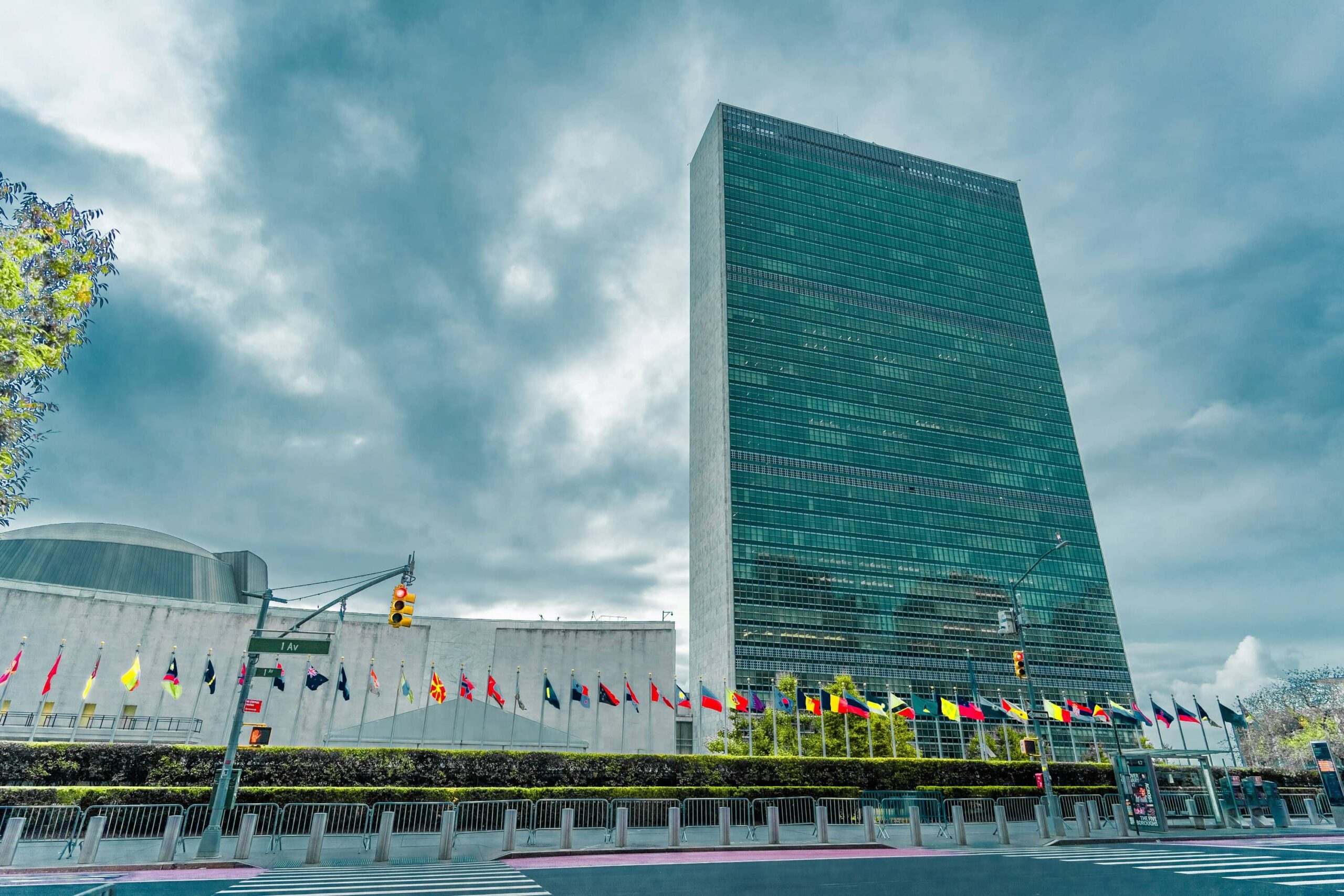
The question of potential global AI regulation is becoming increasingly relevant after UN Secretary General António Guterres renewed calls for international AI governance, warning that the technology is advancing faster than the systems designed to oversee it. Speaking at the UN’s Global Dialogue on AI Governance in Geneva, Guterres argued that global rules are needed to address risks ranging from misinformation to the protection of children, while ensuring AI develops in a way that benefits society.
Recent discussions have centred on creating shared principles for AI safety, transparency and accountability across borders. And on paper, the idea sounds straightforward – AI is a global technology, so why shouldn’t it have a global rulebook?
The problem is, however, that the reality for startups is far more complicated than this.
A Global Standard Could Reduce Regulatory Chaos
One of the strongest arguments in favour of international AI governance is that it could simplify compliance.
These days, startups operating internationally face a whole lot of regulations that vary from one country or region to the next. Indeed, what is acceptable in one market may need additional disclosures, testing or legal reviews in another.
According to Promise Akwaowo, Automation and AI Practitioner at Royal Mail Group, the sheer number of emerging AI regulations is already creating challenges. “Global guardrails could help, but only if they create an interoperable baseline rather than another compliance layer.” Akwaowo argues that harmonised definitions and evidence standards could reduce duplicate compliance work, making it easier for startups to expand internationally.
And others agree. James Rubinowitz, AI expert and personal injury attorney at Rubinowitz Law Firm, believes fragmentation is a bigger threat than regulation itself. “A ten-person startup cannot [afford compliance teams], and every hour a founder spends mapping conflicting national rules is an hour not spent building the product.”
If a common framework emerged that national regulators broadly recognised, startups could potentially develop a single compliance strategy rather than navigating dozens of different ones.
More from Artificial Intelligence
The Fear Of A New Compliance Tax
But while founders generally support clearer rules, plenty also worry that global standards could create a issues when it comes to higher barriers to entry.
Mahendra Balal, Editor at Sovereix, believes that the biggest risk is that regulation unintentionally favours established players. “Large enterprises possess the capital and legal infrastructure to absorb complex global guardrails seamlessly; AI startups do not.”
He argues that startups may ultimately need to raise larger funding rounds just to cover legal and regulatory costs, shifting competitive advantage toward businesses with the deepest pockets rather than just the strongest products.
That concern was echoed by Adam Dalloul, Founder at EmpirioLabs, who notes that heavier regulation often hits smaller companies hardest because they lack the resources available to larger competitors.
So in theory, global guardrails could create a more level playing field, but in practice, startups worry they could become yet another expense on an already long list of challenges facing early-stage companies. And that’s not exactly something startups and founders are keen on seeing.
One Size Probably Won’t Fit All
A recurring theme among founders and analysts is that any global framework would need to account for scale and risk.
Hien Nguyen, Founder and CEO at Screate Labs, argues that regulatory obligations should be tied to the potential impact of an AI system rather than the size or age of the company building it. “Good governance protects users without making innovation a privilege reserved for incumbents.”
Further to this, Anum Farooq, Founder and CEO of Heal Earth, supports global governance but believes frameworks should include tiered compliance pathways and regulatory sandboxes that allow smaller businesses to innovate without facing the same burdens as multinational corporations.
Diana Yevsieieva, Digital Infrastructure Analyst at BellaVista Project, goes even further than this, warning us that poorly designed governance could effectively become a “tax” on innovation if startups are forced to dedicate disproportionate resources to compliance.
Will The UN Actually Shape AI Regulation?
Another question is how much influence the UN will actually have, because it’s all well and good in theory, but what about real-life scenarios? Unlike national governments, the UN cannot simply pass binding AI laws that companies must follow. Much of its role is likely to involve creating shared principles and encouraging alignment between member states.
Some experts remain sceptical about this point. Ranjith Raghunath, CEO of CX Data Labs, questions whether the organisation even has the authority or resources needed to enforce meaningful AI regulation globally.
Others think that the more important development may come through international standards rather than legislation itself. David Viney, CIO at Alchemy Consulting, points to ISO 42001 as a potential benchmark that could become the de facto framework businesses follow, regardless of what governments eventually legislate.
A Delicate Balancing Act
For startups, the debate isn’t really about whether AI should be governed, because most agree that at least some level of oversight is inevitable and necessary. What they’re questioning is what that oversight looks like – how realistic it is, the logistics and more.
If the UN’s efforts result in simpler, internationally recognised standards, startups could benefit from greater certainty and easier access to global markets. But, on the other hand, if the rules become overly complex, they risk strengthening the position of large technology companies while making it harder for smaller innovators to compete.
In that sense, the success of any future AI guardrails may not be measured by how comprehensive they are, but by whether a startup with ten employees can realistically understand and comply with them. As AI continues to move faster than policymakers, that balancing act could prove just as important as the rules themselves.
Industry Experts Weigh In
- Promise Akwaowo: Automation and AI Practitioner at Royal Mail Group
- Adam Dalloul: Founder at EmpirioLabs
- Anum Farooq: Founder and CEO at Heal Earth
- Diana Yevsieieva: Digital Infrastructure Analyst at BellaVista Project
- Frank Meltke: CEO at contraco
- Lisa Falzone: President and Co-Founder at Athena Security
- James Rubinowitz: AI Expert and Personal Injury Attorney at Rubinowitz Law Firm
- Hien Nguyen: Founder and CEO at Screate Labs
- Ranjith Raghunath: CEO of CX Data Labs
- Aaron Vaccaro: President of Singularity University
- David Viney: CIO at Alchemy Consulting
- Mahendra Balal: Editor at Sovereix
Promise Akwaowo, Automation and AI Practitioner at Royal Mail Group

“According to the OECD AI Policy Navigator, 2026, more than 1,300 AI policy initiatives now exist across over 80 jurisdictions and international organisations. For startups, that fragmentation is already a cost because each new market can mean different risk classifications, documentation requirements, testing expectations and legal reviews.
“Global guardrails could help, but only if they create an interoperable baseline rather than another compliance layer. The UN’s Global Dialogue on AI Governance brings all 193 Member States into one forum, which is significant, but smaller companies cannot absorb compliance in the same way as large enterprises. European Commission impact work has cited business estimates of around €100,000 in compliance costs for a high-risk AI project.
“My view is simple, harmonise definitions, assurance requirements and evidence standards globally, then let countries address local harms. Global governance should reduce duplicate compliance, not standardise bureaucracy.”
Adam Dalloul, Founder at EmpirioLabs

“The honest worry with heavier guardrails is that they hit smaller companies that don’t have the resources larger firms do much harder, so the same rules can widen the gap they mean to close.
“But what keeps smaller players competitive is the models themselves. There are a variety of open-weight models that are now catching up to the abilities of the SOTA proprietary models from the big US labs, GLM 5.2 being a notable example, and it’s only a matter of time until that gap is bridged. So whatever gets standardized, my priority as a founder is to stay lean and keep our setup model-agnostic, testing our own fallbacks so we can switch to another already-tested, compatible model rather than betting the company on any single ruling.”
Anum Farooq, Founder and CEO at Heal Earth

“I am the Autistic Founder and CEO of an AI-powered educational technology startup (Heal Earth), and I view the UN’s push for global AI governance as a profoundly positive step for smaller innovators.
“Currently, the fragmented patchwork of national AI regulations acts as a silent tax on startups. We lack the compliance armies that enterprise tech giants deploy to navigate conflicting cross-border rulebooks. A unified, UN-backed framework offers the regulatory certainty and universal legitimacy needed to unlock seamless international market access for early-stage companies.
“For this vision to succeed, the execution of these global guardrails must remain proportionate. To ensure harmonized standards accelerate rather than stifle competition, international frameworks should actively champion tiered compliance pathways and cross-border regulatory sandboxes. By pairing universal safety norms with accessible compliance mechanisms for SMEs, the UN can foster a highly competitive, ethical AI ecosystem.”
Diana Yevsieieva, Digital Infrastructure Analyst at BellaVista Project

“The concept of the implementation of global governance of AI can lead to the “tax” of innovation and create a monopoly in that area. The proper governance can easily establish the compliance of large companies in the segment of implementation of AI technologies, whereas startups and small and medium enterprises have to invest their resources there in order to fulfill all the existing regulations.
“My specialty is in the intersection of the real estate industry and the platform/AI economy. The proptech industry is a perfect illustration of independent AI-assisted solutions aimed at implementing innovative technologies for “smart buildings” or decentralized systems based on the usage of AI technology for decentralized databases.
There should be a rule of proportionality for the implementation of a unified set of rules to make any regulatory framework inclusive instead of being simply a hindrance to international development.”
Frank Meltke, CEO at contraco

“UN-backed AI guardrails promise certainty, but for startups they risk widening a gap contraco’s work has come to define as the Verifier Gap. Large technology companies have the capital to absorb sweeping, one-size-fits-all compliance obligations. Smaller firms, including contraco, must dedicate a disproportionate share of resources to proving alignment with broad international rules, time that would otherwise go toward product development.
“IMHO this tension appears directly in agentic commerce, where autonomous systems execute decisions and transactions without human review. Balancing regional directives with emerging global governance creates a real compliance burden for smaller companies. If global standards apply the same liability and reporting expectations to a specialized startup as to a trillion-dollar enterprise, smaller companies absorb a cost that larger competitors barely notice.”
Lisa Falzone, President and Co-Founder at Athena Security

“As someone building AI products, I think the biggest challenge today is that every country is creating its own rules. That makes it expensive and time-consuming for startups to expand internationally. Some global standards would definitely help, but only if they’re practical. If compliance becomes too complex or expensive, it will end up helping the biggest tech companies while making it harder for startups to compete.
“The goal should be to set clear expectations around safety and transparency without creating so much red tape that innovation slows down. Good guardrails should give customers confidence in AI while still allowing smaller companies to move quickly and bring new ideas to market.”
James Rubinowitz: AI Expert and Personal Injury Attorney at Rubinowitz Law Firm

“Regulatory fragmentation, not regulation itself, is the biggest threat to startups. I ran a law firm, teach AI law at Cardozo Law School, and I am building an AI startup, so I see this from all three sides. Large companies can afford compliance teams in every market they enter. A ten-person startup cannot, and every hour a founder spends mapping conflicting national rules is an hour not spent building the product. Unfortunately, we are starting to see differing regulations among all 50 states and all 27 member nations of the EU.
“The UN’s Global Dialogue on AI Governance, which just convened all 193 member states in Geneva, issues no binding rules, and that seems to be a strength for the moment to promote uniform global AI governance. If the Dialogue produces baseline standards that national regulators recognize, a startup could build one compliance program and sell into every major market. ”
Hien Nguyen, Founder and CEO at Screate Labs

“The UN is right to push for shared AI guardrails. The real question is whether those guardrails lower the cost of participating in the global AI economy—or quietly raise it.
“The biggest risk for startups isn’t regulation itself. It’s fragmented compliance. Large companies can absorb legal teams, audits, and multiple regulatory frameworks. Early-stage startups often can’t.
“When compliance becomes expensive before product-market fit, regulation starts shaping market structure as much as it shapes safety.
“Global governance should establish common principles: privacy, transparency, accountability, meaningful human oversight, and interoperability, while allowing local implementation.
“Most importantly, obligations should scale with systemic risk, not organizational maturity. The regulatory burden should reflect the real-world impact of an AI system: how many people it affects, how sensitive the data is, and whether failures create consequences beyond individual customers. A company experimenting with an internal AI workflow shouldn’t face the same obligations as a model deployed across critical infrastructure or hundreds of millions of users.
“Good governance protects users without making innovation a privilege reserved for incumbents.”
Ranjith Raghunath, CEO of CX Data Labs

“Simply put, I’m skeptical about the UN’s ability to meaningfully regulate AI. While some nations and even groups like the EU have shown some willingness to pursue AI regulations or at least foster their domestic AI industry, any UN regulation will face a steep uphill battle due to opposition from the US, and even if regulations do pass, they simply don’t have the budget for enforcement, especially when countries can claim national security.”
Aaron Vaccaro, President of Singularity University

“I’m a believer in global AI governance, not a skeptic of it. I’ve advised companies trying to launch products across a dozen regulatory regimes at once, and that fragmentation is its own tax on innovation. One clear global standard, if done well, is more pro-competition than the patchwork we have now: it lowers the cost of scaling to new markets, which is exactly where small companies struggle most against larger rivals. So I support the UN’s effort, and I want it to succeed.
“My concern is execution, not intent. If the framework ends up too complex and heavy, only navigable by large compliance or legal teams, it will just entrench the incumbents it’s meant to check. The measure of success isn’t whether we get global rules. It’s whether a ten-person startup can understand them without hiring a lawyer.”
David Viney, CIO at Alchemy Consulting

“For a startup, the thing to actually watch isn’t any single Act, Bill or Compact… it’s ISO 42001, the international AI management standard recognised and certifiable across ISO’s 177 member countries, covering 99% of the world’s population. It isn’t law anywhere, not even in the EU.
“But we have seen this movie before: ISO 9001 (for quality) and ISO 27001 (for security) became global languages because customers and insurers demanded the certificate long before regulators caught up. Nobody builds a car to satisfy a law. They build it to pass a crash test. Which is why companies… including start-ups… will design their products and service to meet ISO 42001. It’s the only crash test for Ai currently on the table, and the legislation (still evolving in all countries) will converge towards it.”
Mahendra Balal, Editor at Sovereix

“Regarding the UN’s push for global AI governance, here are my thoughts as a market strategist on how this impacts the startup ecosystem.
“While a unified UN-backed AI governance framework promises the allure of frictionless global market access, the reality for startups is often a steep “compliance tax.” At Sovereix, we see firsthand how regulatory homogenization disproportionately favors incumbent tech giants. Large enterprises possess the capital and legal infrastructure to absorb complex global guardrails seamlessly; AI startups do not. For early-stage founders, every dollar spent proving international compliance is a dollar diverted from core product innovation.
“While aligned global rules might eventually reduce the long-term friction of operating across fragmented national borders, the immediate barrier to entry will undoubtedly rise. Consequently, startups will be forced to raise larger seed rounds simply to cover legal and regulatory overhead, subtly shifting the competitive landscape toward the most well-capitalized—rather than the most innovative players.”
