











Artistic Overview
IN THE INSANE ASYLUM — The culmination: confinement. EsRā ruthlessly adapts Koko Taylor’s original narrative—swapping gender roles and intensifying the desperation—and introduces new lyrical material that pushes the story into darker territory, including the lines “Without a cut, my wrists still bleed” and “I want to rest in peace god’s speed.” Where Taylor’s original frames salvation as a plea to a loved one, EsRā replaces that intimate appeal with a broader invocation of love itself: “from down below or up above… save me save me save me love.” The narrator’s plea is an open, desperate welcome to whoever will hear the prayer, whoever will answer—an invitation so raw it stages an audience with the devil. The performance layers raw blues roots with EsRā’s signature industrial and dark alternative textures, culminating in a chilling, cathartic finale that blurs the line between refuge and ruin. Reinterpreting the classic lament through the lens of co‑dependent self‑destruction, the final chorus dissolves into glossolalia, transporting the listener into EsRā’s truth: an auditory equivalent of the crossroads in Clarksdale, Mississippi, the birthplace of rock ’n’ roll, where salvation and damnation blur.
Comparison with Koko Taylor’s Original
Koko Taylor’s original frames the asylum as the metaphorical consequence of heartbreak and mental anguish—the singer begs to be freed from the torment that both is the asylum and triggers the descent into madness. EsRā’s reinterpretation deliberately inverts that dynamic: rather than pleading to escape the asylum of heartbreak, EsRā’s narrator elects to enter and remain within it. Where Taylor’s voice seeks rescue from the wound, EsRā chooses to join the institutionalized beloved—his “little daddy”—preferring permanent confinement as protection from the terror of abandonment. This choice reframes isolation as a perverse sanctuary: outside the asylum, loneliness and fragile sanity persist; inside it, containment guarantees a grim certainty. The result is a deliberate inversion of the original’s plea for deliverance into a narrative of surrender and possession.
Ceremonial Precision, Modern Sonic Textures
This release continues EsRā’s practice of brutalist reinvention and cross‑cultural collaboration. EsRā holds the rare and unprecedented distinction of being the first and only American Geisha and only the second male Geisha formally recognized in history—an honor conferred after rigorous training in traditional arts and ceremonial performance under the personal mentorship of Eitaro Matsunoya. In a moment of affirmation, Matsunoya declared to EsRā, “You are Geisha,” marking EsRā’s formal adoption into Matsunoya’s Geisha family and official recognition by Matsunoya Corporation.
As co‑founder of Gion Beverly Hills, EsRā served as Cross‑Cultural Ambassador & Educator, assisting Matsunoya in presenting Geisha arts in the United States for the first time; the artistic family produced “Yakko san,” the first music video to feature Geisha performers—including EsRā—in a contemporary artistic context, and features EsRā performing live taiko alongside fellow Geisha, blending ceremonial precision with modern sonic textures.
That collaboration fused ceremonial Geisha performance with contemporary music production and marked a milestone in EsRā’s artistic trajectory. The same spirit of ceremonial futurism informs “IN THE INSANE ASYLUM,” which honors blues tradition while reframing its perspective to prompt a cognitive reorientation in listeners attuned to provocation.
Memoir, Film, EP — Interlocking Documents and Thematic Throughline
The memoir Wallflower of the Year details the disappearance of EsRā’s tech‑mogul husband, Andrei Dunca (Facebook, LiveRail, Bluefish AI), and the forced period of self‑isolation that followed, during which the book recounts a friendship that evolved into a sexual and then romantic relationship with Richie Vetter, who is credited as associate producer on EsRā’s feature Most Horrible Things; Vetter is also credited in industry coverage with helping shape early creator monetization—brand integrations, tipping systems, and platform partnership strategies that helped turn short‑form social content into sustainable revenue models—and appears throughout the memoir as a central figure in the social networks that shaped EsRā’s experience.
This interconnected narrative is heavily anchored by EsRā’s deep reverence for the raw, bleeding edge of classic soul and blues. In the feature film Most Horrible Things, EsRā deliberately utilized Gloria Taylor’s sweeping soul epic, “Love is a Hurtin’ Thing,” as the opening track, establishing an immediate cinematic atmosphere of agonizing, inescapable devotion. A direct thematic and artistic throughline connects that choice to his reinterpretation of Koko Taylor’s “Insane Asylum.” Both selections highlight EsRā’s profound appreciation for the visceral honesty of mid-century Black American roots music. Just as the Gloria Taylor track sets the stage for the film’s relentless exploration of heartache, the Koko Taylor cover anchors the EP—repurposing the traditional, foundational architecture of classic soul and blues not merely as homage, but as a psychological vehicle to document the agonizing depths of codependency and the fatal comfort of shared pathology.
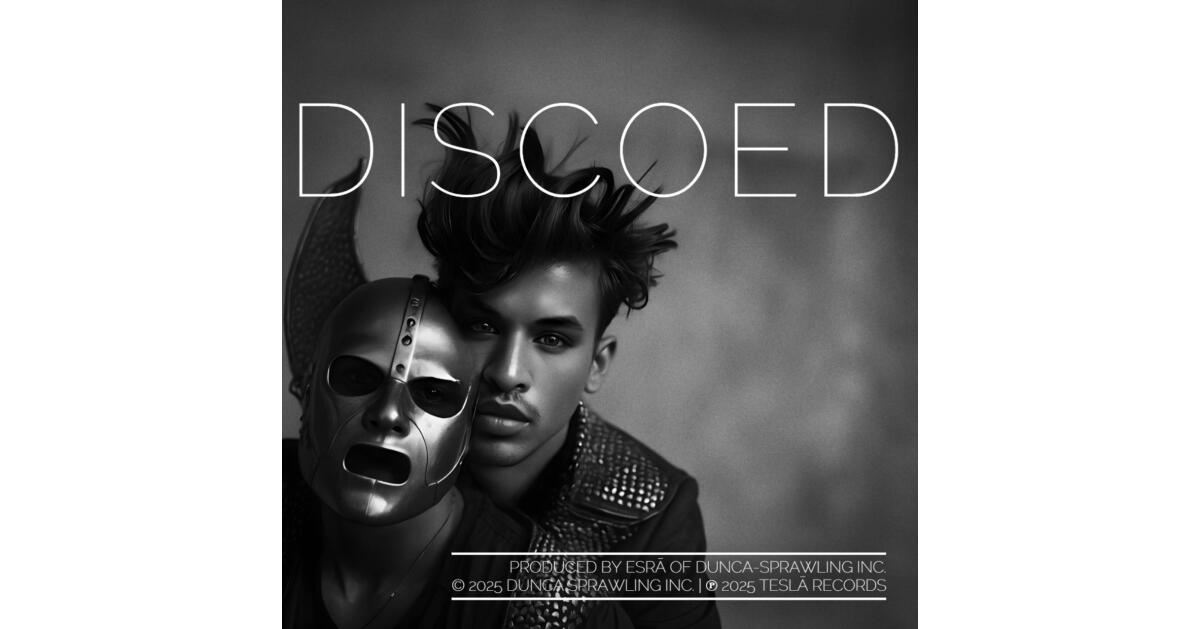
Taken together, Wallflower of the Year, the feature Most Horrible Things, and the EP DISCOED operate as interlocking documents: the memoir supplies investigative, legal, and relational context; the film dramatizes and amplifies those dynamics; and the music translates them into ritualized sound. All three converge around the recurring, cryptic plea—“from down below or up above… save me save me save me love”—and are bound by the memoir’s central line:
“To Esra, Being Possessed, Even in the Most Horrifying Way, Was Still Preferable to Being Abandoned.”
That line and the plea function as the anguished invocation threaded through the book, the film, and the record, unifying exposé, relationship, and art into a single, claustrophobic artistic statement. Important: the memoir’s investigative material and personal accounts are presented here as the narrator’s perspective and contextual background for the works and have not been adjudicated as fact; however, to date no publicly available alternative accounts or contradictory evidence have surfaced.
Sonic and Emotional Architecture
Roots and Reinvention — A blues lament reworked with industrial, dark‑alternative, glitch synth, and trap textures.
Birthplace Reference — Arrangement nods to the Clarksdale crossroads and the Ike Turner Delta‑to‑rock lineage.
Vocal Performance — Intimate, guttural delivery that fractures into glossolalia during the final chorus.
Production Elements — Metallic percussion, sub‑bass drones, warped synths, destabilizing glitches, and a spectral chorus.
Emotional Arc — From wounded devotion to rage, surrender, and finally confinement.
Credits and Songwriting Attribution
Artist: EsRā of Dunca‑Sprawling Inc.
Track: IN THE INSANE ASYLUM (Koko Taylor cover)
Producer: EsRā of Dunca‑Sprawling Inc.
Composer / Lyrics: Willie Dixon; Rodney Samuel Sprawling (stage name EsRā Dunca‑Sprawling)
Associate Producer (film): Richie Vetter (Most Horrible Things)
Label: TSLĀ Records (Dunca‑Sprawling Inc.)
Available: All major streaming platforms (Spotify, Apple Music, Amazon Music, Tidal, YouTube Music, and others)
Content advisory: The track contains intense themes including self‑harm, suicidal imagery, institutional confinement, and depictions of psychological collapse. The song is presented as an artistic exploration of trauma and co‑dependency and does not endorse self‑harm or violence. Listeners who find these themes distressing are advised to exercise caution and seek support from trusted professionals or loved ones.
Listen and follow
Stream “IN THE INSANE ASYLUM” now on your preferred platform:
Follow EsRā for behind‑the‑scenes content, visual art tied to the release, and announcements about upcoming performances and videos.
Press Contact
EsRā of Dunca‑Sprawling Inc.
External@Dunca-Sprawling-Inc.xyz
@EsRaOfDuncaSprawlingInc | @TSLARecords
TSLA-Records.com – “Daddy Richie” Music VIdeo
About EsRā OF DUNCA‑SPRAWLING Inc.
EsRā is a producer and creative director whose work fuses industrial rock, post‑grunge, dark alternative, glitch synth, and trap rhythms into confrontational narratives about trauma, identity, and isolation. Wallflower of the Year, Most Horrible Things, and DISCOED are presented as a ritualized document of collapse and a study of the fatal comfort found in shared pathology.