










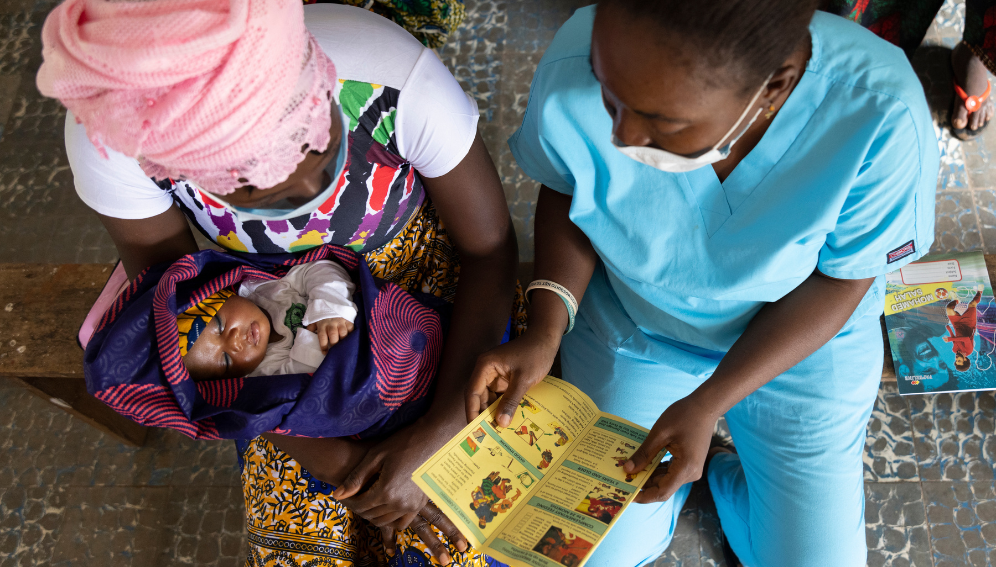
As progress on malaria stalls, the case for local research in Africa is stronger than ever, write Edwine Barasa of KEMRI-Wellcome Research Programme and David Mukanga at the Gates Foundation.
[SciDev.Net] As we mark World Malaria Day (25 April), Africa finds itself at an uncomfortable crossroads. After two decades of measurable progress in public health, key indicators are beginning to stall—and in some cases reverse.
This moment demands not only renewed commitment, but a reassessment of how health systems and research ecosystems are structured.
Over the past 20 years, gains have been significant. Life expectancy rose from 49 to 61 years across 15 countries in Sub-Saharan Africa, while under-five mortality was cut by half.
Yet these advances are now under pressure. In 2024 alone, Africa accounted for over 270 million malaria cases, 96 per cent of the global total, and nearly 595,000 deaths, representing 97 per cent of global malaria mortality.
Child mortality, after years of decline, is beginning to rise again.


Evidence shows that almost three quarters of infant and early childhood deaths involve multiple conditions simultaneously, including malaria, malnutrition and pneumonia. Yet health systems remain largely organised around single diseases.
This disconnect is not incidental. It reflects how systems have been built.
For decades, many African health systems have relied on vertical programmes, disease-specific initiatives funded and implemented in silos, often running parallel to national structures. These programmes have saved millions of lives. But they have not consistently built the integrated, resilient systems required to respond to complex and overlapping health challenges.
As funding landscapes shift and donor priorities evolve, the limitations of this approach are becoming harder to ignore.
The fragmentation is not limited to service delivery. It extends into research itself. Much of the research conducted across the continent has been shaped by funding models that prioritise short-term, disease-specific outcomes and product trials. Critical areas such as health systems research and implementation science have remained underfunded. The result is a persistent gap between evidence generation and real-world application.

Edwine Barasa is executive director of KEMRI-Wellcome Research Programme
Too often, data is produced but not translated into policy or practice. National research institutions—which are best positioned to generate locally relevant insights—remain underutilised.
Countries are left without timely answers to urgent questions: why do preventable deaths continue to occur, and what interventions work best in resource-constrained settings?
On World Malaria Day, these questions take on added urgency. Malaria control has long depended on tools such as insecticide-treated nets, diagnostics and treatment protocols. While these interventions have been effective, their impact is shaped by how well they are integrated into broader health systems.
Africa cannot solve its health challenges using evidence generated elsewhere and applied too late.
The continent needs more clinical and implementation research conducted within its own systems, close to the communities affected.
The most pressing questions are practical: which interventions work best, under what conditions, and how can they be delivered effectively at scale? These are questions that require local answers.
Investing in local research institutions is therefore not optional. It is a strategic necessity.
Locally driven, evidence-based interventions are already improving survival outcomes across the continent. When countries generate and apply their own data, they are better able to respond quickly and effectively to evolving health challenges.
Kenya offers a compelling example. The Kenya Medical Research Institute and its partnership with the KEMRI-Wellcome Research Programme, has developed an integrated model that connects community engagement, research, and policy. In this system, communities are not passive subjects of research but active participants.
Researchers work closely with families, schools, and healthcare providers to ensure that studies are culturally appropriate and that findings are relevant and actionable. This approach improves both trust and data quality, and crucially, it ensures that data does not remain confined to reports.
Through initiatives such as the Child Health and Mortality Prevention Surveillance (CHAMPS), real-time data is already informing policy decisions on child mortality and antimicrobial resistance.
David Mukanga is the deputy director for Africa Regulatory Systems at the Gates Foundation.
The benefits of research-driven innovation are also evident at a broader level. Advances in vaccines and immunisation strategies helped save at least 1.8 million lives in Africa in 2023.
However, these gains depend not only on innovation but also on the systems that enable rapid adoption.
This is where regulatory capacity becomes critical. Efforts to strengthen harmonisation through institutions such as the African Medicines Agency are essential to ensuring that new tools move efficiently from evidence to approval to delivery.
The lesson is clear: community engagement, research, surveillance and policy are not separate domains. They are interconnected components of a single system. Fragmentation across any one of these areas weakens the whole.
World Malaria Day is often framed as a moment to celebrate progress. But this year, it should also be a moment of reckoning. The persistence of malaria, alongside rising child mortality and increasingly complex health challenges, signals that incremental improvements are no longer enough.
What is needed now is integration.
As funding constraints tighten and health threats become more interconnected, Africa’s ability to sustain progress will depend increasingly on its own institutions. Strengthening those institutions—and embedding research within the systems that deliver care—is not just a long-term goal. It is an immediate priority.
Without that shift, the gap between what we know and what we do will continue to cost lives.
Edwine Barasa is executive director of KEMRI-Wellcome Research Programme and David Mukanga is the deputy director for Africa Regulatory Systems at the Gates Foundation.
This piece was produced by SciDev.Net’s Sub-Saharan Africa English desk.


