













The sand plume, making its way from North Africa and across Spain and France, is expected to reach the UK in the next few days.
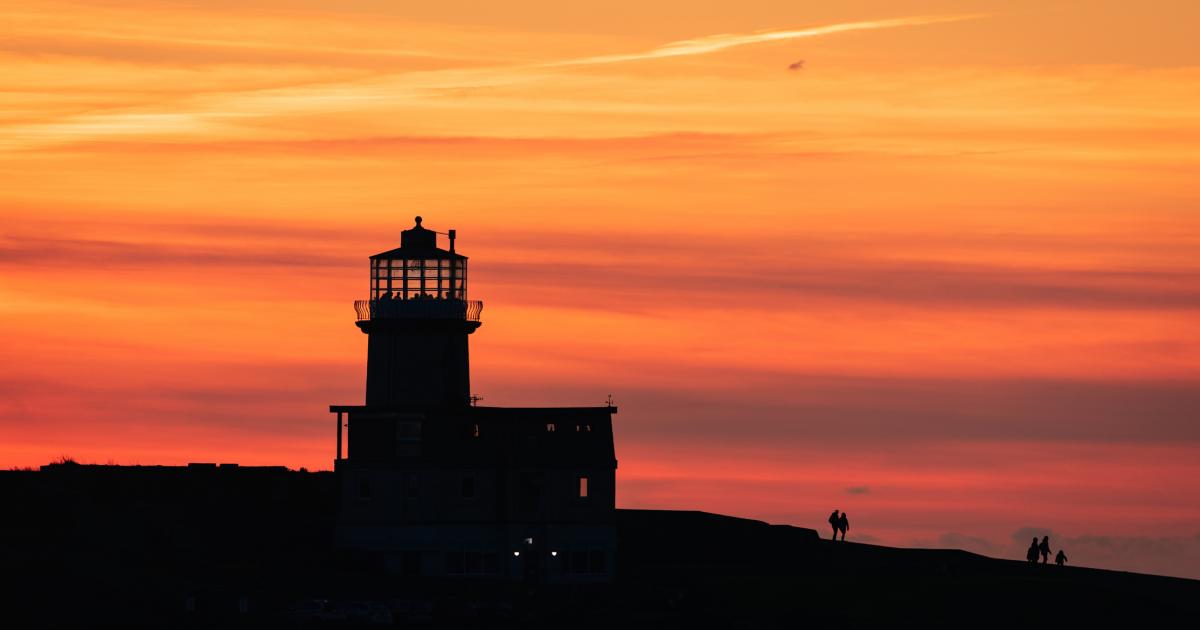
Due to it, sunrises and sunsets will be transformed into spectacular sights, with gold, amber, and burnt orange colours on display.
However, it may also create issues for drivers, who may wake up to a covering of the so-called ‘blood rain’.
The bright sunsets are expected on Thursday into Friday as the Saharan dust drifts over the country (Image: Getty Images)
‘Blood rain’ from North Africa to hit Sussex in coming days
Saharan dust is already on the move across Europe, with the Met Office forecasting “a brush of dust‑influenced air likely, affecting southern parts of the country”.
The Met Office said: “By Wednesday and Thursday, the combination of a moist south‑westerly airflow and a broad dust plume could lead to some dust settling out with the rain.
“At this stage, concentrations are expected to remain relatively low, meaning rainfall itself is unlikely to appear noticeably red.
“Instead, where dust mixes in, the impact is more likely to be seen after showers have passed, with a light film of yellowish or brownish residue on surfaces.”
It said that people may notice:
- A light coating of dust on vehicles or windows
- Slightly reduced visibility at higher altitudes if the dust layer is particularly concentrated
- Vivid sunrises or sunsets
The Met Office advised that the dust is not a concern from a health perspective, but those with respiratory sensitivities “may notice a slight increase in airborne particulates before rainfall clears the atmosphere”.
What is ‘blood rain’?
Despite having a striking name, “blood rain” is not a scientific phrase, nor does it describe a frequent or clearly defined meteorological event, the Met Office explains.
It continued: “Instead, it simply refers to rain that takes on a reddish tint once it reaches the ground.
What is ‘blood rain’ and will we see it this week?
What the Met Office says…⬇️https://t.co/dGwEx8fHd8 pic.twitter.com/XfRLnKLeCG
— Met Office (@metoffice) March 4, 2026
“The colour can vary from a faint rusty hue to deeper reds, depending on how much dust is present in the atmosphere at the time of rainfall.
“Instead, it simply refers to rain that takes on a reddish tint once it reaches the ground.
“The colour can vary from a faint rusty hue to deeper reds, depending on how much dust is present in the atmosphere at the time of rainfall.”
Red rain is “extremely rare”, as despite dust-laden rain being common in the UK, it looks normal to the naked eye due to the concentration of particles being low.
It is only after the rain dries that a thin film of dust left on cars, windows, or outdoor surfaces is seen.
Will you be keeping an eye on the sunsets this week? Let us know in the comments.
Source link
[Featured]
[Just In]


