











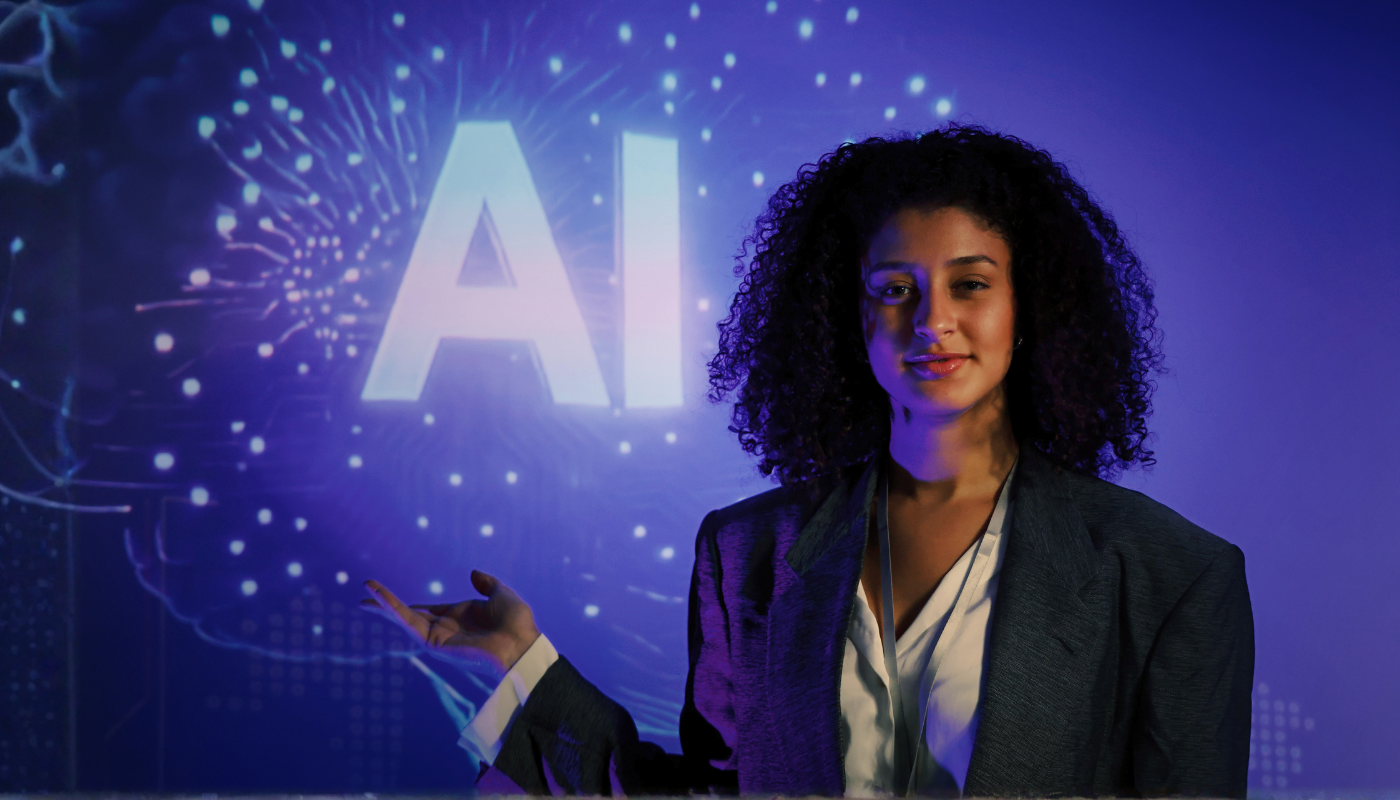
There is no shortage of lists celebrating women in tech, and that is a good thing. This one has a specific focus.
The women here are building products that are already in production, making decisions that are shaping how AI gets used in healthcare, finance, education, supply chains and regulated industries, and doing it at startup and scaleup scale.
According to the Female Innovation Index 2026, female-founded AI startups in Europe raised at a three-year high in 2025, with AI accounting for 25% of all rounds raised by female-founded companies. The momentum is building; some have raised significant funding and others are at an earlier stage. All of them are working on problems worth understanding if you want to know where AI is heading in practice.
2026 is a particular moment for this. The AI industry is maturing past the hype phase and into the harder work of deployment, regulation and real-world reliability. The founders and operators building at that layer tend to be less visible than the people announcing billion-dollar foundation models, but the work is no less important for that.
These ten are worth your attention.
The Women Shaping AI Right Now
1. Priya Lakhani – Century Tech (EdTech, UK)
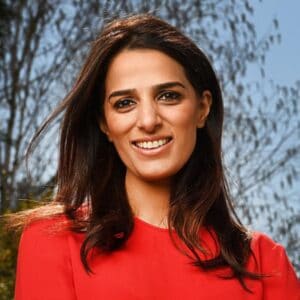
Priya Lakhani founded Century Tech, an AI-driven platform that maps each student’s learning gaps and prescribes personalised micro-lessons in real time, now used across thousands of UK schools. She has been building in EdTech long enough to have seen the AI hype cycle come and go, and the product has outlasted most of the discourse around it. Lakhani is one to watch because Century drives huge impact within a sector where AI tools have repeatedly failed to move from pilot to mainstream – and it has managed the transition.

2. Dr Michelle He – Abound (FinTech, UK)

Co-founder of Abound, Michelle He has built an AI-driven lending platform that uses open-banking transaction data to assess affordability more dynamically than traditional credit scores. The company has raised over £200 million in funding facilities and is actively changing how UK lenders think about fair credit risk. She is doing it in a sector, consumer lending, where the consequences of getting AI wrong fall directly on real people, which makes the care she has brought to the model design noteworthy.
3. Salma Bakouk – Sifflet (Enterprise AI, France/UK)

As co-founder and CEO of Sifflet, Salma Bakouk has built an AI-assisted data-quality and governance platform that helps enterprises detect and fix broken data pipelines before they break models. Her work is at the intersection of data operations and trustworthy AI, giving her serious influence over how mid-market companies actually deploy AI in production. It is more understated work than building a consumer product, and more important for that reason.
4. Roxane Fischer – Anyshift.io (Enterprise AI, France)

Roxane Fischer is co-founder and CEO of Anyshift.io, where she has built Annie, an AI assistant that sits over a continuously updated graph of a company’s entire production environment and answers plain-English questions about what broke, what changed and what is at risk. When an incident fires, Annie pinpoints the root cause in seconds rather than the hours it typically takes to trace through disconnected monitoring tools. Fischer studied at Ecole Polytechnique and Imperial College London and came to the problem as both an AI researcher and an engineering lead – the product addresses one of the most persistent pain points in SRE, and it is already deployed and operational within commercial environments.
5. Dr Valerie Kirchberger – Evela Health (HealthTech, Germany)

Co-founder of Evela Health, a Berlin-based femtech startup, Valerie Kirchberger uses AI to translate women-specific health data into more personalised diagnostics and treatment pathways. She is part of a growing cohort of European AI-driven health startups that are closing the data gap in women’s medicine. There is a wide gap: the majority of clinical AI models have been trained predominantly on male patient data, which makes the work Evela is doing structurally important rather than niche.
6. Joana Pinto – Clynx (HealthTech, Portugal/EU)

As co-founder and CEO of Clynx, Joana Pinto has developed Motiphy+, an AI-enhanced, gamified rehabilitation platform that turns physiotherapy into interactive, trackable exercises for patients at home. Backed by EIT Health, her startup typifies the AI-plus-clinical workflow model that is changing how European health systems scale rehabilitation services. The gamification layer has a practical purpose – it addresses the single biggest failure mode in physiotherapy, which is patient adherence.
7. Danaï Antoniou – Gradient Labs (FinTech, UK)

Founder of Gradient Labs, Danaï Antoniou is building AI agents that operate within highly regulated financial services environments, helping compliance and risk teams automate workflows without stepping outside audit boundaries. Her work is at the sharp edge of AI in regulated industries, where design decisions directly shape what banks can realistically adopt. The ICO’s recent guidance on AI agents made this space significantly more prominent, and Antoniou has been building in it longer than most.
8. Malin Schmidt – Kodiak Hub (Enterprise AI, Sweden)
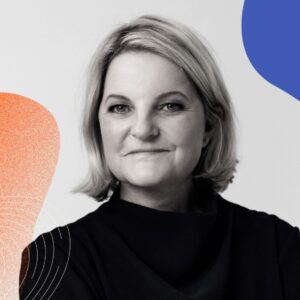
Founder of Kodiak Hub, Malin Schmidt has created an AI-driven procurement platform that helps large organisations build more resilient, regional supply networks by modelling risk and dependencies in real time. Her startup has raised multiple seven-figure rounds in Europe and exemplifies how AI is being used to re-localise global supply chains. Given how exposed those supply chains turned out to be post-pandemic, her work is being validated by events over time
9. Rafah Knight – SecureAI (AI Safety, Global)

Founder and CEO of SecureAI, Rafah Knight focuses on frameworks and tooling to help organisations stress-test AI models against misuse, drift and security-adjacent risks. She is active in global policy-adjacent forums on AI security, operating as a behind-the-scenes architect of how AI risk governance actually plays out in practice rather than in white papers. In a year when AI safety has become one of the most politically contested topics in tech, her work is more relevant than ever.
10. Chelsea Williams – Mater-AI (DeepTech, UK)

Chelsea Williams is co-founder and CTO of Mater-AI, a UK-based startup building an AI-accelerated, physics-informed materials discovery engine focused on finding materials that convert heat into electrical energy – a problem directly relevant to tackling data centre heat waste and industrial energy recovery. Her background spans quantum computing research, investment banking and academia, a combination that is unusual enough in deeptech to be worth noting on its own. Williams grew up on a council estate, made her way into physics and then into some of the most technical corners of the industry, and is now applying that trajectory to one of the harder open problems in energy materials science. In a list full of people building AI products, she is building the kind of AI-assisted foundational research that makes those products possible.


