




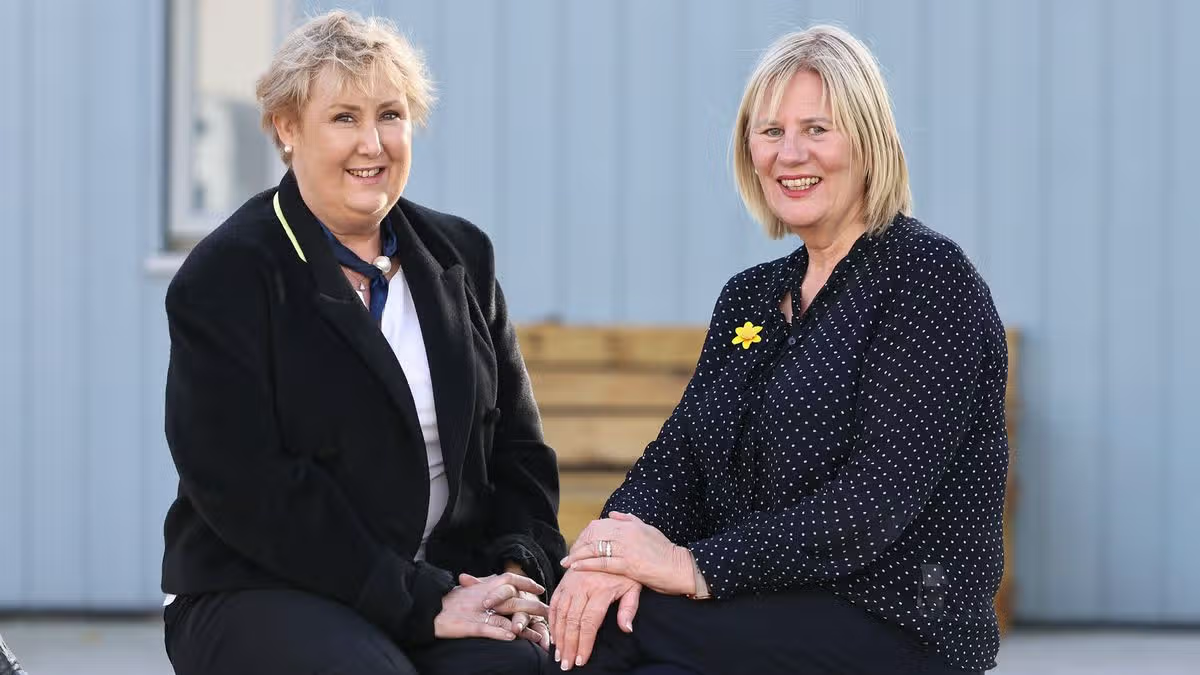
“I probably wouldn’t have anything near the quality of life that I’ve had without Marie Curie. There’s absolutely nothing to lose.”
After a long career as a nurse lecturer, Mabel Doherty now finds herself living with a terminal illness.
The diagnosis last year came five years after the mum-of-three previously underwent a mastectomy and breast cancer treatment.
Now she is supported by Marie Curie, the UK’s leading end of life charity, which cares for people with any illness they are likely to die from including advanced cancer alongside Alzheimer’s (and other forms of dementia), heart, liver, kidney and lung disease, motor neurone disease and Parkinson’s.
Mabel, 61 and from South Belfast, told Belfast Live: “Initially I was diagnosed during lockdown in March 2020 when I discovered a lump, kind of a dimple. I’d had a mammogram the previous September so I wasn’t that worried about it.
“Then it kept changing and getting bigger and I didn’t get around to seeing about it until July because I was busy with work. I was taken down for the mammogram and right away we realised it was breast cancer with lymph involvement, so that set everything in motion.
“I had a mastectomy, lymph nodes removed, and a reconstruction all done by around August 24 followed by chemotherapy and radiotherapy. I had the whole treatment, everything thrown at me and then it all finished by the following April.
“I went for a mammogram every year after that and I got five years all clear. Then last year I started coughing and basically it turned out the cancer was in the lung, the brain, spine and femur so it moved around quite a bit.
“I started more treatment last September but by January they realised the treatment was working. I tried another one and that made me really sick so I had to abandon that one.
“There was a third treatment and it just left me really flattened and not having a good quality of life plus I had radiotherapy to the brain, stereotactic radiotherapy, which was quite invasive and I was very fatigued.
“When it came to September a year on from treatment that hadn’t really done that much my consultant and I decided that the quality of life wasn’t great, so we stopped the treatment, and palliative care has been there since.”
Outpatients at Marie Curie like Mabel receive regular and personalised care designed to support their independence and quality of life. Patients can attend the hospice for regular appointments, and the team will monitor their condition and create individual support plans. This may involve physiotherapy and occupational therapy, complementary therapies, wellbeing activities and bereavement support.
Mabel explained: “I had medical care in the hospital in the cancer centre, and then I had palliative care from Marie Curie and they worked hand in glove. Marie Curie has offered me lots of other things like reflexology, breathing exercises and support from the occupational therapist – anything I need, they can organise with the trust for example blood tests.
“But the big thing that I’ve had is kind of like hospice at home where all the needs have been kind of preempted and worked on. Pain relief is a big thing now, because I’m in a lot of pain with my spine so they’re trying to tweak different tablets and even twice a week, they’ll contact me just to see if this works or we’ll try that so it’s very individualised to me.”
Mabel’s friend Paula Heneghan is Associate Director of Strategic Partnerships and Services at Marie Curie NI who says patients now have many more options when it comes to where they receive care, allowing more people to spend time at home.
She said: “A lot more services have developed over the years and what we have is a multidisciplinary team who can meet the needs of patients and families better than they may have done in the past.
“A lot of people would choose to maybe not be admitted to the hospice and want to have their symptoms managed at home. There are a number of reasons why that happens.
“For younger people they often want to be in that situation where they can still have control of their own life, and if those symptoms are managed, they can actually, continue to live their life in a very good way.
“Out in the community we would have patients who require specialist advice and support and within some of the Trusts we have a rapid response service. These are all based at GP out of hours so if patient or family is in distress or requiring more help they would contact out of hours and then the Marie Curie nurse will then go to the patient’s home.
“During those visits it’s often about symptom management and sometimes it is that end of life is imminent and families need support.”
Marie Curie also recently funded an Advanced Nurse Practitioners post to support and care for patients who have palliative and end of life care needs, with the focus on the community setting across the Omagh and Fermanagh areas of the Western Health and Social Care Trust.
Paula explained: “The nurse would have skilled, highly skilled expertise in end-of-life care and that again allows people to have a choice to remain at home.
“Rurality has its own difficulties at times as well but what we would have is a network of nurses right across Northern Ireland and a lot of the care we provide in the community is mainly out of hours when a lot of the other services aren’t working.
“We are closely linked into our district nurses who are identifying patients for the service. They want the help and what we’re trying to do is avoid people going into hospital.”
Mabel added: “I know that some people don’t know anything about the hospice and it’s just a frightening word but for me, it wasn’t a frightening place to come. It’s not all about end of life. It is to give you a good life.
“It has made a huge difference and in fact, I probably wouldn’t have anything near the quality of life that I’ve had without Marie Curie. There’s absolutely nothing to lose.
“In some cases, stage 4 cancer can give you 16 years of life. In other cases it can be 6 months so everybody is very individual. It’s not one size fits all.
“If Marie Curie come to the door, which they probably will do whenever you’re diagnosed with stage 4, don’t turn them away. It might be a bit scary and a bit like ‘Oh, that means I’m dying’ but it isn’t, it’s palliative.
“Initially I was doing really well, but then obviously as time went on, I needed them more, but they will read the situation. You can read the situation. It’s very much teetered to you, so you are leading it and you can have as little or as much as you want, but definitely don’t turn them away because they are amazing.”
Marie Curie is dependent on public donations so that its Nurses and Healthcare Assistants can provide expert end of life care to people at home, in its hospice, and through its free Support Line (0800 090 2309).
If you’re living with a terminal illness or have been affected by death, dying and bereavement, Marie Curie can help. Visit mariecurie.org.uk or call the free Marie Curie Support Line on 0800 090 2309.
To find out more about the Marie Curie services available in Northern Ireland, visit: mariecurie.org.uk/services/northern-ireland.
Video and photography: Justin Kernoghan
For all the latest news, visit the Belfast Live homepage here and sign up to our daily newsletter here.
