




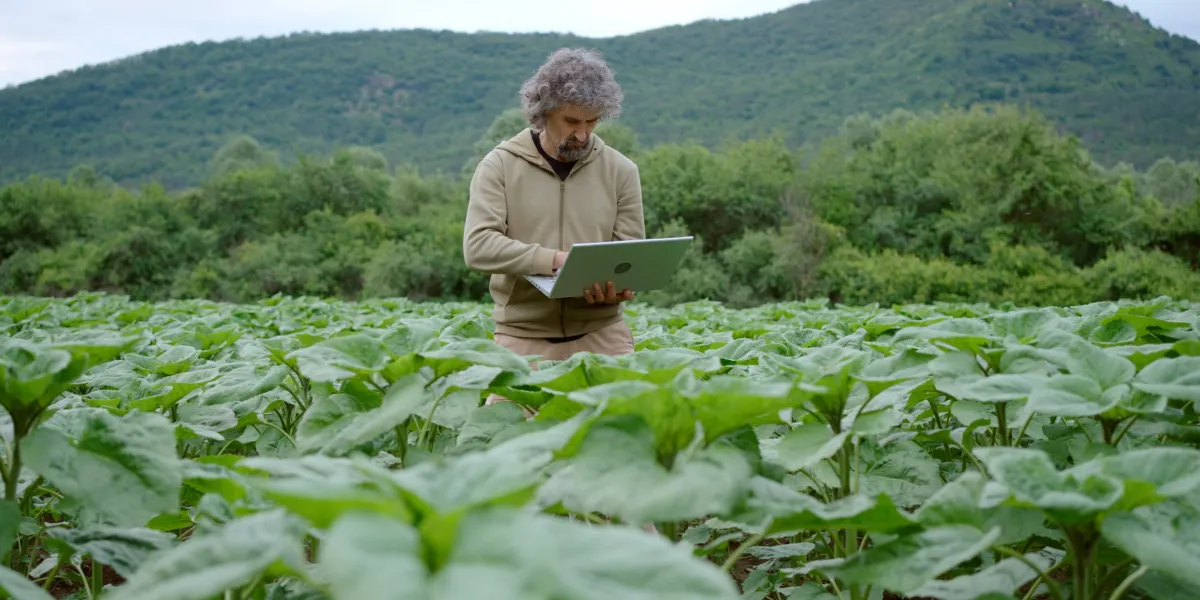
Agricultural AI also needs to understand more than just customer attributes; it needs to understand the land: GPS coordinates, farm boundaries, field blocks, and soil variation across a single property. Where do you apply fertilizer, and at what rate, and in which specific area of the farm? Not all parts of a field are the same, and an AI system that treats them as if they are will produce recommendations that are at best imprecise and at worst damaging.
There is also a compliance dimension due to the chemicals and the responsibility involved. Operational AI in agriculture needs significantly more checks and governance than it might in a lower-stakes environment. When a flawed recommendation gets acted upon in the field, the consequences can be severe.
What data readiness means in practice
Data readiness is the difference between AI delivering on its promise vs. a “garbage in, garbage out” scenario. Fundamentally, being ready for AI means having a data model that accurately reflects how the business operates.
For a company like Wilbur-Ellis, a 104-year-old, family-owned agricultural distributor, that means understanding who your customers are, which fields they farm, which inputs they need, which suppliers those inputs come from, what they paid last season, and how all of that connects to margin. That information needs to be current, consistent, and accessible across the organization, rather than locked in separate systems that were never designed to talk to each other.
Similarly, for farming operations themselves, data readiness means having a reliable, connected picture of what is happening across every field: soil health records, input application histories, yield data from previous seasons, equipment performance, and real-time sensor readings from irrigation systems.
Governance matters just as much as structure. Prices change, relationships evolve, and suppliers come and go. An AI system drawing on data that was accurate six months ago but has not been maintained will make recommendations based on a version of the business that no longer exists.
Building the foundation that makes AI trustworthy
The good news is that the path to data readiness is feasible. It starts with a strong data model: a single, governed source of truth that connects customers, suppliers, products, pricing, orders, and margins in a way that reflects how the organization operates.
From there, it requires data pipelines fast enough to deliver insights when decisions need to be made, governance frameworks that keep that data trustworthy over time, and security controls that ensure sensitive commercial information is accessible to the right people under the right conditions.
