













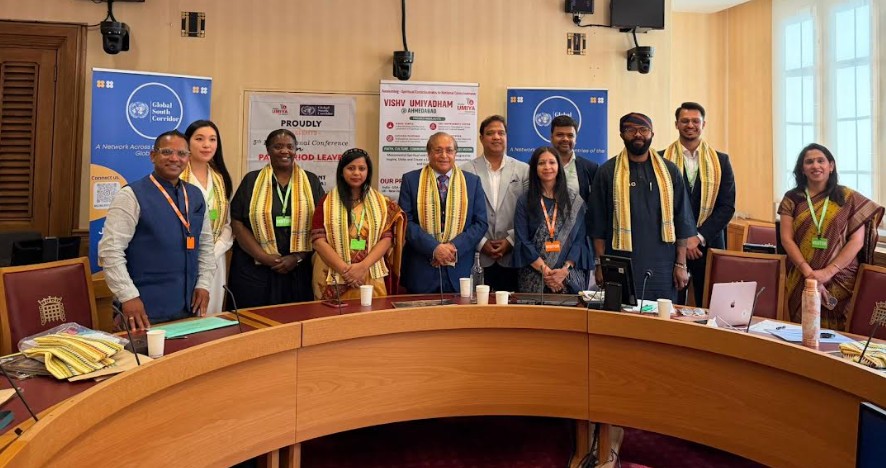
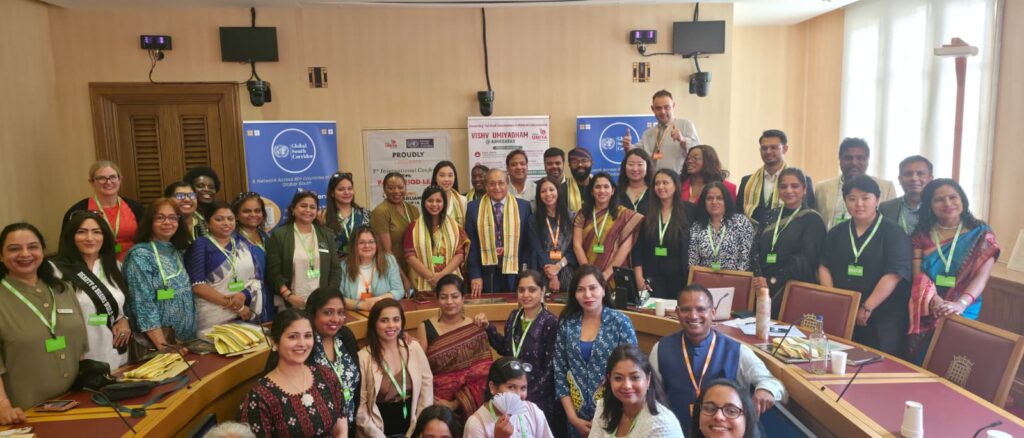
London May 28 : The UK Parliament’s House of Lords has hosted the 5th International Conference on Paid Period Leave to mark World Menstrual Hygiene Day, bringing together policymakers, academics, campaigners and international delegates to discuss menstrual health, workplace inclusion and gender equality.
The event, organised by the Global South Corridor in partnership with Vishv Umiya Foundation (VUF), ECOF Enterprises and MHM-KIT, attracted participants from countries including the UK, India, Ghana, Nigeria, China, France and Spain.
Speakers at the conference called for greater recognition of menstrual health as a workplace and public policy issue, arguing that menstrual dignity should be treated as a fundamental human right.
Opening the event, Dr Bibhuti Bhusan Pattnayak, Executive Director of the Global South Corridor, said the organisation drew inspiration from the historic Bali Jatra trade tradition, which connected India with Southeast Asia and Africa through commerce and cultural exchange.
He said the Global South represented nearly 85% of the world’s population and around 40% of global GDP, adding that its perspectives should play a greater role in international discussions.
“This conference is about dignity, health, inclusion and menstrual equity for women and girls around the world,” Dr Pattnayak told delegates.
Sweta Mohanty, Executive Director of the Global South Corridor, said menstrual wellbeing should become part of mainstream workplace health discussions.
She argued that measures such as flexible working arrangements and occasional work-from-home options could help create more supportive working environments for women.
Campaigner Ranjeeta Priyadarshini, founder of the Global Campaign for Paid Period Leave, described menstrual health as a global issue affecting women across societies and workplaces.

She said support for the campaign had grown in several parts of India, including Bihar, Karnataka and Odisha, and noted that some organisations had already introduced policies linked to menstrual wellbeing and paid leave.
Among the keynote speakers was Lord Rami Ranger, who voiced support for paid period leave and wider efforts to improve workplace equality.
Speaking about his personal experiences growing up in a single-parent household, Lord Ranger said witnessing his mother’s struggles had shaped his understanding of the challenges women face.
He described paid period leave as “an initiative that benefits not only women but humanity as a whole”.
UNICEF representative Marion Walker also addressed the conference, highlighting the importance of workplace and public-sector policies that support women’s health.
She said greater awareness of menstrual health and stronger workplace support systems could help remove barriers affecting women’s participation in the workforce.
Chenxing Liu, UK Director of the Asian Women Development Plan International (AWDPI), described paid period leave as a workplace equality measure rather than a special privilege.
She also spoke about the growing role of artificial intelligence in shaping workplaces and stressed the importance of ensuring future systems remain inclusive and gender-responsive.
Mceva Temofe, founder of African Economic Global Convergence, praised campaigners who had pushed the issue into mainstream public debate despite early criticism and resistance.
He pointed to Nairobi City County Government’s decision to approve two days of paid menstrual leave per month for women employees as an example of policy change influenced by advocacy efforts.
Councillor Sumeet Jalan said education and awareness among boys and men remained essential in addressing stigma surrounding menstruation.
He said improving understanding within society would help create more supportive attitudes and workplace policies.
The conference also featured the launch of an international song promoting paid period leave, composed by Rui Dai, Chairperson of the International Artificial Intelligence Association, alongside a documentary exploring women’s experiences and global advocacy efforts around menstrual health.
Closing the event, Partha Sarathi Panda, Executive Director of the Global South Corridor, thanked delegates and organisers for their contributions.
Participants concluded the conference by reaffirming support for policies aimed at improving menstrual dignity, workplace inclusion and gender equality worldwide.


