





A couple of years back, I guided five hikers along the Laugavegur. All of them were over seventy. All of them had been serious hikers their whole lives, the kind of people who knew what a multi-day trek was supposed to feel like.
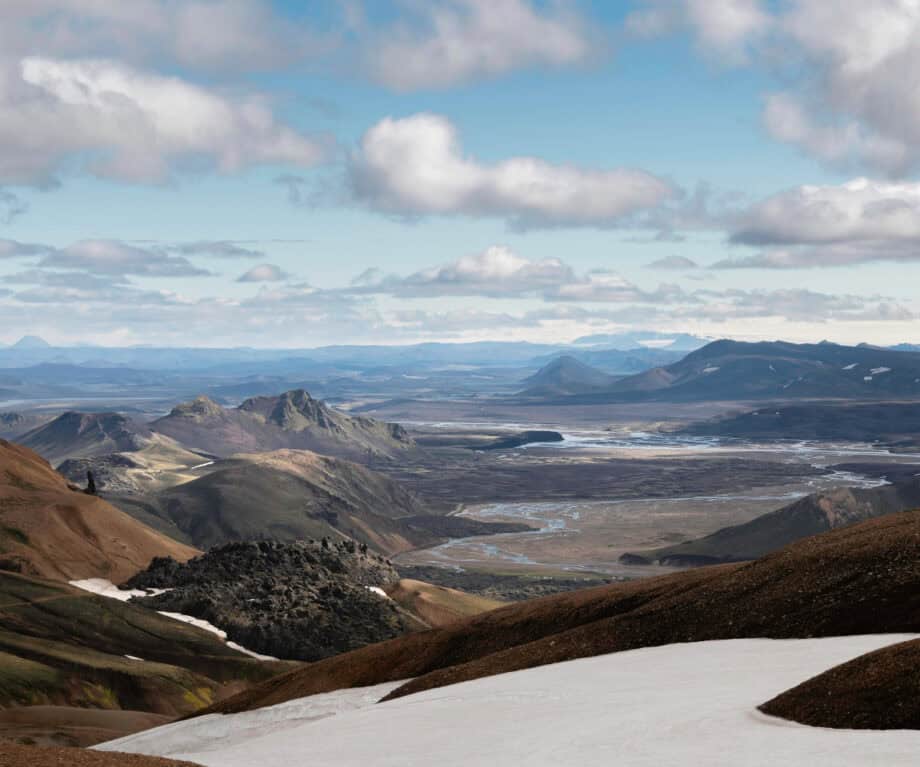
By the end of the trail, one of them had been pulled off the route with a bad knee and shuttled back to civilization. Another had picked up COVID somewhere along the way and was crossing rivers with a high fever for the final two days. He pushed through because at that point in the trail there is no real way out. You walk to the end. I more or less held him up at the deeper crossings. He made it.
When we finished, they told me it had been the hardest thing they’d ever done. Wonderful too, they said. But the hardest, by a long way. And the thing they kept coming back to wasn’t the scenery or the route. It was that somebody had been there beside them the whole time. The pace adjusted whenever a knee was complaining. An arm under them at the rivers. The man with the fever got across crossings he could not have crossed on his own.
That’s the gap, more or less, between hiking in Iceland on your own and hiking with someone who lives here.
I want to write about why that gap matters, and why the best hikes in this country specifically reward going with a guide. I run a small private tour company called Lilja Tours, based outside Reykjavík, so yes, I have a stake in the answer. But this is the answer I’d give regardless. The trails in Iceland are not the kind of trails most people are used to.
The trails change every week
Most travelers misjudge this part. They look at the route on AllTrails or Wikiloc, see a six-hour day with 600 metres of climb, and assume the conditions match the description. In Iceland, conditions don’t match the description. They match the week.
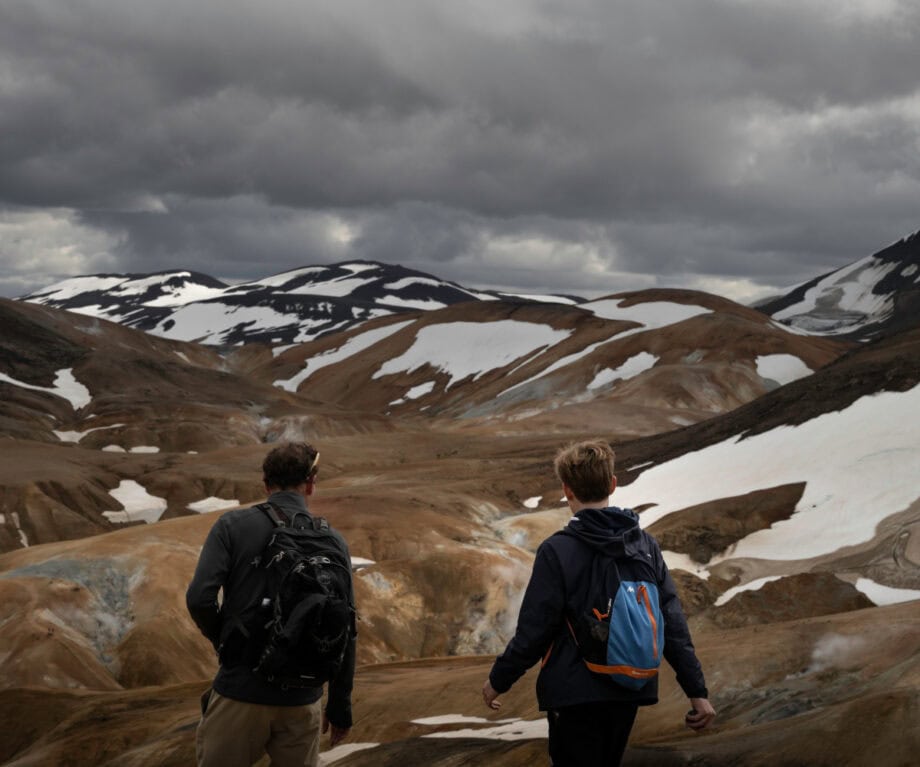
Take the Fimmvörðuháls trail between Skógar and Þórsmörk. In late June it can be perfectly walkable. By early July, after a stretch of warm weather, the snowfields at the top can be soft. By August it’s bone dry. By September the wind on the col can have you crawling on your hands and knees. The trail doesn’t change. The trail’s mood changes.
A guide knows what the mood was yesterday because they’ve talked to the guide who came down yesterday. That’s not something a forum post or a printed guidebook can do for you in time.
The river crossings are the river crossings
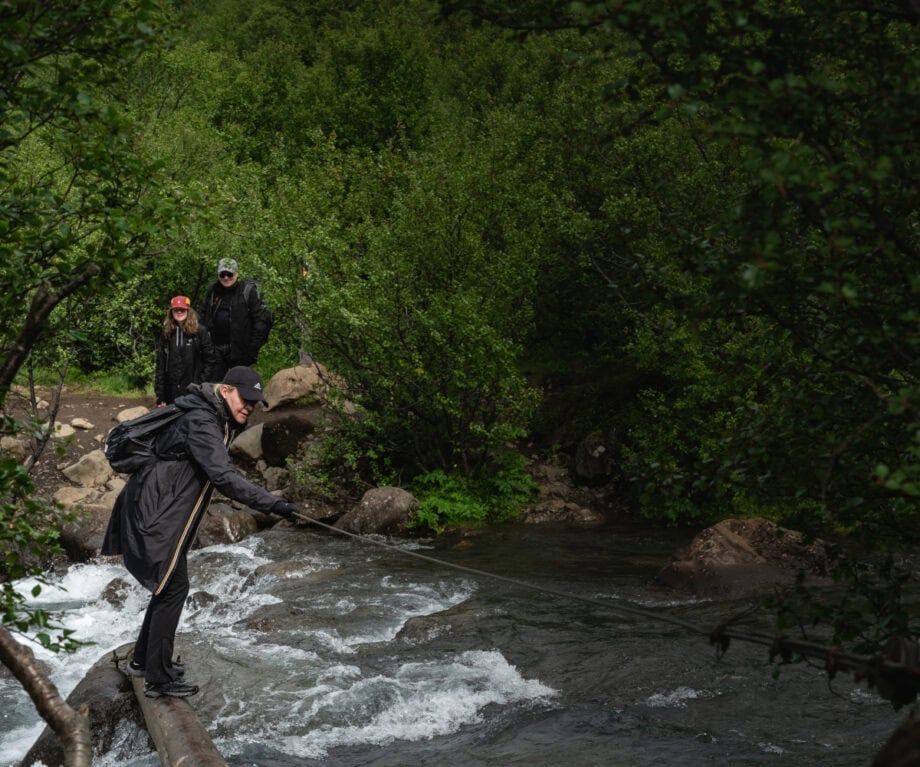
I won’t list specific rivers because the lesson isn’t river-specific. The lesson is this: Iceland has hiking trails where the route involves walking through unbridged glacial water that you can’t see the bottom of, and the depth and flow of that water depends on the temperature on the glacier 40 kilometres upstream that morning.
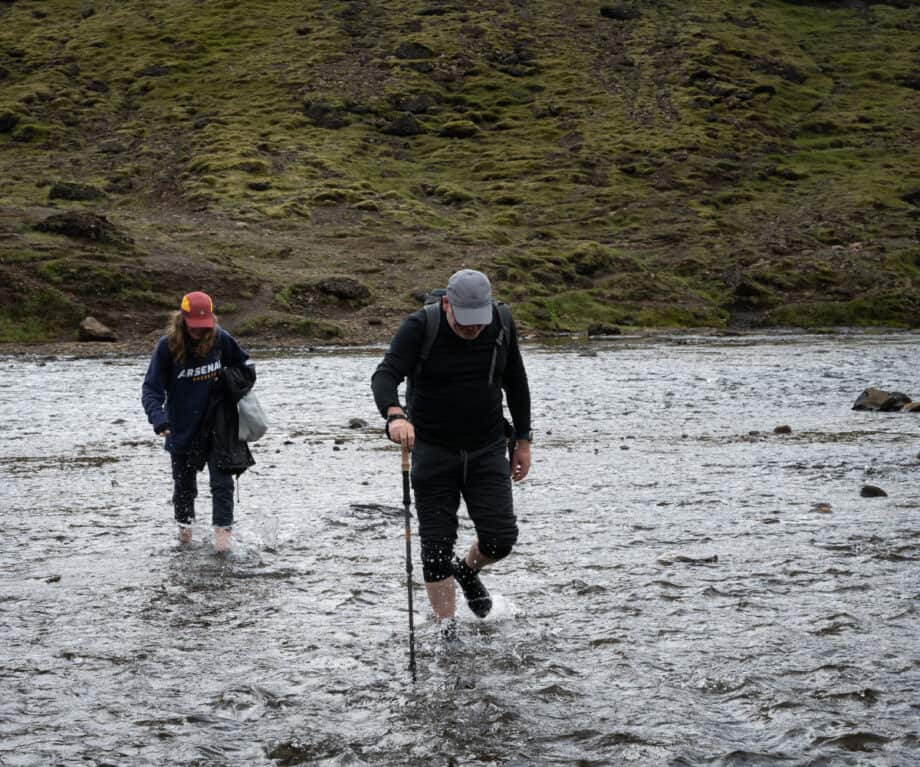
This catches people out every season. Always. Every single year, we hear about hikers who turned around at a crossing they hadn’t expected to find, or worse, didn’t turn around when they should have. Someone who’s done one Icelandic river crossing knows what to look for in the second. A person who’s done none can’t tell the difference between a knee-deep walk and a hip-deep mistake.
The point of a local guide isn’t only to teach the hike. They’re standing between you and a decision you don’t yet have the experience to make.
What you walk past without a guide
This part gets undersold. People talk about safety when they pitch guided hiking, but honestly the more interesting case is what you don’t see otherwise.
Above Landmannalaugar, the rhyolite ridges have these dark stripes running through them. Most hikers see only the colours. A guide can tell you those stripes are obsidian flows from a separate eruption, several centuries apart, layered through the older rhyolite. You’d never know just by looking. The mountain’s geological story is invisible without someone to read it for you.
It’s the same on the moss fields, where what looks like soft green carpet is actually a single plant that’s been growing slowly since long before any Christian church was built in this country. The information is everywhere. You just need somebody to point at it.
Everything you need to plan your trip in 2026
What “private” actually buys you on a hike
I want to be specific here, because “private guide” can mean a lot of things. In Iceland, in our experience, a private hiking guide changes the day in two practical ways.
The first is pace. Group hikes move at the pace of the slowest person, or to the schedule of the bus that’s coming back. A private day flexes. If you want to spend forty minutes at the top of Glymur because the light is doing something strange on the gorge below, you spend forty minutes. If you want to skip a section because your knee is bothering you, you skip it.
The second is access. Some of Iceland’s best short hikes start at trailheads that require a 4×4 with high clearance. A coach tour can’t go up the Kjölur or down to Þakgil. A private operator with the right vehicle can. We do most of our highland day hikes from a Land Cruiser, because that’s how you actually get to the start of the walk in the first place.
These aren’t luxury features. They’re the reason the day works.
Which hikes really need a guide, and which don’t
Not every hike in Iceland needs one. Reykjadalur is fine to do on your own. So is Glymur if it’s not raining. So is the trail above Akureyri to Súlur. If somebody wants to walk an afternoon out from a hotel, they can.
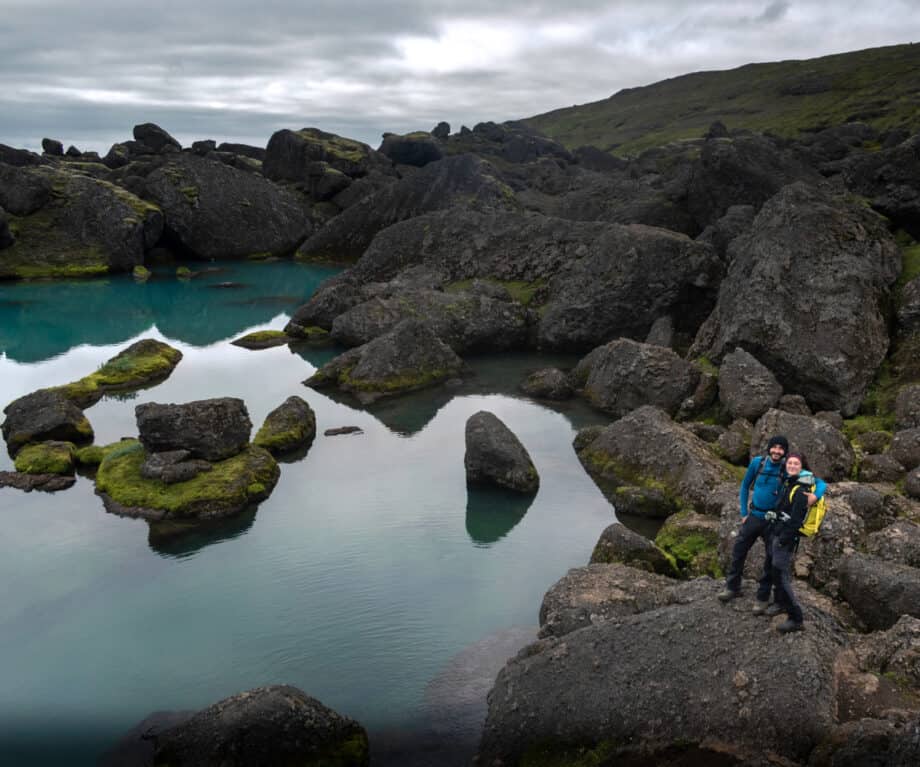
The hikes I’d specifically recommend going guided are the ones with any of the following: an unbridged river, an exposed col above 800m, a route that’s difficult to follow in poor visibility (which in Iceland can come on within twenty minutes), or a context-rich landscape where you’re paying for the experience and don’t want to be staring at your phone the whole time.
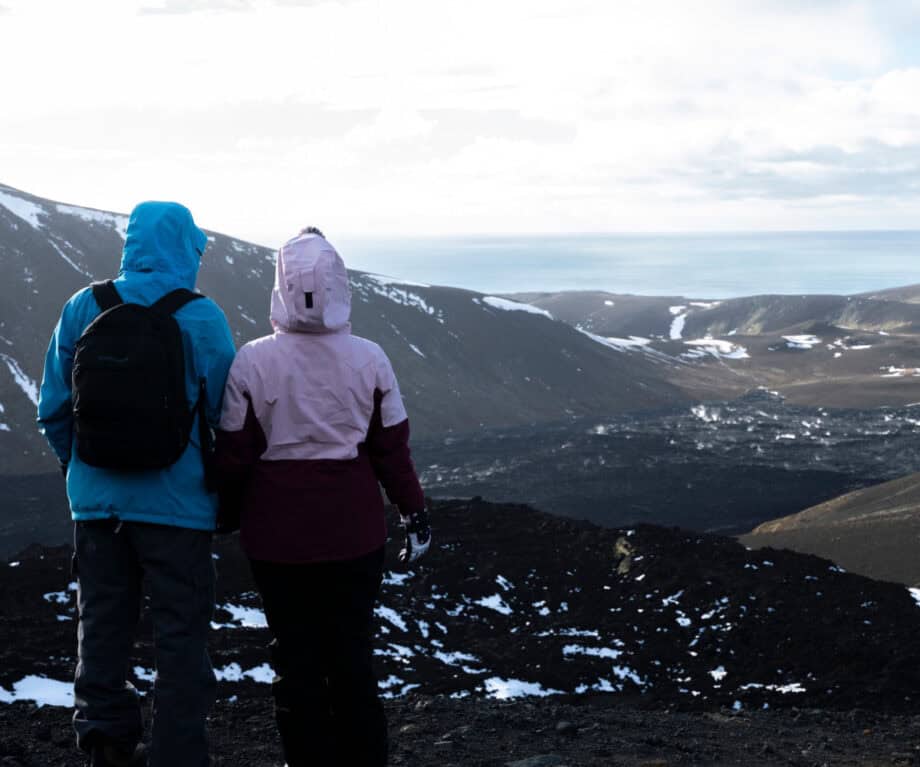
By that test: Laugavegur, Fimmvörðuháls, anything in Þórsmörk, the routes around Askja and Kverkfjöll or even simply Fagradalsfjall. These are the country’s best hikes and they’re best done with someone who has done them dozens of times.
What we do at Lilja Tours
Briefly, since this is where I’m allowed to talk about it. We design private hiking days, and longer multi-day private trips, around what guests actually want to walk. Most of our hiking guests are doing it as one element of a wider Iceland trip: a day in the highlands inside an eight-day private tour, that kind of thing. Some come specifically for two or three days of hiking, and we build around that. Either works.
What I’d say is this. The hike costs the same time on the ground whether you’re guided or not. The difference is what happens during those hours. The trail is the same and the mountain doesn’t change. What’s different is whether you walk through it knowing what you’re walking through.
That, more than the safety case, is the real reason to hire a local guide for your best Iceland hikes. The country tells you almost nothing on its own. Someone has to read it out loud.

Julien Achache
Julien Achache is Owner of Lilja Tours. Lilja Tours is a boutique private tour operator based in Reykjavík, Iceland, specializing in bespoke private tours with a perfect 5-star rating across platforms. If you would like to be a guest blogger on A Luxury Travel Blog in order to raise your profile, please contact us.
Did you enjoy this article?
Receive similar content direct to your inbox.
Please enable JavaScript in your browser to submit the form
