





[CAIRO, SciDev.Net] The war in the Middle East is threatening to increase the risk of another belligerent threat—a devastating crop pest that could further undermine food security, scientists warn.
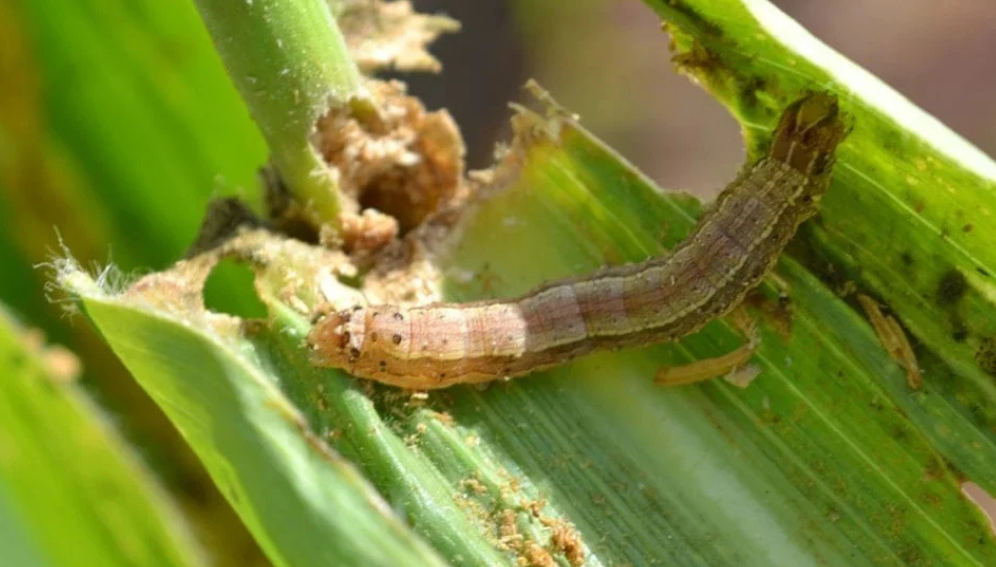
The invasive fall armyworm feeds off more than 80 crops, but is most likely to attack maize, cutting yields by up to 60 per cent, according to the agricultural research organisation CABI (the parent organisation of SciDev.Net).
Native to the tropics of Latin America and fond of high temperatures, the insect has spread to Africa, Asia and Australia and was recently discovered in western Iran.
Now scientists are warning that disruptions to maritime and air travel in the conflict-stricken Gulf region could delay the response needed to contain the pest, with supply chains for agricultural inputs through the Strait of Hormuz cut off.
Asadollah Hosseini-Chegeni, a researcher from the department of plant protection at Iran’s Lorestan University, told SciDev.Net: “Ongoing conflict can significantly disrupt surveillance systems, coordination, and timely intervention.”
He warned that limited access to certain areas and reduced monitoring capacity could result in underreporting of outbreaks.
“These constraints highlight the importance of strengthening basic surveillance even under challenging conditions,” he said.
A study conducted by Chegeni and his team confirmed the presence of fall armyworm in Lorestan province, in the west of the country, but data on any damage caused to crops remains lacking.
The study, published in the June issue of the journal Asia Pacific Entomology, used genetic testing to identify larvae samples collected in maizefields.
Abdul Rehman, deputy director of project implementation at CABI, advises farmers to use locally available biopesticides, such as Bacillus thuringiensis bacteria and neem extracts, to protect their yields.
“Containment is viable via early scouting and biocontrol if acted on now,” he told SciDev.Net, highlighting the importance of training for farmers and agricultural extensions workers through programmes such as those offered by CABI.
Risk of spread
The discovery highlights the continued spread of fall armyworm and raises questions about its transmission routes and regional risks, according to Chegeni.
While such measures might be deprioritised under the weight of war, doing so could have serious consequences. Maize crop losses could reach up to 20-40 per cent, as has been the case in Africa, Rehman suggests.
He says rapid outbreaks are most likely in Iran’s warm, irrigated rice and maize-growing areas, such as the southwestern province of Khuzestan, where the pest could thrive. Studies have found optimal growth temperatures for fall armyworm larvae are between 25 and 35 degrees Celsius.
Mountainous Lorestan is unsuitable for the permanent settlement of the pest due to its harsh winter, but could be a starting point for outbreaks elsewhere, Rehman warns.
Rice and maize
The insect found in Lorestan has a genetic lineage associated with rice crops, meaning Iran’s 730,000 hectares of rice fields could be at risk, according to Rehman. However, field data indicates that maize is still the crop most targeted and damaged by fall armyworm.
“In Africa, rice is only occasionally affected despite the fact that it is claimed all the time that the rice strain is present, while in Asia, most damage is found on maize, not rice,” said Rehman.
He added that the damage could also extend beyond maize and rice crops, to wheat and barley in Syria and Lebanon, as well as sugarcane and vegetables.
Thaer Yasseen, regional plant protection officer for the Near East and North Africa at the FAO, told SciDev.Net: that while there is regional concern about the pest, it hasn’t reached “panic levels”.
“The emergence of the insect in a number of countries in the region in recent years has made it no longer a surprise to agricultural institutions, which now have tools for early detection, practical experience in identifying and dealing with the infestation, and developing an effective response protocol,” Yaseen said.
Such interventions, if deployed early, reduce the likelihood of widespread losses.
In the longer-term, Chegeni warns that climate change could expand the areas suitable for the pest to settle and increase its chances of surviving through the winter, potentially causing it to spread permanently across the Middle East.
However, Yasseen stresses that the level of risk is linked to the speed of response, efficiency of monitoring, and local climatic conditions, with widespread outbreaks likely to flare up rapidly under the right conditions if intervention is delayed.
“The danger is real, but it is containable, provided that monitoring continues, control tools are integrated, and effective agricultural coordination is maintained,” he added.
This article was produced by the SciDev.Net’s Middle East and North Africa desk.
