




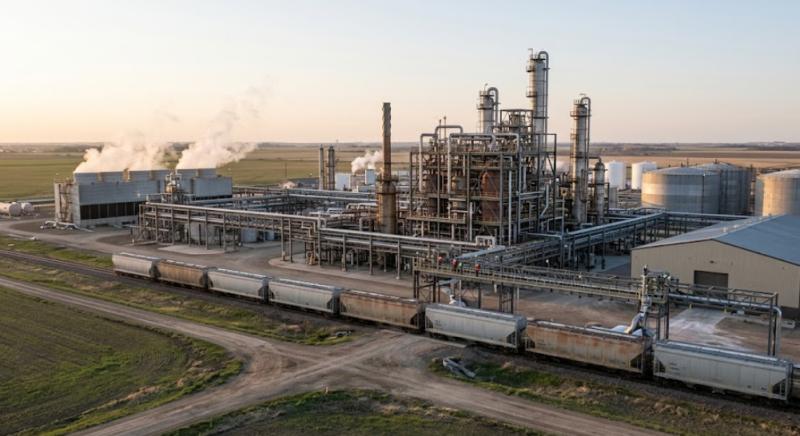
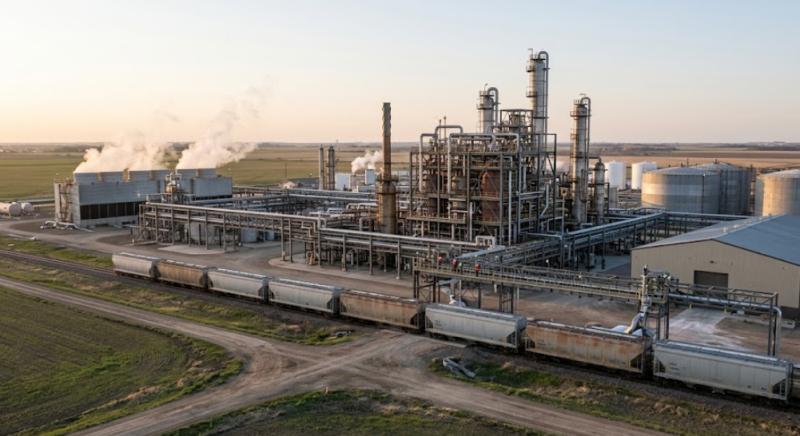
Establishing a manufacturing facility in today’s competitive industrial landscape requires more than just capital investment-it demands a thorough feasibility assessment backed by data-driven insights. Industries such as fertilizers, chemicals, and food production rely heavily on precise production planning to ensure profitability and operational efficiency.
Decisions start with data – explore the insight :- https://www.procurementresource.com/reports/urea-manufacturing-plant-project-report/request-sample
Urea, as one of the most widely used nitrogen-based fertilizers, continues to experience strong global demand due to agricultural expansion and food security concerns. For investors and manufacturers, understanding the economics of a urea manufacturing plant, including production costs, raw material sourcing, and infrastructure requirements, is essential before committing to a project.
A structured evaluation of the urea manufacturing process, supply chain dependencies, and market demand can significantly reduce risks while improving long-term returns.
What is Urea and Its Industrial Importance
Urea is an organic compound with the chemical formula CO(NH2)2. It is primarily synthesized from ammonia and carbon dioxide and serves as a key nitrogen fertilizer in agriculture.
Major Industrial Uses
Agriculture: Urea is the most commonly used nitrogen fertilizer globally, supporting crop yield and soil fertility.
Food Industry: Used in controlled applications such as food-grade additives and fermentation processes.
Chemical Manufacturing: Acts as a raw material for resins, adhesives, and plastics.
Animal Feed: Utilized as a non-protein nitrogen source in livestock nutrition.
Its widespread application makes the urea manufacturing plant a critical component in global agrochemical supply chains.
Overview of the Urea Manufacturing Process
The urea manufacturing process is a well-established chemical synthesis involving high-pressure and high-temperature reactions.
Key Production Steps
1. Ammonia Production
Ammonia is produced using the Haber-Bosch process, combining nitrogen and hydrogen under controlled conditions.
2. Urea Synthesis
Ammonia reacts with carbon dioxide to form ammonium carbamate, which is then dehydrated to produce urea.
3. Concentration
The urea solution is concentrated through evaporation to achieve the desired purity level.
4. Prilling or Granulation
Molten urea is converted into solid granules or prills for ease of handling and transportation.
5. Cooling and Packaging
The final product is cooled, screened, and packaged for distribution.
This process requires precision engineering and continuous monitoring to ensure efficiency and product quality.
Key Raw Materials and Inputs
The cost and efficiency of a urea manufacturing plant heavily depend on the availability and pricing of key inputs.
Primary Raw Materials
Ammonia: The most critical input, directly influencing production cost
Carbon Dioxide: Often sourced from ammonia plants or industrial emissions
Utilities and Supporting Inputs
Natural Gas: Used as a feedstock and energy source
Water: Essential for cooling and processing
Electricity: Powers plant operations and equipment
Catalysts and Chemicals: Required for reaction efficiency
Packaging Materials
Bags, bulk containers, and logistics materials impact final distribution costs.
Fluctuations in raw material prices, especially natural gas, can significantly affect urea plant setup cost and operating margins.
Machinery and Plant Infrastructure
A typical urea manufacturing plant requires a combination of chemical processing units and supporting infrastructure.
Core Equipment
Ammonia synthesis units
High-pressure reactors
Evaporation and concentration systems
Granulators or prilling towers
Supporting Systems
Heat exchangers and compressors
Storage tanks and silos
Pollution control systems
Automated packaging lines
Infrastructure planning must also include land acquisition, utilities integration, and compliance with environmental regulations.
Cost Factors in Manufacturing
Understanding cost structure is essential for evaluating the feasibility of a urea manufacturing plant project.
Key Cost Drivers
1. Raw Materials
Ammonia and natural gas account for a significant portion of production costs.
2. Energy Consumption
High-temperature and high-pressure processes require substantial energy input.
3. Labor
Skilled workforce for plant operations, maintenance, and quality control.
4. Maintenance and Depreciation
Regular equipment servicing and long-term asset depreciation.
5. Logistics and Distribution
Transportation costs for raw materials and finished products.
A detailed production cost analysis helps identify optimization opportunities and improve operational efficiency.
Market Demand and Industry Trends
The global demand for urea remains strong, driven by multiple macroeconomic and sector-specific factors.
Key Demand Drivers
Agricultural Expansion: Increasing food demand due to population growth
Government Subsidies: Fertilizer support programs in emerging economies
Export Opportunities: Growing international trade in fertilizers
Industrial Applications: Expanding use in chemicals and resins
Emerging Trends
Shift toward sustainable and energy-efficient production methods
Adoption of carbon capture technologies in urea plants
Increasing focus on supply chain optimization
Urea Manufacturing Plant :- https://www.procurementresource.com/reports/urea-manufacturing-plant-project-report
These trends are shaping investment decisions in industrial manufacturing economics and influencing plant design strategies.
Importance of Detailed Manufacturing Reports
Before establishing a new facility, businesses conduct comprehensive plant feasibility studies to evaluate risks and returns.
Key Insights Provided by Reports
Technical plant design and capacity planning
Capital investment estimation
Operating cost breakdown
Raw material sourcing strategies
Profitability and ROI analysis
Such reports enable stakeholders to make informed decisions regarding manufacturing plant investment and long-term scalability.
Strategic Value of a Urea Manufacturing Plant Project Report
Businesses evaluating investment opportunities often rely on detailed feasibility studies. A comprehensive Urea Manufacturing Plant Project Report provides insights into production processes, capital investment requirements, operating costs, raw material sourcing, and plant profitability analysis.
These reports serve as a critical decision-making tool for manufacturers, investors, and procurement teams aiming to assess the economic viability and operational feasibility of setting up a urea production facility.
Final
The establishment of a urea manufacturing plant requires a deep understanding of production processes, cost structures, and market dynamics. From raw material sourcing to energy consumption and logistics, each component plays a vital role in determining overall profitability.
Contact Information
Company Name: Procurement Resource
Contact Person: Ashish Sharma (Sales Representative)
Email: sales@procurementresource.com
Location: 30 North Gould Street, Sheridan, WY 82801, USA
Phone: UK: +44 7537171117
USA: +1 307 363 1045
Asia-Pacific (APAC): +91 1203185500
Procurement Resource is a leading market research firm that specializes in providing detailed insights and analysis on the procurement and production costs of various commodities and products. With a team of seasoned industry experts, Procurement Resource offers comprehensive reports that cover all aspects of the supply chain, from raw material sourcing to final product manufacturing. Their services are designed to help businesses optimize their procurement strategies, reduce costs, and enhance efficiency. By leveraging their in-depth market intelligence and proprietary cost models, Procurement Resource enables clients to make informed decisions, stay competitive, and drive sustainable growth in an ever-evolving market landscape.
This release was published on openPR.
