












| Updated:


Edinburgh Worldwide Investment Trust has caved to years of pressure from US activist investor, Saba. Its chair tells Ali Lyon why it is asking shareholders to vote to break up the fund, and what it says about the wider investment trust industry.
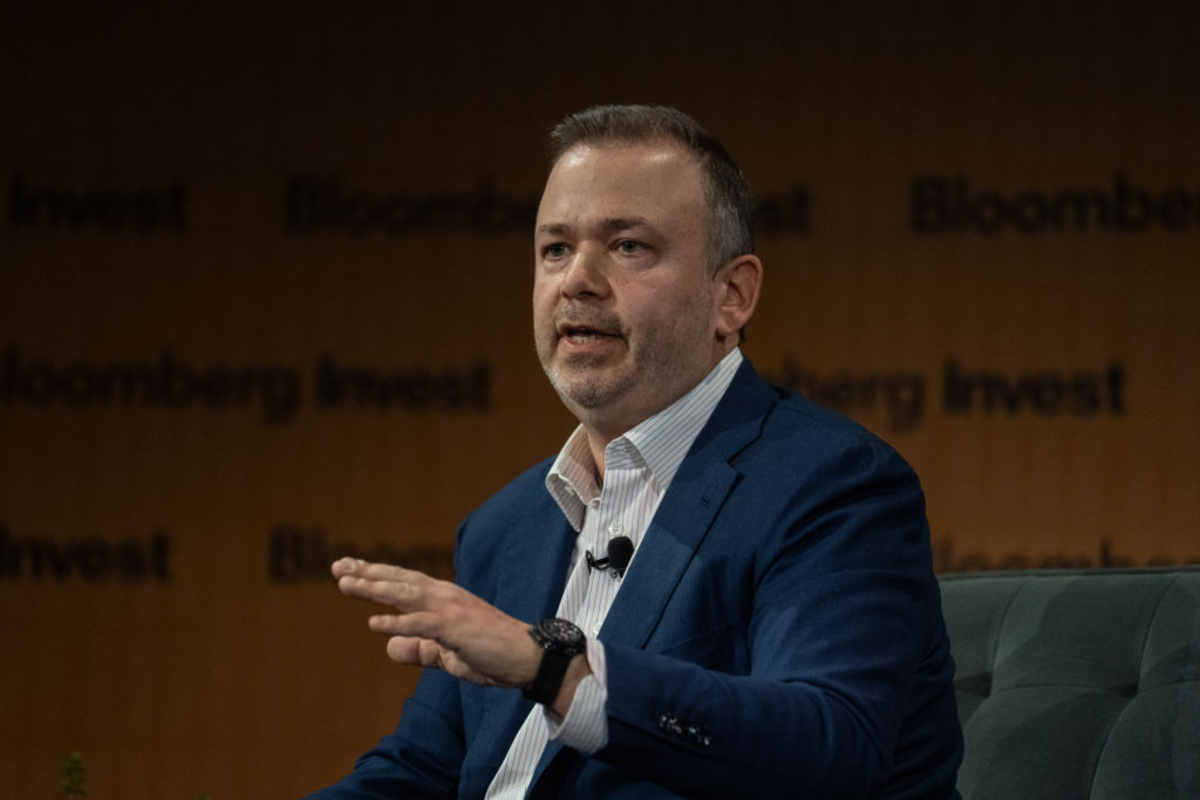
To Jonathan Simpson-Dent, being labelled a fraud, a liar and a romantic luddite has been one of the less challenging aspects of the two years he has spent fending off an activist assault on one of Britain’s oldest investment trusts.
“It’s quite easy to defend those kind of accusations,” the chair of Edinburgh Worldwide (Ewit) reflects, “Because the mudslinging is unwarranted and there’s absolutely nothing to it.”
He had been warned, he says, that clashes of this nature “tend to get ugly” – that ad hominem attacks are often part and parcel of big activist campaigns. Much harder to come to terms with has been the notion that in less than a month – after more than a century as a mainstay of Britain’s storied investment trust scene – Ewit will change beyond all recognition, under his tenure.
“Emotionally it has been very tough,” he says, reflecting on the harsh reality he and the closed-end fund run by Scotland’s Baillie Gifford face. “Because we’ve fought like crazy to make Edinburgh Worldwide a shining light in the investment world… and there aren’t many others out there like us.”
Simpson-Dent is speaking to City AM a fortnight after Ewit rocked much of the Britain’s cosy trust community by giving its army of retail and institutional investors a chance to exit the fund ahead of its upcoming annual general meeting. The decision was tantamount to throwing in the towel after an especially acrimonious battle to rebuff a wave of unwanted advances from its biggest shareholder, Saba.
Since half way through 2024, the US activist hedge fund – run by its uncompromising founder Boaz Weinstein – has been building its stake in Ewit with the aim of pushing through major changes to the trust’s governance and investment strategy. And until last month, the efforts of the American fund, which specialises in exploiting financial arbitrage opportunities, had largely gone unrewarded.
A combination of Saba’s mere presence as a major shareholder and an improvement in the fund’s performance may have helped reduce the trust’s discount – meaning the difference between an investment trust’s shares and the net value of its portfolio (NAV). But at two separate shareholder showdowns – one at the start of 2025 and the other in January of this year – its proposals for a new-look board and manager were roundly dismissed by Ewit investors.


Not acting ‘would have been reckless’
Rejection, however, appears only to have made the US activist more determined. And despite being offered the chance to exit its position at NAV by Ewit’s board, Saba has since tabled a third round of resolutions, just two months after losing the second vote. This third pitch will – either way – prove to be final. Because, faced with dwindling motivation from shareholders to vote and the fact that turnout at AGMs tends to be lower than specially requisitioned meetings, Simpson-Dent felt the odds were now firmly stacked against him – and acted.
“When you apply that natural reduction in voter turnout to the slender majority that we won on the second defence campaign, there’s a strong probability that we’d actually lose the AGM,” he says. “So that gave us a choice.”
The choice, in his mind, was clear: push ahead with another high-risk defence campaign – ploughing more of the trusts’ finite resources into the PR and investor relations machinery that that avenue would entail. Or grant shareholders a way out on the current board’s terms, via a process known as a tender offer.
“Just keeping everything crossed and hoping that we got through it would have been a bit reckless. And so our pragmatic response was, ‘If there’s going to be a change of control, we don’t want that to be uncontrolled.’ The only fair thing to do was to offer them an off-ramp of some sort.”
The move, which shareholders need to decide on before 8 April, would break-up the trust in all but name. The fund managers would sell down its liquid holdings initially – which tend to be in high-growth companies – and return the proceeds to shareholders. Down the line, the managers would also look to extricate them from the trust’s flagship holding: Space X. Elon Musk’s rocket-maker remains a private company, meaning its shareholders can only buy or sell its shares at a liquidity event, like a fundraising round or – more likely – a public market debut.
Saba took a fortnight to construct its response to the tender offer. But when it came it was excoriating. In an open letter to the trust’s investors, the American fund accused Simpson-Dent of “adopting a ‘take the ball home’ strategy”. Ewit’s chair, they argued, was forcing shareholders into a rushed decision simply because his own fate was sealed.
They also tabled their own counter offer, giving shareholders three options. The first, to exit the trust immediately at NAV. The second, to exit at NAV after any Space X liquidity event but before any change to the investment philosophy. And the third, to retain their investment in the trust. The suite of options, they said, “would provide shareholders a clean exit, on their own terms, at a time of their own choosing”.
To Emma Bird, head of investment trusts at Winterflood Research, Saba’s gambit could be enough to convince some shareholders to side with it. But the push has also triggered fresh suspicion. Much of Saba’s argument, hitherto, have coalesced around its plans to replace Ewit’s board with three independent, arms-length directors, who, once in place, would overhaul the trust’s investment strategy. But if those directors were truly independent, Bird says, there is no way Saba – as a shareholder – could strong-arm them into carrying out the course of action laid out in its counter offer.
“That kind of suggests that Saba has influence over this new board,” she tells City AM. “And that goes against everything they have been saying about those nominees being independent and taking a fresh view on the future of the trust if they are appointed.”

Saba campaigning on multiple investment trusts
Should Weinstein’s efforts fail with Ewit, there are other fronts on which the US hedge fund can still battle it out. At the onset of its activist campaign in 2024, it took up large positions in no fewer than seven investment trusts, forcing major shareholder showdowns at each. Investors overwhelmingly rebuffed those advances, but, as with Ewit, the fund has stuck around on its investor base.
Last month, Impax Environmental Markets, an ESG trust with a climate-focused mandate, was forced to issue a tender offer of its own. Doing so will help “avoid the risk of Saba gaining control and changing the company’s mandate”, it has argued.
Tech and telecoms-specialist Herald is also locked in negotiations with Weinstein. Its board hopes it can convince him to take some profits on what has proved a lucrative investment without having to resort to the same ultimatum as Impax and Ewit. But in a sign it is girding its loins for those crunch talks to hit the buffers, its investment manager is already selling down its more illiquid holdings, small-cap companies to avoid a returns-sapping firesale should the negotiations go nowhere.
To both Impax and Ewit, the activist onslaught has laid bare a swathe of regulatory issues in the investment trust space; ones which they are already taking up with the Financial Conduct Authority. Chief among their concerns is the fact that – thanks to its position as the largest investor in both trusts – it can keep requisitioning shareholder votes even after being rejected on several occasions. Another gripe is the more relaxed standards to which its communications – as an investor – are held compared to theirs.
“A public company board needs to go through huge scrutiny, and anything it says in the market needs to be fact checked and approved by lawyers,” says Simpson-Dent. “They can just throw mud as they see fit, and confuse people through fair means and foul.”
Any overhaul in regulation would undoubtedly come too late to prevent the effective break-up of Ewit and the defenestration of its chair. And in Saba’s eyes, one would be totally redundant. As old as it Edinburgh Worldwide is – it can trace its roots back to the Victorian era – it is still a listed company and not, as Saba’s letter to shareholders observes, a “public good”. It has a fiduciary duty to shareholders and thus, Weinstein argues, should be subject to the same rules as any other public company.
Simpson-Dent insists he accepts that. That, notwithstanding the harsh reality that the 130-year-old institution faces on his watch, Ewit exists to maximise returns to its ranks of institutional and retail investors at their behest. His problem, he says, is with the aggressor which, despite its best efforts, has failed to convince the investor-base its plans are in their interest.
“I’m not anti-activist at all,” he says. “Activists have a role in any market. But ultimately, our investors have rejected these guys twice. And they need to feel that they’ve got a voice, and their voice can be heard and listened to.”


