












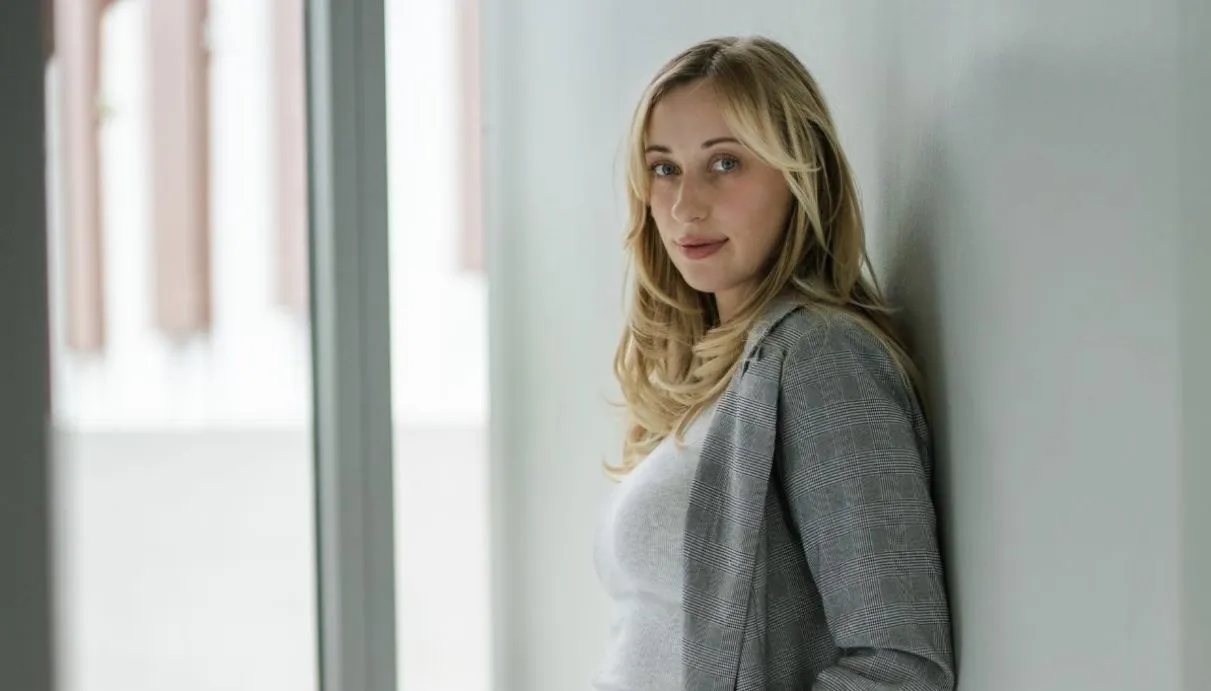
From a childhood shaped by uncertainty in Ukraine to leadership inside fast-moving entertainment environments, Hanna Azarenko has built a career around making complex creative teams actually function.
Hanna Azarenko works in a part of the entertainment world that most audiences never stop to think about. She helps build the systems that allow film productions to come together across countries, time zones, and production demands without losing speed or structure. The public sees the finished project, the artist, the rollout, the cultural moment. Her job is to make sure the people, payroll, logistics, and operating model behind that work can hold.
That role matters more than ever in entertainment and media, where teams are increasingly fluid, international, and built around projects rather than fixed departments. Azarenko has made that reality her specialty. She focuses on how creative organizations manage fluid teams, international contributors, and fast production cycles in ways that remain workable under pressure.
“I work best in environments that are moving fast and changing constantly,” Azarenko says. “That is where structure becomes most valuable.”
What makes her story stand out is that the skills behind that work did not come from one neat corporate ladder. They were shaped much earlier, under very different conditions. Azarenko comes from a small town in Ukraine that has been impacted by war. She learned early to adapt under pressure, stay calm when her situation changed suddenly, and find order when no clear structure existed. Those instincts later became professional strengths.
“You learn quickly in unstable environments that waiting for perfect conditions is not an option,” she says. “You learn how to keep moving, how to read people, and how to solve what is in front of you.”
Her path then carried her through Ukraine, Russia, China, and the United States, exposing her to very different cultural, business, and organizational settings. That range became foundational. It trained her to notice how communication styles shift across contexts, how expectations change from one environment to another, and how teams can break down when those differences are ignored. It also gave her an unusually practical form of cultural intelligence, one built through experience rather than theory.
“I got used to operating across differences very early,” Azarenko says. “That ended up becoming one of the most useful parts of how I work.”
That focus has led her into high-profile creative ecosystems in the United States. Azarenko currently leads HR at EDGLRD, a recognized film creative production company led by filmmaker Harmony Korine. The company operates in media, entertainment, and visual culture spaces connected to internationally recognized artists across music, fashion, and lifestyle. Within that context, Azarenko’s work goes far beyond traditional HR responsibilities. She designs and manages the infrastructure that supports film productions across borders—covering global payroll, compliance, hiring models, and talent coordination. Her role often sits at the intersection of production operations and workforce strategy, where even small breakdowns can impact timelines and budgets.
“My role is to keep moving pieces aligned when the environment is changing fast,” Azarenko says. “That is what lets the creative work keep moving.”
She also built a project-based workforce model that supported international productions, including a feature film presented at the Venice Film Festival, where she was credited for her contributions to production operations and talent coordination. Those accomplishments say a lot about the kind of operator she is. She is not working at the edges of production. She is creating the underlying structure that allows it to function across borders and at scale.
That is part of why her recognition by Deel landed so strongly. Azarenko was selected for “The Deel 100,” a global campaign spotlighting people building the future of global work. The campaign included billboard placements in major cities such as New York, San Francisco, and Sydney. She was also invited to join a global payroll community as a founding member. For someone whose work often happens behind the scenes, that kind of public acknowledgment matters.
“It was meaningful because it recognized a type of work that usually stays invisible,” Azarenko says. “A lot of people talk about the future of work. I am more interested in building the systems that make it function.”
That point gets to the heart of her perspective. Azarenko is not interested in vague talk about flexibility or innovation. She is interested in how modern creative companies actually operate. That means thinking seriously about contributor-based teams, cross-border hiring, operational clarity, recognition, and the practical limits of traditional employment models inside fast-moving industries. She argues that creative companies are evolving toward more fluid, skills-based structures, and that their systems need to evolve as well.
“Creative production does not fit neatly inside old workforce models anymore,” she says. “The structure has to reflect the way people actually work now.”
That view also shapes where she wants to go next. Azarenko sees her future in continuing to build and lead global workforce systems for borderless, project-based teams. She wants to deepen her role in the broader conversation around how modern work is changing, especially in industries where freelance and full-time contributors often work side by side and where attribution still does not always reflect how much people actually shape a project. She also plans to write more about these questions, not from a distance, but from lived practice inside the environments themselves.
Azarenko represents a kind of leadership the entertainment world increasingly depends on. She understands how high-profile creative environments function when they are under pressure, when the team is international, when the production is moving quickly, and when the old systems are no longer enough.
“The entertainment world runs on talent,” Azarenko says. “But talent alone is not enough. You need an operating model that lets people do their best work without chaos taking over.”
Hanna Azarenko may not be the face in front of the camera, but she is helping determine how the work behind it comes together.
For more information about Hanna Azarenko, visit her LinkedIn profile.


