













| Updated:

As the English cricket season begins again, the demise of Middlesex should be ringing alarms bells at fat cats Surrey and the ECB, writes Ed Warner.
Of course the forecast is for biting winds across the country this weekend. What did you expect? The English cricket season starts tomorrow.
Expect confected hoopla about The Hundred, its teams now under new ownership with some rebranded; an England team talking a big game under old leadership with tattered reputations to restore; and the scratched record about the stark financial disparities between counties playing on repeat.
The divide between cricket’s haves and have-nots is well-understood. The England and Wales Cricket Board has gone some way towards addressing it by establishing long-term investment pots for each county from the proceeds of its sale of franchises in The Hundred.
However, infrastructure projects will take years to bear fruit and, right now, some counties are operating within short-term financial constraints that make it near impossible to compete on the field against those who host internationals and The Hundred.
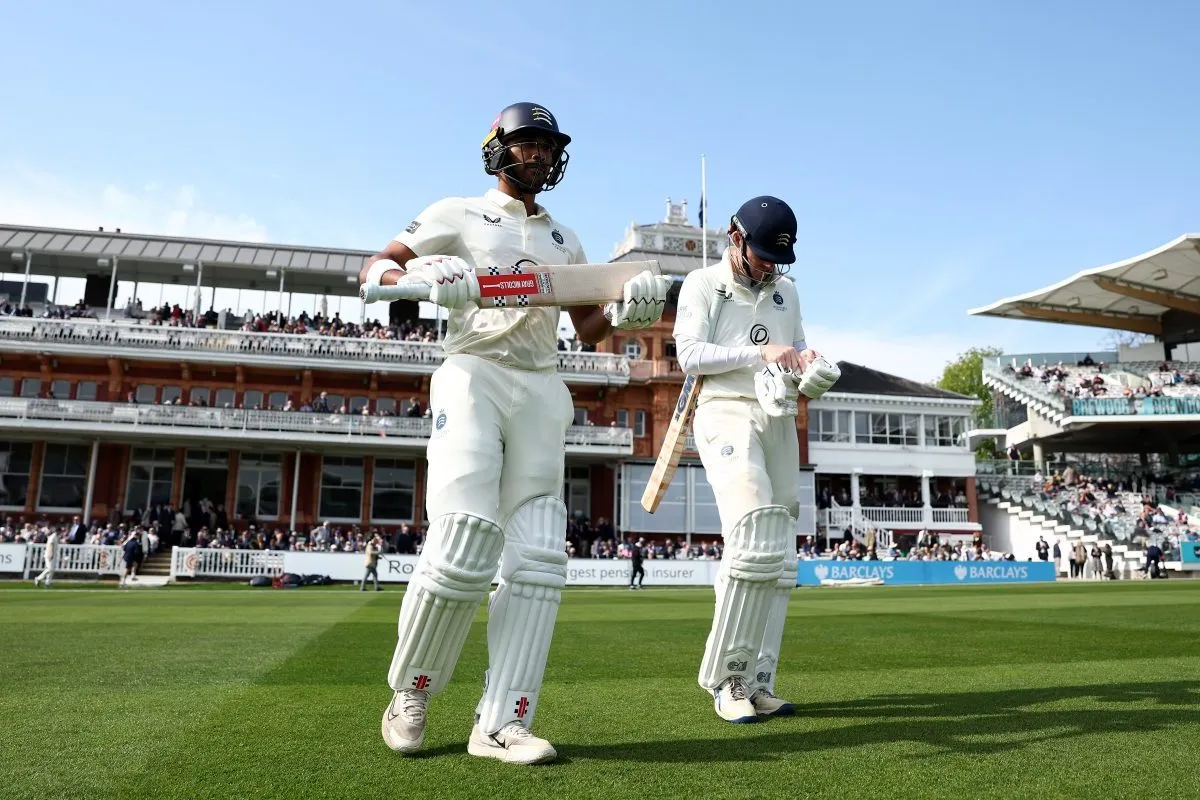
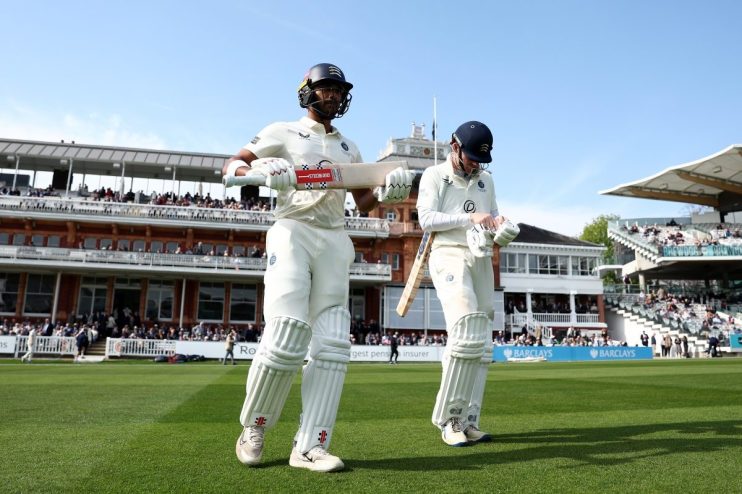
Nowhere is this distinction more painful than at Middlesex, a county dealt the weakest of hands in merely being a tenant at Lord’s and whose leadership has repeatedly managed to play that weak hand extremely badly.
Forget for now the long-running legal dispute with its former chief executive – and the current one being on an enforced leave of absence under a misconduct investigation. The county’s latest annual report makes grim reading and highlights the current tensions between have-not counties and the ECB, and the effect on sporting competition.
Tension exists within counties too. Just this week a clutch of storied former Middlesex players, with Mike Gatting to the fore, have demanded the resignation of chairman Richard Sykes.
Their complaint is a sporting one. Coming from seasoned professionals, it constitutes a strange motivational device for the current crop of Middlesex players at the start of a new season.
“Around the counties the men’s teams now are variously regarded as ‘a soft touch’ and ‘lacking fight’,” reads the incendiary letter to Middlesex members from the former players.
Gatting was himself a director of of the county for the maximum allowable three terms of office up until 2025, so this softness largely developed on his watch.
Middlesex’s financial results for the past year show that 55 per cent of its £7.3m turnover derived from the ECB. Just £1m came from membership fees, the annual subs from the club’s supporter owners.
A potential modest profit was turned into a £100k loss after £407k was spent on efforts to find a solution to the county’s structural bind – namely roosting at Lord’s, sharing matchday revenues with landlord the MCC, and severely restricted in the number of days on which it can use the iconic ground during the prime summer months.
Thinking of buying a Middlesex membership this season? You’ll be able to watch just one day of cricket at Lord’s between 24 May and 24 September.
This exceptional spending roughly matched a first payment received from the ECB from The Hundred proceeds. But the governing body declined to endorse a transaction that the Middlesex board was pursuing while incurring these costs. Members have been left grumbling about hefty fees paid to consultants and travel expenses incurred during this aborted project.
The net effect is that Middlesex’s reserves have sunk to just £5k. Meanwhile its chairman is bemoaning the fact that the ECB won’t allow the windfall from The Hundred to be spent on the playing squad – although Gatting and his cohort might argue the board wouldn’t know how to spend any extra money productively anyway.
Rugby union’s experience in recent years shows that a sport’s top club competition is only as strong as its weakest member. The Prem has shrunk to just 10 teams and its clubs are now anxious to engineer its expansion. Moreover, the absence of relegation jeopardy spawns too many dead-rubber matches towards the end of each rugby season.
Cricket, by contrast, has managed to cling on to a two-division structure with its traditional 18 first-class sides – largely thanks to the revenue generated by the England men’s team and its distribution to those counties.
However, while The Hundred may now be seeding greater long-term stability across cricket, in the near term it will likely solidify the competitive gulf dividing the game.
As for Middlesex, the chairman’s statement in its annual report hints at a possible demutualisation of the club. Some have mooted a sale to the MCC, others to private investors for whom rights to use Lord’s would constitute a trophy asset – even if access is constrained to the chilly shoulder weeks of the English cricketing season.
There’s even talk of a new-build home ground. This might seem fanciful, but investors in cricket globally have shown willing to dream big.
Somehow a solution must be found, and it is as vital to the members at England’s wealthiest county, Surrey, as it is to their downtrodden counterparts on the other side of the Thames.
The ECB needs to step in and engineer a fix. It has the connections and the resources, but is it bold enough? First, though, it may find itself sat in the balcony while Middlesex members decide their beleaguered chairman’s fate.
Twist and shout
No sooner had I penned a column on the likely advent of AI judging in Olympic sports than I was contacted by a company that is developing just such capabilities.
Owl AI is the outfit in question. Its CEO Josh Gwyther tells me that progress is happening at such a pace in collaboration with international governing bodies that machines may replace humans in some judging capacities in some sports in time for the LA28 Olympics.
No surprise that Gwyther hails from Google and that Owl AI’s funding has come from a range of tech heavyweights.
Last weekend World Gymnastics debuted a “real-time judging visualisation” system powered by Seiko at its World Cup. The objective was greater immediacy and transparency in scoring decisions.
A step forward, but still ultimately driven by human judgement. Give it a few years and such innovations might feel very yesteryear.
At first I thought that AI judging would only be affordable and applicable in elite sport. But the more I scratch the surface, the clearer it is that the real win could be in amateur sport – in coaching athletes as well as in competition – such is the calibre of modern smartphones, the power of technology and the very low marginal cost of delivery once developed.
It all comes down to the ability of AI to analyse moving images and map them against the success criteria of sports such as diving, gymnastics and combat sports in close to real time.
While I still thrill at refereeing controversy in football, I’m all for removing it entirely from judged sports. But how much further could things go?
Let AI apportion blame when a scrum collapses in rugby, for example, and our spectator experience would be richer, surely? And conceptually, that must be possible.
Double trouble
I can’t have been the only sad running sack who saw news of plans for the first two-day London Marathon in 2027 and whose initial thought was to wonder whether I could manage to run a full marathon on both the Saturday and the Sunday, and whether the entry system will allow a double.
There will be inevitable gripes from inconvenienced Londoners about travel disruption, logistical headaches and concerns about volunteer fatigue, but I applaud the initiative to open up this iconic event to as many runners as possible.
This is being billed as a one-off. My bet though is that it becomes the London Marathon’s regular set-up – maybe not in 2028 as the city and organisers reflect on lessons learned, but every year thereafter.
And on personal reflection, once in the weekend would be enough for me. Discretion/valour etc.
Ed Warner is chair of GB Wheelchair Rugby and writes his sport column at sportinc.substack.com


