












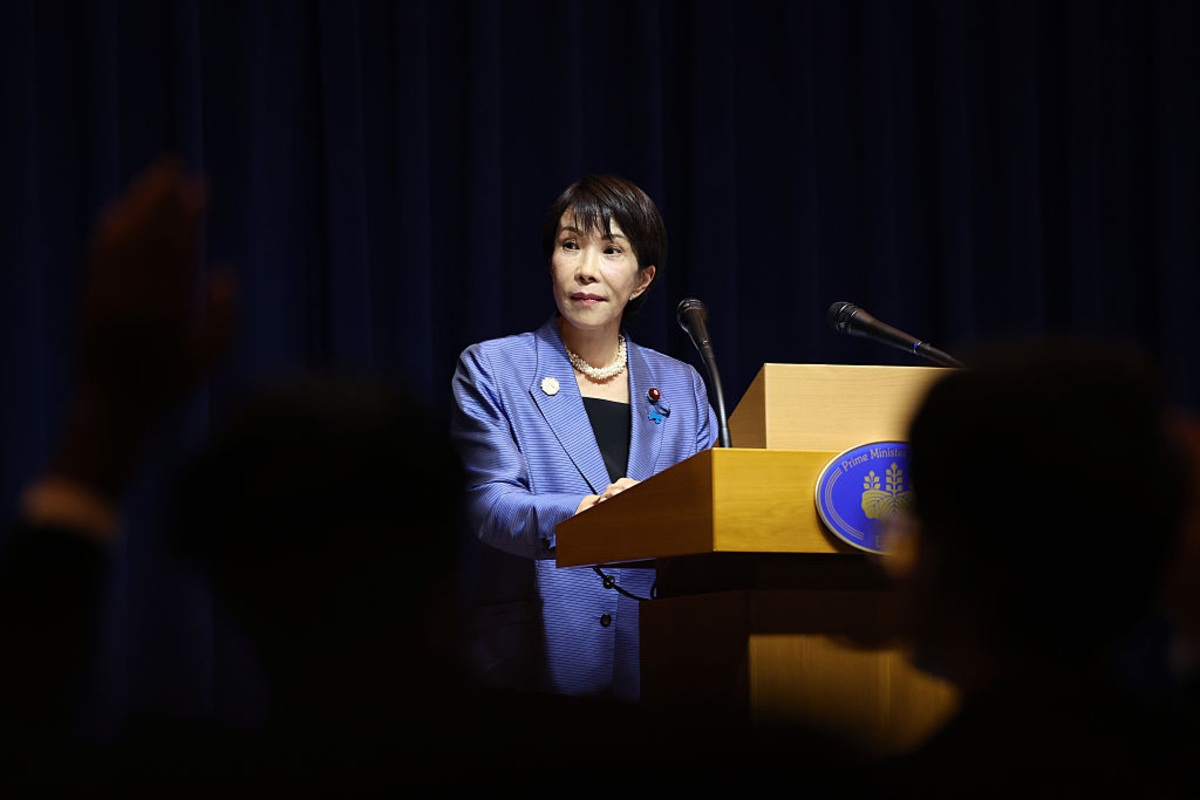


The yen slipped sharply against the US dollar on Wednesday morning, after Japan’s prime minister Sanae Takaichi picked two ‘dovish’ candidates for roles at the country’s central bank.
Takaichi nominated academics Ayano Sato and Toichiro Asada who both favour economic stimulus and lower interest rates, raising questions they could challenge Bank of Japan governor Kazuo Ueda’s efforts to normalise policy and keep raising rates.
The yen weakened 0.5 per cent against the dollar to 1.55 yen, following news of the nomination.
This came after a slump on Tuesday following reports that Takaichi had held a brief meeting with Ueda in which she expressed reservations about the need to continue raising interest rates.
Landslide victory
The nominations to the BOJ’s nine-member policy board follow Takaichi’s landslide election victory last month, with her Liberal Democratic Party winning a majority in the lower house.
Takaichi, who has been dubbed Japan’s ‘Iron Lady’, roared to victory after voters were encouraged by her pledges to revitalise the country’s sluggish economy, with the yen rising briefly in the wake of the election.
But, the currency has been weakening steadily over the last two weeks as both investors and analysts become increasingly concerned about Takaichi’s spending plans.
The relationship between the markers and prime minister have been strained since she announced a $135bn spending plan in November 2025, exacerbated by her promising a two-year suspension to the eight per cent consumption tax on food.
Analysts have raised concerns that she may be unable to fund her plans without triggering a debt or currency crisis.
The suspension is expected to cost roughly 5 trillion yen per year, alongside potential social security cuts, increases to defence spending and other pro-growth spending policies.
Last Friday, Takaichi used her first major policy speech to parliament to set out what she branded “responsible and proactive fiscal policy”, but markets are unconvinced she will push higher spending even if that sends inflation past the BOJ’s two per cent target.
Driving policy
Since the election, analysts have noted the vacancies as an early test on Takachi’s monetary policy stance and her determination to shape the central bank’s decision making.
Ipek Ozkardeskaya said: “Takaichi voiced apprehension regarding further Bank of Japan rate hike, which could temper the impact of her expansionary fiscal plans aimed at boosting growth, and nominated two reflationist academics to join the BoJ policy board, suggesting that the yen will remain under pressure.”
But others argued the nominations would probably have a limited effect on the bank’s policy, as Ueda has high levels of control to exercise over the board.
While the yen slumped, the stock market rallied, with the Nikkei 255 jumping 2.2 per cent, trading at the 58,583.12 mark, due to the nominations being “seen as favouring more stimulus”.


