












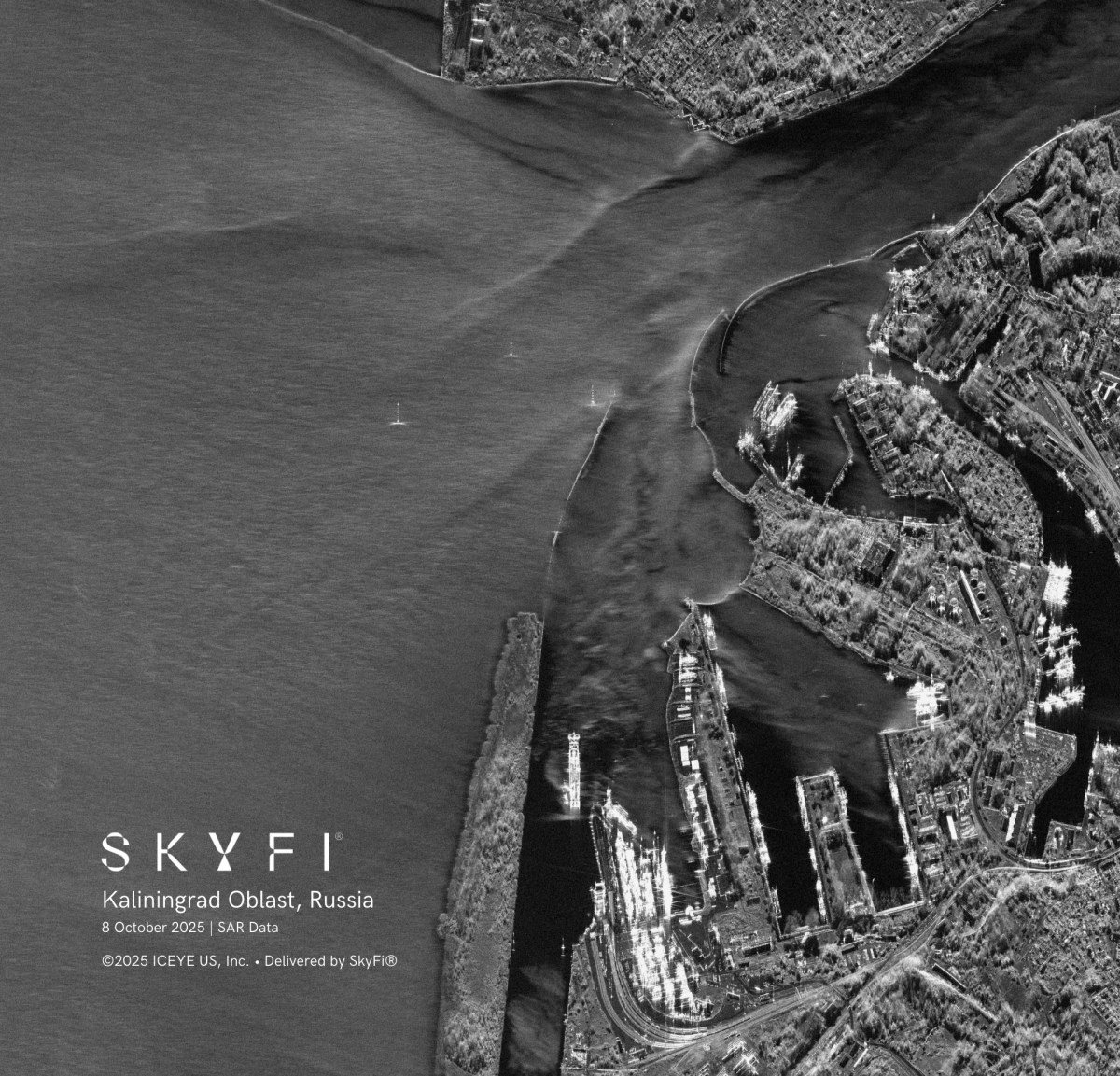
There are thousands of satellites orbiting the Earth, and an increasing number of them are able to capture all types of images in near real time.
It used to be a somewhat cumbersome process to access those images. But Austin-based startup SkyFi has built a platform that acts as a sort of “Getty Images” for more than 50 geospatial imagery partners that has proven popular in the worlds of finance, defense, infrastructure, and insurance — to name a few.
That popularity escalated as SkyFi began offering more analytics and insights to its customers through its website and mobile app, along with the ability to “task” satellites to capture images of a location at a specific time, CEO Luke Fischer recently told TechCrunch in an interview.
“I think the real goal for us is providing answers for customers, both government and commercial,” Fischer said. “Imagery is a commodity, or it’s closely becoming a commodity, [so it’s] not just about speed of delivery, but more importantly, speed of delivery of answers to customers.”
Being able to offer insights along with easy-to-access imagery is a big reason why SkyFi was just able to close a $12.7 million Series A funding round, according to Fischer.
That’s reflected in the investor makeup of the round. It was co-led by climate-focused fund Buoyant Ventures and IronGate Capital Advisors, which invests in dual-use companies. Other investors included DNV Ventures (the investment arm of 160-year-old maritime company DNV), Beyond Earth Ventures (a space-focused firm), and TFX Capital (which has made a number of defense-related space investments).
Fischer said he and co-founder Bill Perkins — who comes from the hedge fund world, hence the emphasis on generating actionable insights — initially only sought to raise a round of about $8 million.
Techcrunch event
San Francisco
|
October 13-15, 2026
But 2025 was a record year for defense-related investments, and SkyFi received more investor demand than expected, Fischer said. The company upped its target to $10 million, and again to $12 million, before arriving at the $12.7 million figure after some strategic investors joined the round. (One was DNV; Fischer declined to name the other on the record.)
Fischer said SkyFi used to have a harder time convincing satellite imagery providers to hand over access to their data. Now, he said, onboarding new providers is “table stakes.”
“It took a took a little bit for us to get to this point, [but] we have largest virtual constellation of assets. That means we have all the data supply in the world for us, all the different sensor types,” he said. SkyFi has been able to leverage all of that data and, crucially, the many requests it’s received from customers over the last few years to build up analytical offerings worth selling to commercial and government customers.
“We know better than anyone what they’re asking for,” he said.
Fischer said he learned first-hand how powerful this kind of feedback loop can be from his time helping lead Uber’s Elevate division.
“Uber has data on where people move in the world. They layer different products, the bikes, the scooters, the electric aircraft, the drone delivery. We have that equivalent data on what people are looking at in the world they’re asking of that data,” he said. “It gives us a much better purview. And again. We’re software first, so I don’t have the burden of having to pay for hardware capital expenses.”
Some of those customers will want to do their own analytics, like the hedge funds, Fischer explained. But most are increasingly interested in what SkyFi has to offer on the insights side, he said.
The company plans to use the new funding to expand on all this, though Fischer is clearly proud of building a product that is deeply capable but inherently approachable, to the point that even his family uses the product.
“My teenage daughters task satellites for their high school, and now college, homework on their iPhones,” he said.


