













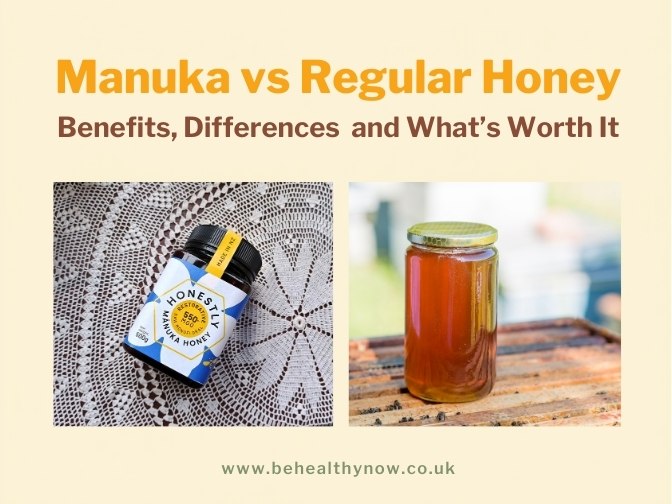

Honey feels like one of those simple foods, until you stand in front of a shelf and realise there are about twenty different jars staring back at you. Then you spot manuka honey, see the price, and start wondering if it’s genuinely better… or if it’s just clever branding.
In the manuka honey vs regular honey comparison, the big difference is simple: manuka is a specific honey with tested antibacterial activity that’s often stronger and more predictable.
Regular honey can still be excellent, but its benefits vary depending on the floral source and how it’s been processed.
Because there’s a lot of hype around honey, I went back to studies and reviews and focused on benefits that have actually been shown in research. I’ll also touch on raw and local honey along the way, since those are often part of the same conversation.
What is manuka honey, really?
Manuka honey is honey made when bees collect nectar mainly from the mānuka plant (Leptospermum scoparium), which grows in New Zealand and parts of Australia. It’s not a “style” of honey like runny or set. It’s a specific honey linked to one plant, and that’s why it’s treated differently from general “flower” or blended supermarket honey.
What do the manuka ratings on the jar mean?
Most manuka jars show either MGO or UMF.
MGO is short for methylglyoxal. It’s a natural compound found in manuka honey that’s linked to its stronger antibacterial action. The higher the MGO number, the more MGO the honey contains (usually shown as mg/kg).
UMF is a broader grading system. It looks at several manuka “markers” to confirm the honey is genuine manuka, and it also gives you an idea of strength.
What counts as “regular honey”?
‘Regular honey’ sounds straightforward, but it can mean a few different things. Sometimes it’s a blended supermarket jar. Other times it’s a single-flower honey like acacia or chestnut. And then you’ve got raw and local honey, which can be a completely different experience again.
“Regular” or “normal” honey could be:
- Blended supermarket honey (often mixed from multiple regions and flowers to taste the same every time)
- Single-flower honey (like acacia, linden, chestnut, orange blossom, etc.)
- Raw honey (less processed, usually not heavily heated or ultra-filtered)
- Local honey (from a nearby beekeeper or local area, sometimes raw, sometimes not)
This matters because honey isn’t one identical product. The taste, thickness and even the “feel” of it can change depending on the floral source, and processing can change things too.
Some honey is gently strained and left alone. Some is heated and filtered to stay clear and runny for longer.
None of that automatically makes it “good” or “bad”, but it does help explain why two jars labelled “honey” can behave very differently.
And it’s also why the benefits people expect from honey can be all over the place. If one person is using raw single-flower honey and another is using a blended supermarket honey, they’re not really comparing like with like.
Manuka vs regular honey: benefits compared
When I looked through the research, a clear pattern showed up. Regular honey has the strongest evidence for a couple of everyday uses, especially soothing coughs, and it also shows up in studies on wound dressings.
Manuka honey can do many of the same everyday things, but it has a couple of extras. It’s usually stronger on the antibacterial side, and it often comes out higher in antioxidants than very light honeys (like acacia), which is part of why people pay more for it.
Quick comparison: what each honey is actually good for
| Benefit | Regular honey | Manuka honey |
|---|---|---|
| Sore throat and cough | Often helps soothe and ease cough (most studies use honey in general) | Also soothing, but not clearly better in cough research |
| Burns and wounds | Best results come from medical-grade honey in dressings | Also used in dressings, but medical-grade matters most |
| Skin and skincare | Moisturising and can help keep skin bacteria/fungi in check | Similar use; not automatically better for skincare |
| Antibacterial and antifungal effects | Can be strong, but varies a lot by type and handling | Often stronger and more predictable |
| Teeth and gums (plaque/bleeding gums) | Linked to fewer plaque-causing bacteria (braces study) | Linked with less plaque and gum bleeding in oral-health research |
| Gut and stomach | Best evidence is for diarrhoea support when used in rehydration drinks | Interesting lab findings for bacteria like H. pylori; less proven in people |
| Immune support | More of a supportive food than a true “immune booster” | Supportive food. One flu cell study, but no proof it prevents infections |
| Antioxidants | Varies a lot. Darker honeys (and honeydew) are often higher. | Usually high (higher than very light honeys), but some darker honeys can match or outdo it. |
| Blood sugar and cholesterol | Some trials show small improvements, especially with raw/single-flower honey | Limited manuka-specific research; likely similar to other raw honeys |
Coughs and sore throat
For coughs, honey is one of the few home remedies that keeps showing up in research.
A 2023 systematic review looking at children with a short-term cough (usually from a cold) found honey generally worked better than placebo, no treatment, or common cough medicines. It helped ease symptoms and improved sleep. The authors also point out that the studies aren’t perfect, so the overall evidence quality is rated as low.
For sore throat, there’s less research, but it’s in the same “soothing” category. One study in adults found that adding honey alongside standard sore-throat care helped people feel better faster and improved satisfaction.
The main point here is that most of the cough and sore throat research is on honey in general, not manuka specifically.
So if you’re mainly using honey to soothe your throat and calm a cough, a good jar of genuine honey is usually enough.
Wounds and skin: is manuka better?
If you’re choosing between manuka and regular honey for wounds, the truth is this: medical-grade honey in a proper wound dressing wins. That matters more than whether the honey is manuka or not.
What “medical-grade honey” means
Medical-grade honey is honey that’s been prepared for wound care. It’s sterilised (often using gamma irradiation) so it’s safe to use on broken skin and doesn’t introduce unwanted germs into a wound.
That’s why it’s a better and safer option than using a random jar from the cupboard.
What the research shows for burns and wounds
The strongest evidence is for honey dressings, especially for second-degree (partial-thickness) burns. A Cochrane review found these burns healed around 4 to 5 days faster with honey dressings than with some standard dressings.
Manuka is often used in wound products because its antimicrobial activity tends to be more reliable, but it’s not automatically better than every other honey in every test. A 2023 review even notes that some local honey types may be just as good, or sometimes better, in antimicrobial testing.
What about skin and skincare?
Honey shows up in skincare for a simple reason: it’s naturally moisturising, and it can help keep bacteria and fungi in check on the skin. Reviews also mention honey being used in treatments for things like dandruff and diaper dermatitis.
One useful detail if you’re looking at skincare products: honey is usually used in smaller amounts (often around 1% to 10%) because pure honey is sticky and runny on the skin.
Antibacterial and antifungal: which honey is stronger?
You can see why honey shows up in wound care once you look at its germ-fighting side.
Both regular honey and manuka can slow down the growth of bacteria (and some fungi). The difference is that manuka tends to be more consistent, while regular honey can be anywhere from “mildly active” to “surprisingly strong”, depending on the floral source and how it’s handled.
Why honey can slow germs in the first place
With many “regular” honeys, part of the antibacterial effect comes from tiny amounts of hydrogen peroxide that form when honey mixes with moisture. Hydrogen peroxide is a mild disinfectant. In honey, it’s made by a natural enzyme (glucose oxidase) that gets more active when honey is diluted.
Manuka has another advantage: it naturally contains extra compounds that still do their job even when that peroxide effect is weaker. The best known is MGO, which is linked to manuka’s stronger and more predictable antibacterial action.
That said, manuka isn’t always “stronger” against every bug. Some local honeys can match it, and occasionally even come out better, depending on the type of honey and the bacteria or fungus being tested.
Plaque and gum inflammation
This is one of the more practical places where honey’s “germ-fighting” side might matter.
There’s a small pilot study where people used a manuka honey confectionery for 3 weeks, and they ended up with less plaque and less gum bleeding compared with the control group. It’s not a huge study, but it’s a real finding worth mentioning.
Regular honey has some evidence here too. In one study with teenagers wearing braces, chewing honey was linked to fewer plaque-causing bacteria in the mouth, which is a good sign for oral hygiene.
Gut and stomach: what honey can do
This is one area where honey gets talked up a lot. A couple of uses do have decent support, but some “gut health” claims come mostly from lab research (meaning the honey is tested on bacteria in a dish, not eaten by people in a real-life study).
Diarrhoea and tummy bugs (human studies): The clearest evidence is for honey in general (not specifically manuka), used in an oral rehydration drink (fluids + electrolytes). In clinical studies in children, honey in the rehydration mix shortened bacterial diarrhoea and helped recovery.
Gut bacteria (early research): Reviews describe honey supporting beneficial gut bacteria in lab studies, but human results are modest so far. In one human trial, even UMF 20+ manuka didn’t noticeably shift gut bacteria levels in healthy adults.
H. pylori and ulcers (mostly lab studies): Manuka has shown activity against H. pylori in lab testing. But in a small human study, manuka honey didn’t eradicate H. pylori based on breath testing.
For digestion, the clearest human evidence is still for honey in general, mainly in rehydration drinks for diarrhoea. Manuka is still worth a look, especially when people talk about specific bacteria, but most of that is lab research so it’s more “supportive” than a guaranteed fix.
Immune support: what honey really does
Honey is often described as an “immune booster”, but that hasn’t been clearly proven in the simple, everyday way people mean it (like catching fewer colds).
Most of the immune research is done in labs, where honey is tested on immune cells. In those studies, honey can change levels of inflammation chemicals that are part of your immune response.
When you look at studies where people actually eat honey, the results are mixed and not strong enough to call it a reliable immune “upgrade”.
For example, a small study comparing manuka 12+ with another honey didn’t show a clear improvement in an immune marker.
And a 12-week trial in smokers using Tualang honey saw one inflammation marker improve while another moved the opposite way.
What about antiviral claims?
There are also some antiviral claims around honey, especially manuka. But the main evidence here is from lab experiments (not people).
In one flu study done on infected cells (not in people), manuka slowed the influenza virus in that lab setup. And when researchers paired it with common flu antivirals in the same experiment, the combo looked stronger.
So, for immune support, I’d treat honey (regular or manuka) as a supportive food, not a proven way to prevent or treat infections. Although, if you enjoy manuka, there’s no harm in having some when you’re ill.
Antioxidants: why some honeys are more “powerful” than others
Honey naturally contains antioxidants (plant compounds from nectar) which can help your body deal with oxidative stress (everyday wear and tear in your cells). That matters for long-term health in general, but it does not mean honey is “preventing disease” on its own.
However, the amount of antioxidants depends a lot on the type of honey. Darker honeys often come out higher, but it’s not a perfect rule.
Manuka usually does well here. In some head-to-head comparisons, it came out higher than very light honeys like acacia.
At the same time, it’s not always top of the list. Honeydew (forest) honey and darker honeys like buckwheat, oak, chestnut, pine and fir can beat it, or match it sometimes, depending on what’s being measured.
One more interesting detail: one review found that when researchers put manuka honey through a lab test that mimics digestion, its antioxidants didn’t break down much. And when they applied that “digested” manuka to gut cells in the lab, it helped protect the cells from damage.
And what about the anti-inflammatory side?
This is where it gets a bit muddier.
Some of the natural compounds in honey get studied for both oxidative stress and inflammation – which is why the two topics often get mixed together. But they’re not the same thing.
- Oxidative stress = everyday “wear and tear” in cells
- Inflammation = your immune system reacting to irritation, infection, or injury
In test-tube research, honey sometimes looks like it can calm certain inflammation signals, which is why it gets labelled “anti-inflammatory”.
But when you look at human studies, the results aren’t consistent. Some inflammation markers improve in some trials, others don’t, and the pattern isn’t always the same. Most studies also use honey in general, not manuka specifically.
So I’d call the anti-inflammatory side promising, but not consistent enough to treat honey like an anti-inflammatory supplement.
Blood sugar and cholesterol: can honey make a difference?
There have been quite a few studies on honey looking at blood sugar and cholesterol.
In a large review of clinical trials, honey was linked to small improvements in fasting blood sugar and blood fats, and the best results tended to show up with raw (unprocessed) honey and certain single-flower honeys like robinia and clover.
A separate review that looked at “natural honey” across multiple trials found the same kind of thing for cholesterol: lower LDL and triglycerides, and higher HDL overall.
Where manuka fits in
There aren’t many studies on manuka specifically for blood sugar and cholesterol. But if you’re buying a raw or minimally processed manuka, it makes sense to expect it to behave more like other raw honeys than like a heavily processed blend.
And one practical point that really matters: in that big review, raw and single-flower honeys tended to perform better than processed honey, so a cheap blended supermarket honey usually won’t behave the same way as a raw, single-flower honey that still has more of its natural compounds.
So those are the main benefits where honey has the strongest real-world evidence. But there’s one topic that comes up sometimes online and it needs a calmer, more realistic explanation.
Honey and cancer claims: what looks promising (and what isn’t proven)
You’ll see some big claims online about honey and cancer. The honest version is simpler: most of the research so far is “early-stage” (cancer cells in a lab, or animal studies), not proper human trials. So it’s interesting, but it’s not something anyone should treat as a therapy. A 2024 review sums this up well.
Where manuka stands out is that it shows up more often in this kind of research than most supermarket honeys. For example, one 2024 study found that manuka honey slowed tumour growth in a breast cancer mouse model, and it looked even more effective when combined with a chemotherapy drug.
And in lab work, one study found manuka could push certain cancer cells toward cell death. You don’t need to remember the biology here. The takeaway is just: in some lab models, manuka seems more active than other honeys.
So if you’re reading cancer claims, I’d keep it grounded: honey can be part of a healthy diet, but it’s not a cancer treatment, and it shouldn’t replace medical care.
What about sugar? Is manuka better than regular honey?
After all the talk about antibacterial strength and antioxidants, it’s worth looking at the simple stuff too: the sugar and carbs on the label.
What I noticed looking across brands is pretty simple: most “normal” honey sits somewhere around the 70 to 80g sugar mark per 100g, and manuka isn’t automatically lower. Some manuka jars come out a bit lower, some come out higher, and even when it is lower, it’s usually not a dramatic difference.
Just see the table below for the different manuka brands and other honey types:
| Honey (per 100g) | Carbs | Sugars | Calories |
|---|---|---|---|
| Aldi Manuka 100 MGO (multifloral) | 83.1g | 71g | 336 kcal |
| Lidl Manuka 100 MGO | 86.9g | 85.9g | 350 kcal |
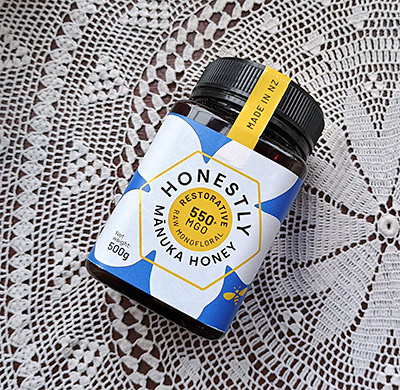
| Honestly Manuka 550+ MGO (monofloral) | 81g | 79g | 286 kcal |
| Rowse Clear/Runny honey | 81.5g | 80.8g | 329 kcal |
| Raw Health Organic Acacia honey | 75g | 75g | 302 kcal |
| Hilltop British Blossom honey | 76g | 76g | 307 kcal |
The main point is this: manuka isn’t reliably lower in sugar than regular honey. If you want a lower-sugar honey, you have to check the label, because the difference depends more on the brand and type of honey than on whether it’s manuka.

Taste and texture: why they vary so much
I’m a big honey fan and these days I mostly buy raw, local honey from a beekeeper. But I’ve tried pretty much everything over the years, from cheap supermarket jars to proper manuka.
The biggest difference for me is this: blended supermarket honey barely tastes like honey. It’s usually mild, very sugary, and you often don’t even know where it comes from.
Once you try single-flower (monofloral) honey, it’s a different world. Acacia is light in colour and mild. Chestnut is darker, stronger, and for me, much sweeter.
Manuka sits somewhere in the middle. The taste is clearly different from “standard” honey, but it’s not as strong as some forest-type honeys. To me it’s closer to a blossom honey, just with a more distinctive flavour that not everyone loves. My brother-in-law even described it as a bit “medicinal”, which I can understand.

Why manuka can taste so different from brand to brand
This surprised me too. If it all comes from the manuka plant, you’d expect it to taste the same, but it doesn’t.
A few simple reasons:
- Monofloral vs multifloral: multifloral manuka is mixed with nectar from other flowers, so the flavour can feel more “standard” and sometimes sweeter.
- Strength/grade: higher-grade manuka often has a stronger, more “medicinal” flavour (not everyone loves that).
- Moisture level: runnier manuka usually has more water in it, so it tastes lighter and the sweetness hits differently.
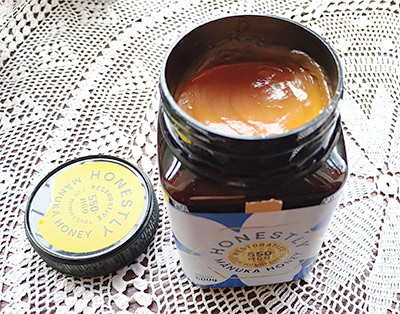
- Crystallisation / creamed style: thicker, creamier manuka is often partly crystallised.

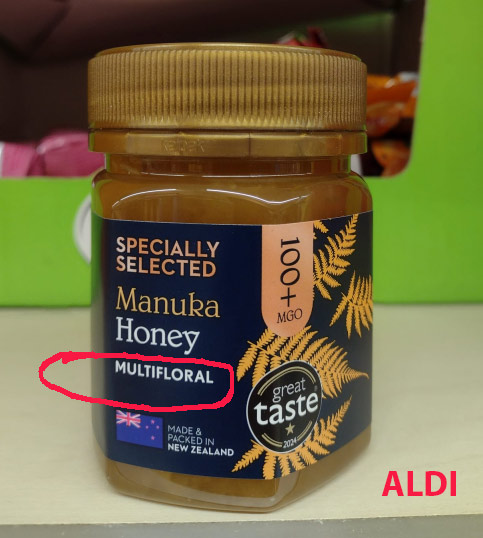
In my own tests, the differences were pretty obvious. Aldi’s manuka was very runny. Lidl’s was only slightly thicker. Honestly Manuka (monofloral, higher MGO) was thicker and creamier, and I found it less sweet than some regular honeys, which I actually preferred.
If you’re choosing based on taste alone, my honest suggestion is to try a small jar first. Manuka isn’t “bad”, but it has a specific flavour and texture that some people love and others really don’t.
Manuka honey vs regular honey: quick recap
Manuka and regular honey aren’t as different as the price tags make you think.
What they both do well: soothing a cough or sore throat, helping with diarrhoea, and help with oral hygiene – both have been linked to less plaque in oral-health research. They’re also naturally moisturising for skin, but for wounds the safest option is still medical-grade honey in a dressing.
Where manuka has the edge: it’s usually the more reliable pick if you’re buying honey mainly for stronger antibacterial action, which is why it’s often used for things like sore gums and gum inflammation. It’s also higher in antioxidants than very light, bland supermarket honeys (though darker honeys can sometimes come out higher on antioxidant tests). Sugar-wise, it’s not automatically better – it depends on the jar.
How to buy good honey (without getting ripped off)
Whether you go for regular honey or manuka, it’s worth buying something that actually tastes like honey and isn’t just a bland, sugary blend.
Here are a few simple things I look for.
A quick checklist (works for any honey)
- Look for a clear origin. Country is the bare minimum. Even better is a region, a specific beekeeper, or a local producer.
- Prefer raw or minimally processed if you can. It tends to have a fuller flavour and keeps more of what makes honey “honey”.
- Single-flower (monofloral) if taste matters. Acacia, linden, chestnut, orange blossom etc. usually have a more distinctive flavour than generic blends.
- Be wary of jars that just say “honey”. That often means it’s a blend from mixed sources, and it can taste flat. (Not always “fake”, just usually not the best.)
A calm note on adulteration
Most honey on shelves is fine, but honey is one of those foods that can be adulterated or stretched (for example, with added syrups). You don’t need to panic, just buy from brands that are transparent about where it comes from, or go local if you can.
If you’re buying manuka, check this too
Manuka is the one place where the label details really matter.
- Check the brand has a batch test report for MGO – QR code, batch number, or a certificate on the brand’s site. (For example, Honestly Manuka provides an independently lab-tested report you can view online.)
- Monofloral vs multifloral: if you’re paying manuka prices, monofloral is usually what people want.
- Buy from a reputable brand that explains testing and shows what their rating means.
Quick red flags
For any honey
- The label just says “honey” with no clear origin (or it says something vague like “blend of EU and non-EU honeys”).
- It’s very cheap for the size and claims to be something special (raw, organic, single-flower) without explaining anything.
- The jar is full of marketing words (“pure”, “natural”, “healthy”) but gives no real details about where it’s from.
- The honey tastes oddly flat and sugary and barely like honey (not a guarantee it’s adulterated, but usually a sign it’s a low-quality blend).
For manuka
- No MGO or UMF rating anywhere (or it’s written in a vague way that doesn’t look like a real grade).
- The jar says “manuka blend” / “multifloral” but is priced like a premium monofloral.
- No batch/lot number or any mention of testing or traceability from the brand.
FAQs
Is manuka honey better than raw honey?
Not automatically. “Raw” tells you how the honey was handled (minimally processed), while “manuka” tells you the source (manuka plant). A raw, high-quality local honey can be excellent.
Manuka can still be worth it for the “extras”. It’s usually more consistent when it comes to antibacterial strength, it tends to be higher in antioxidants than very light honeys, and it’s been linked with less plaque and gum bleeding.
Manuka vs organic honey: what’s the difference?
Manuka tells you the honey comes from the manuka plant. Organic tells you it was produced under organic standards (how the hives and land are managed).
Organic can be a nice quality sign, but it doesn’t automatically mean the honey is more “active” or more beneficial. You can get organic regular honey and organic manuka.
Is manuka better for blood sugar than regular honey?
Some studies show honey (especially raw/single-flower honey) can slightly improve fasting blood sugar when it’s used as part of a healthy diet, usually as a swap for other sweeteners. Manuka hasn’t been studied enough to claim it does this better, and it still raises blood sugar like any honey.
Is manuka higher in antioxidants?
Often, yes, especially compared to very light honeys. But it doesn’t always come out on top. Darker honeys like honeydew (forest) honey and buckwheat can match it or beat it on antioxidant tests.
Can babies have manuka honey?
No. Manuka honey and regular honey aren’t recommended for babies under 12 months, because of the risk of infant botulism.
Can local honey help with allergies or hay fever?
Sometimes, but it’s not guaranteed. The idea is that local honey may contain tiny traces of local pollen, but the research is mixed. If you want to try it, treat it as a “might help” experiment, not a reliable solution.


