










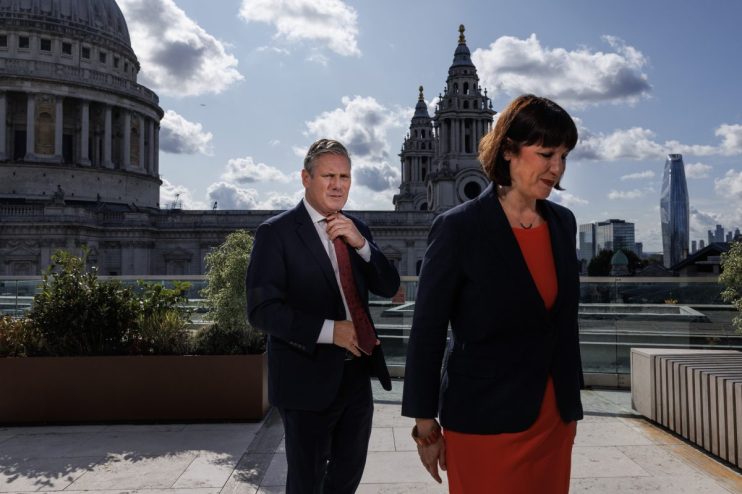

Rachel Reeves has come under fire after fresh data revealed Britain was stuck in last place among the world’s seven largest economies for total investment.
Public and private investment marked just 18.6 per cent of GDP in the three months to September, placing the UK last among the G7 nations.
Whilst it is a trend that has remained prevalent since the 1990s, it’s a blow for Labour and the Chancellor, who has promised to pump billions of government investment into infrastructure and housebuilding.
The new figures from the Office for National Statistics (ONS) also suggest the private sector has been spooked by the Labour government’s repeated policy changes, U-turns and tax raids.
In April, businesses were hit with the double whammy of an employers’ national insurance tax raid and the hike to the national minimum wage, both unveiled by the Chancellor in her first Autumn Budget.
This coming April, the living wage is set to rise once more, piling further pressures onto businesses.
Energy standing charges are also set to rise in yet another blow to businesses from April 2026, hampering their ability to invest amid rising costs.
The Chancellor was given some good news to tout in the aftermath of her November Budget after banking giants JP Morgan, Barclays, Lloyds and Goldman Sachs all announced fresh injections of capital into the UK after banks were spared from a tax raid.
Public sector to drive economic growth
Economists expect the public sector to be the key driver of UK economic growth in the years to come as the private sector continues to battle with rising costs and taxes.
Capital Economics has pencilled in a 1.4 per cent expansion in 2025, before growth falls to just one per cent in 2026, with the public sector “the main source of growth”.
The Confederation of British Industry (CBI) upgraded its growth forecast for 2026 to 1.3 per cent from one per cent after an extra £11bn in state spending plans were revealed in the Budget.
Forecasts from the Confederation of British Industry downgraded business investment growth by 1.1 percentage points for 2026 from a previous projection of 1 per cent.
Chief economist Louise Hellem said the growth upgrade should be interpreted as “cautious optimism” rather than “cause of celebration”, warning that private sector growth was being held back by “underlying challenges” in regulation, taxation and energy.
Shadow chancellor Sir Mel Stride told The Times the new ONS figures “should be ringing alarm bells in Downing Street”.
“Low business investment signals a lack of confidence in the future of the economy. That is precisely what we are seeing,” he added.
Responding to the ONS figures, the government said: “Unlike previous governments, we are investing in our economic future, with over £120bn more in capital investment compared with previous plans and the highest level of public investment for 40 years.
“We have also changed the fiscal rules so we can prioritise investment alongside the private sector. As a result, the national wealth fund has invested almost £4bn, leveraging more than £5bn in private investment and creating nearly 12,000 new jobs, helping to raise living standards in every part of the country.”


