




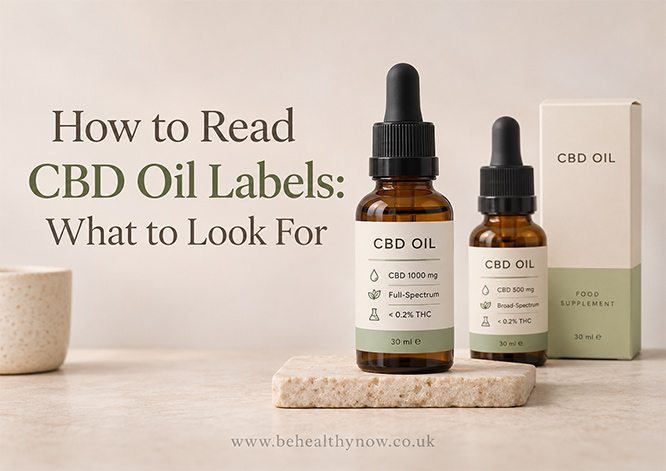
I remember going into a shop to buy CBD oil and seeing all these different bottles with numbers like 500 mg, 1,000 mg and different percentages. I had no idea what they meant or which one I should choose. And to be honest, the person working there wasn’t much help either.
So I ended up doing my own research to understand what all these numbers mean, what the differences are between CBD oils and what you should actually look for when buying one.
In this guide, I’ll share what I’ve learned to help you make sense of CBD oil labels and choose a product that suits your needs, without all the confusion I went through.
What do the numbers on CBD oil bottles actually mean?
Let’s start with the numbers, because this was the part that confused me the most.
When you see 500 mg, 1,000 mg or 2,000 mg on a bottle of CBD oil, that’s usually the total amount of CBD in the whole bottle, not the amount you’re getting with each drop.
You might also see percentages like 5%, 10% or 20%. These tell you how concentrated the CBD oil is.
For a typical 10 ml bottle, here’s what those numbers mean:
| CBD strength | Total CBD in a 10 ml bottle | CBD per ml |
|---|---|---|
| 5% | 500 mg | 50 mg |
| 10% | 1,000 mg | 100 mg |
| 20% | 2,000 mg | 200 mg |
Why bottle size matters
Here’s something that’s easy to overlook. Imagine you’re comparing two bottles of CBD oil, both labelled 500 mg.
- Bottle A: 500 mg CBD in 10 ml = 50 mg per ml
- Bottle B: 500 mg CBD in 30 ml = around 16.7 mg per ml
Both contain the same total amount of CBD, but Bottle A is three times more concentrated.
How much CBD are you actually getting per drop?
This is another thing worth checking, especially if you’re trying to work out how much CBD you’re taking.
For example, a 5% CBD oil contains around 50 mg per ml. If there are approximately 20 drops in 1 ml, that’s about 2.5 mg of CBD per drop.
But the size of a drop can vary depending on the bottle and dropper, so it’s better to check whether the manufacturer tells you how many milligrams of CBD are in each drop or measured serving.
And remember, a stronger CBD oil isn’t necessarily better. It simply contains more CBD in a smaller amount of oil. What matters is understanding how much you’re actually getting, rather than automatically choosing the bottle with the biggest number.
Full-spectrum, broad-spectrum or CBD isolate: What’s the difference?
Another thing you’ll notice when shopping for CBD oil is terms like full-spectrum, broad-spectrum and CBD isolate. These tell you what type of CBD extract is in the bottle.
Here’s what they mean:
- Full-spectrum CBD oil contains CBD along with other compounds from the hemp plant, including other cannabinoids and terpenes. It can also contain small amounts of THC, the compound responsible for the ‘high’ associated with cannabis.
- Broad-spectrum CBD oil also contains CBD and other hemp compounds, but the THC has usually been removed or reduced to very low levels.
- CBD isolate is a highly purified form of CBD, with other cannabinoids and plant compounds largely removed.
Is full-spectrum CBD better?
Full-spectrum CBD is often promoted as being better for sleep, anxiety and pain because the different plant compounds may work together. This is known as the entourage effect.
But does that actually make it more effective?
A study involving more than 2,800 adults found no significant differences between full-spectrum, broad-spectrum and CBD isolate for anxiety, sleep or pain. However, the study had limitations, so we can’t rule out possible differences.
Another smaller study found that people rated broad-spectrum CBD as more helpful for stress than CBD isolate. But because it wasn’t a placebo-controlled trial, we can’t be sure the additional plant compounds made the difference.
For now, there isn’t enough good evidence to say that one type is better than another for specific health concerns.
Which one should you choose?
I’d start by considering whether you want to avoid THC. If you do, broad-spectrum or CBD isolate may be more suitable, although you should still check the laboratory results to confirm what’s actually in the product.
If you’re interested in the possible benefits of the entourage effect, you might consider full-spectrum CBD. Just remember that these extra benefits haven’t been clearly proven.
Personally, I wouldn’t pay more for full-spectrum CBD simply because it’s advertised as more effective. I’d want to see better evidence first.
What else is in your CBD oil?
Once you’ve checked the strength and type of CBD, have a look at the ingredients list.
CBD extract is usually mixed with a carrier oil, which makes it easier to measure and take. Common options include:
- Hemp seed oil: Made from hemp seeds and naturally contains omega-3 and omega-6 fatty acids.
- MCT oil: Usually derived from coconut oil and has a fairly neutral taste.
- Olive oil: Another option, with a more noticeable flavour.
None of these automatically makes a CBD oil better. It’s more about the formulation and your personal preferences.
Is hemp seed oil the same as CBD oil?
No, and this is something that’s easy to get confused about.
Hemp seed oil comes from the seeds of the plant, which don’t naturally contain CBD. So while hemp seed oil can be used as an ingredient in CBD products, a bottle of plain hemp seed oil isn’t the same thing as CBD oil.
If a product is simply labelled “hemp oil”, check whether it actually contains CBD and how much.
What about other added ingredients?
Some CBD oils also contain flavourings, added terpenes or other plant extracts.
Personally, I’d prefer a CBD oil with a short ingredient list, without artificial flavourings or unnecessary additives. I don’t see much point in adding lots of extra ingredients when you’re mainly buying the product for its CBD content.
But remember, natural doesn’t always mean safer. Some plant extracts can also cause reactions, so it’s worth checking the ingredients carefully, especially if you have allergies or sensitivities.
What does THC-free actually mean?
You might see claims like “THC-free”, “0% THC” or “THC not detected” on CBD oil bottles. They sound like the same thing, but there’s actually a difference.
- THC-free or 0% THC: The manufacturer claims the product contains no THC, but small traces could still be present.
- THC not detected: A laboratory couldn’t detect THC in the sample tested. However, every test has its limits.
Why doesn’t ‘not detected’ mean zero?
Laboratory tests have what’s called a limit of detection (LOD). This is simply the smallest amount of a substance that the equipment can reliably detect. Anything below that level might go unnoticed.
Even the Food Standards Agency warns that CBD products labelled “THC-free” may still expose consumers to THC.
This is worth knowing, especially if you’re trying to avoid THC because of workplace drug testing.
My advice? Don’t just trust what’s written on the bottle. Look for independent laboratory results showing what was actually tested. We’ll cover how to check these reports next.
How can you tell whether a CBD oil has been properly tested?
Just because a bottle says it contains 500 mg of CBD doesn’t necessarily mean that’s what you’re getting.
In fact, a Food Standards Agency study of 100 CBD products found that only 49 contained the amount of CBD claimed on the label. Some had more, while others had less.
That’s why independent laboratory testing is worth checking before you buy.
What is a certificate of analysis (COA)?
A certificate of analysis, or COA, is a laboratory report showing what was found in a sample of the product. Ideally, it should come from an independent laboratory rather than testing carried out by the manufacturer itself.
You can often find these reports on the manufacturer’s website, sometimes through a QR code on the packaging.
What should you look for in the report?
You don’t need to understand every scientific term. I’d focus on these four things:
- Product and batch number: Does the report match the exact CBD oil you’re buying? A report for an older or different batch may not tell you what’s in your bottle.
- CBD content: Does the amount measured by the laboratory match what’s advertised on the label?
- THC levels: How much THC was detected, if any? Check which cannabinoids were actually tested.
- Contaminants: Look for testing for things like heavy metals, pesticides and leftover extraction solvents. Not every laboratory report includes these tests.
Also check the testing date and the name of the laboratory.
If you can’t find a report, I’d ask the seller for one. And if they can’t provide it, I’d seriously consider looking elsewhere.
So, which CBD oil should you actually choose?
Now that you know what the different numbers and terms mean, how do you decide which CBD oil to buy?
I’d start by thinking about why you want to try CBD in the first place, rather than simply choosing the strongest or most expensive bottle.
Think about what you’re hoping to get from it
Some people buy CBD oil to help with sleep, stress or pain. But just because a product is marketed for a particular benefit doesn’t mean it will actually work.
Research on everyday, shop-bought CBD products is still limited, and we don’t have enough good evidence to recommend a particular type or strength for these concerns.
So I’d be cautious about products promising better sleep, pain relief or other specific health benefits.
Compare the amount of CBD, not just the price
When comparing products, look at how much CBD you’re getting for your money.
For example, if you’re browsing a range like Mama Kana CBD Oils, you’ll find different strengths and formulations. Rather than choosing based on the price or percentage alone, check the total CBD content and how much you’re getting per serving.
You can also work out the cost per milligram:
- 500 mg bottle costing £20: 4p per mg of CBD.
- 1,000 mg bottle costing £30: 3p per mg of CBD.
The second bottle works out cheaper per milligram, but that doesn’t automatically make it the better choice for you.
Don’t overlook safety
One important thing to remember is that more CBD doesn’t necessarily mean better results.
The UK’s Food Standards Agency recommends that healthy adults consume no more than 10 mg of CBD per day from food products. This is a precautionary upper intake recommendation, not a suggested dose.
CBD also isn’t suitable for everyone. If you take medication or have a health condition, speak to a healthcare professional before using it. Pregnant or breastfeeding women and children should avoid CBD unless under medical direction.
One more thing worth checking is whether the CBD oil appears on the Food Standards Agency’s public list of CBD products. This doesn’t guarantee it’s safe, but it’s an important check when buying CBD oil in the UK.
Looking back, I wish I’d known all this before walking into that CBD shop. I certainly wouldn’t choose an oil just because it has a higher number on the bottle or promises amazing benefits. I’d want to know exactly what I’m getting, whether it’s been properly tested and if it’s actually suitable for me.
