




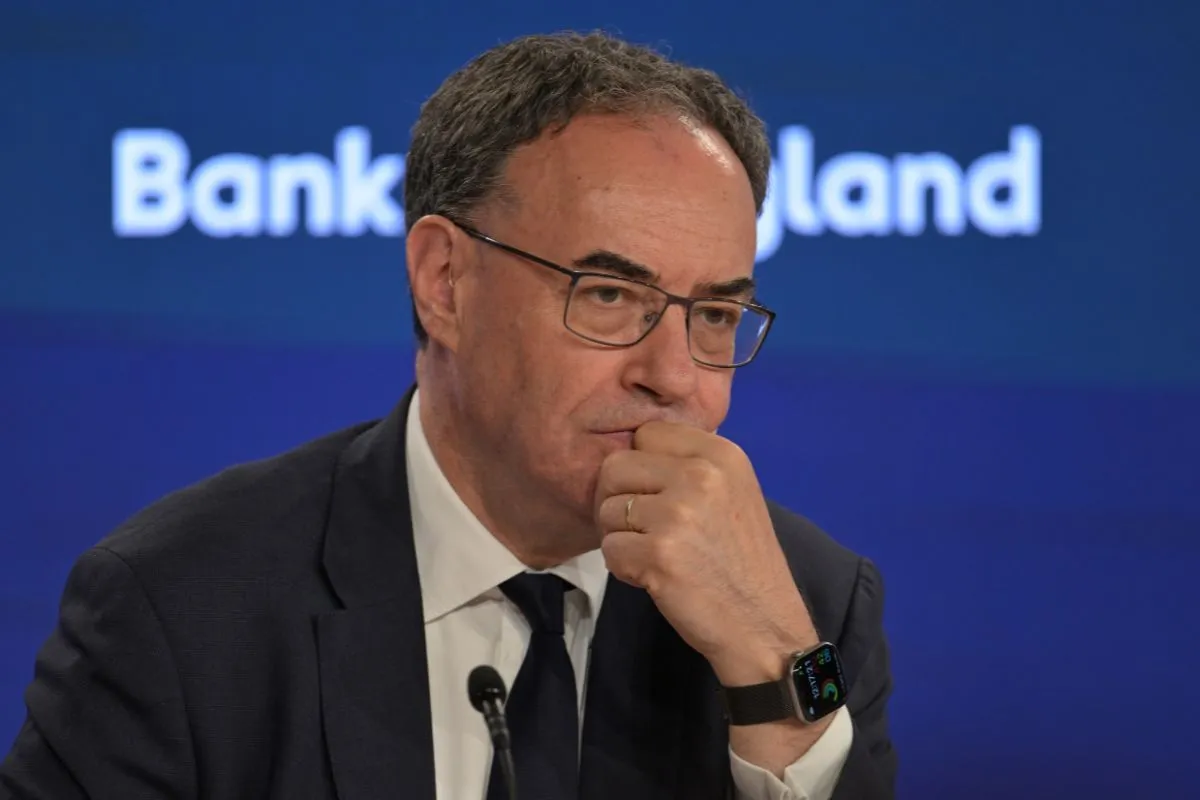
Bank of England governor Andrew Bailey has warned that AI “may not live up to market expectations” and deliver returns fast enough to investors, risking a sharp fall in valuations.
Bailey said in a speech in Zurich that it may take longer for investors to reap the benefits of heavy AI investment than it is currently assumed. His intervention comes against a backdrop of trillions of dollars being wiped from company valuations in the last week.
In an address that focused on the threat of AI to financial stability, he warned that there was a “risk” that investors had over-estimated the value of AI, even if “bubble spotting is an imprecise science”.
“The returns may be good, and they may match expectations, but they take longer to be realised than predicted,” Bailey said. “This has been the case historically with big ‘General Purpose Technology’ innovation – take Edison and electricity for instance.
“There are good reasons to believe that the world moves faster now, but still the timing may not live up to market expectations.”
He added that financial markets overvalue “uncertain future returns” as it was essential to risk-taking on the part of investors.
Bailey’s latest AI alert
Bailey, who is also chair of the global Financial Stability Board, repeated a previous warning that “everyone is priced to be a winner” in AI stock pricing despite history stating that this was unlikely. He pointed to the dotcom bubble and the ensuing failure of Netscape, the dominant web browser in the 1990s which was superseded by Microsoft and other tech giants.
A mass sell-off in AI-related stocks following President Trump’s crushing mid-terms election defeat in the US has sparked suggestions that the AI bubble is bursting.
Last Thursday, more than £2.4 trillion was wiped from the value of the US stock market. On Monday, firms listed on the New York Stock Exchange and Nasdaq saw stock prices recover slightly from falls last week, with each composite index rising by more than two per cent.
Shares in Nvidia, one of the largest listed companies in the world, which is essential to wider AI investments, dropped by five per cent following an investigation into chief executive Jensen Huang’s affair with an alleged Chinese spy.
Bailey’s intervention on market pricing adds to growing alarm over the high expectations for major tech companies in the US to post bumper profits over the next two years after mass investment in infrastructure. Top American hyperscalers, which are made up of the largest AI companies such as Amazon and Meta, are expected to spend about $900bn (£670bn) in 2026 alone, according to JP Morgan.
In April this year, Bank deputy governor Sarah Breeden predicted that stock markets would face an “adjustment” and fall due to highly valued AI stocks.
