




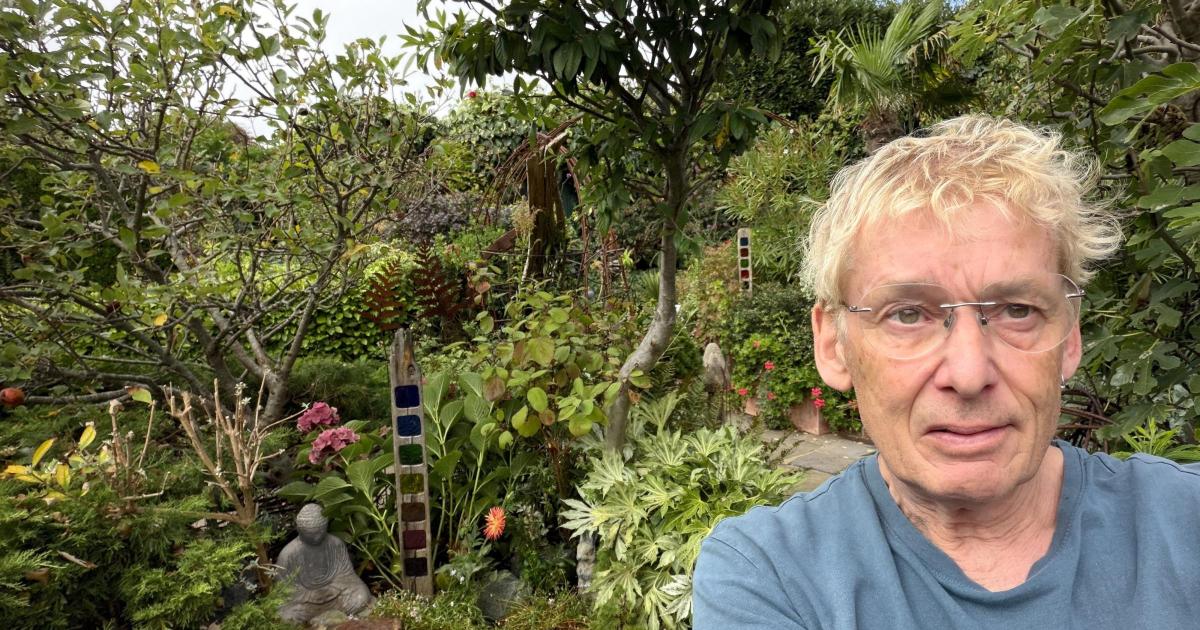
One big area of change has been directly behind the corten steel water feature. I used to have a gunnera, planted in a large plastic container, submerged in the ground. It had been there over ten years but sadly died through the course of this year. I struggled to dig out the container and planted in its place a large hydrangea that I bought earlier in the year. It was purchased as a Hydrangea macrophylla rodeo deep purple but, because of the soil it is now dark pink. It will fill out next year and in front of it are the two new dahlias acquired recently, karma bon bimi and honka red.
A wonderful plant in the garden, throughout the year, but especially in the autumn, is the fatsia japonica. It is a brilliant shrub, growing to about two metres in height with jungly foliage, giving it a very exotic look. It looks great planted in semi-shade and associates well with ferns and hostas. It is also very tolerant of coastal conditions and is perfectly hardy, with only the young foliage at risk from late frosts. Large white flower spikes are produced in late autumn, followed by black berries in winter, which provide some great food for garden birds. For me this is an often-seen shrub that never loses its appeal. It also works well planted in a container. I also have a fatsia ‘camouflage’ pictured, and one called spider’s web.

Fatsia japonica ‘spider’s web’ is one of the most striking evergreen shrubs you can grow for shade, and a real talking point in the garden. This variegated form of the classic fatsia japonica takes the bold, glossy, hand-shaped leaves of the species and dusts them with a fine spray of white speckling, heaviest at the leaf margins and fading towards the centre, exactly as though a spider had been busy overnight. No two leaves are quite the same, and the effect lights up the darkest, dampest corners where little else will thrive.
Meanwhile, fatsia ‘camouflage’ is an exotic looking hardy shrub which will provide interest in your garden all year! It boasts huge, dissected, statement leaves which have camouflage variegation and throughout the autumn produces spherical blooms made from an abundance of tiny white flowers, with black berries following these. Ideal for brightening any dry and shaded corners of your garden as well as blending in with ferns for a beautiful textured display. It also looks just as effective as a stand-alone plant in a patio pot.
You may recall me writing earlier in the year about advice from the RSBP about not feeding birds in the garden through the summer months, from May 1 until October 31. Well, their advice is that it’s now safe to start feeding again for the winter months, so my bird feeder has been filled up and has gone back out in the garden, suspended from one of the three rusty arches.

This year, our crop of fruit has been significantly reduced. We had virtually nothing on either of the two apple trees and a very small crop on the pear tree. The 2026 apple crop is recorded as lower in many regions, due to a combination of record summer heatwaves, severe drought, and spring frost damage. Last year both trees produced a great deal of fruit. The small crop on the pear tree has been harvested and the fruit peeled and poached then stored in the freezer.

A popular plant at this time of the year is the chrysanthemum flower, from late summer to autumn, when little else is in bloom. Its flowers come in a range of different colours, sizes and shapes, and can be single or double-flowered, with spray chrysanthemums forming a number of flowers on one stem. They make excellent cut flowers that can last for up to three weeks in a vase, and they work well in dried arrangements, too.

Garden chrysanthemums can be annual or perennial, and hardy or half-hardy. For a reliably perennial chrysanthemum, choose a hardy variety, which will survive winter outside so you can leave it in the ground and it will come back the following year. Bear in mind that garden chrysanthemums are not the same plants as indoor chrysanthemums, which are sold as house plants. Indoor chrysanthemums are tender and must not be taken outside in autumn and winter. They are best treated as cut flowers as you’re unlikely to encourage them to flower again after they have finished blooming.
Read more of Geoff’s garden at www.driftwoodbysea.co.uk or follow both him and the garden on social media.
Source link
[Featured]
[Just In]
