




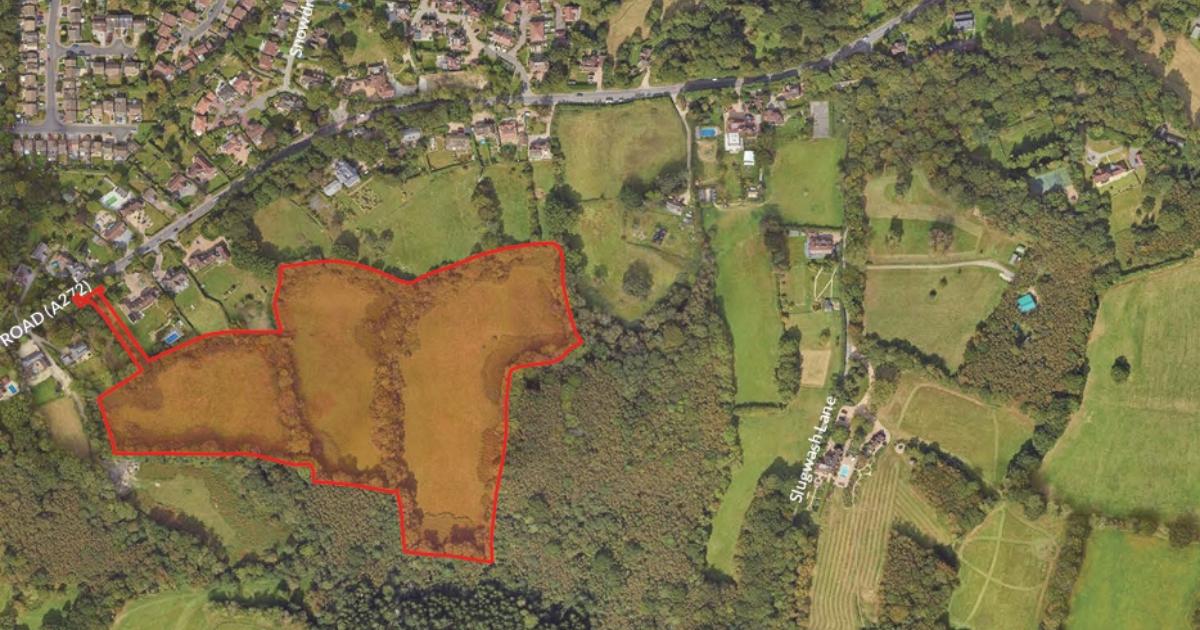
Miller Homes was granted outline permission for the 80-home development at Colwell Farm, off Lewes Road in Haywards Heath, on November 3.
The plans cover three fields to the south of Lewes Road and include open space, landscaping and a new vehicle and pedestrian access.

Mid Sussex District Council had initially refused the application in 2025, on the grounds that it was an “unsustainable countryside location” and would result in the loss of a “significant” number of trees.
But the authority stopped defending its reasons for refusal in June, after the site was included on a long list of potential housing allocations.
Mid Sussex was asked to increase its planned number of houses to support the unmet needs of Crawley and Brighton and Hove, and the council now says this outweighs its previous reasons for refusal.
The development had continued to face significant opposition from campaign body Protect Colwell Farm Action Group, which called witnesses at the inquiry in July and August, and raised concerns including the loss of trees and the effect on wildlife.

Planning inspector T Burnham overturned the council’s decision after an inquiry lasting six days.
The inspector found the development would harm the character of the Lewes Road Conservation Area and listed Colwell House, but deemed the harm to be “low”.
The provision of homes, including affordable housing, was given substantial weight in the planning balance.
Both the council and developer agreed Mid Sussex could demonstrate only a maximum of 3.75 years of housing land supply, rather than the five years required.
The inspector concluded that “the benefits of granting permission overall would not be substantially outweighed by any adverse effects”.

The inquiry also examined whether two groups of trees on the site were ancient woodland, and the potential effects on reptiles and bats.
The inspector concluded that neither group was ancient and found no likely adverse effects on nearby Cains Wood, where a 15-metre buffer would be retained.
Approval of details of the appearance, layout, scale and landscaping of the development will need to be obtained before any work can begin.
Source link
[Featured]
[Just In]
