










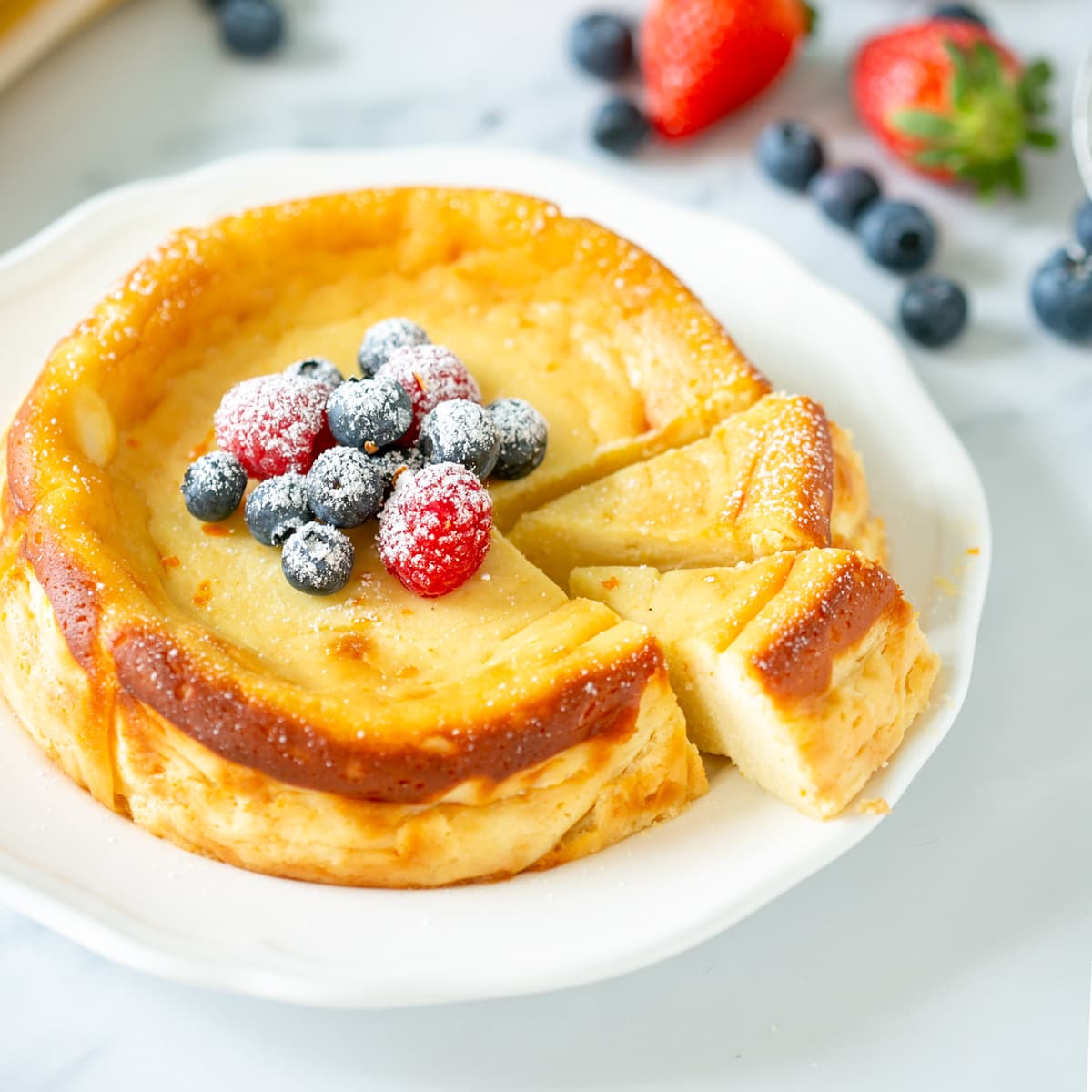


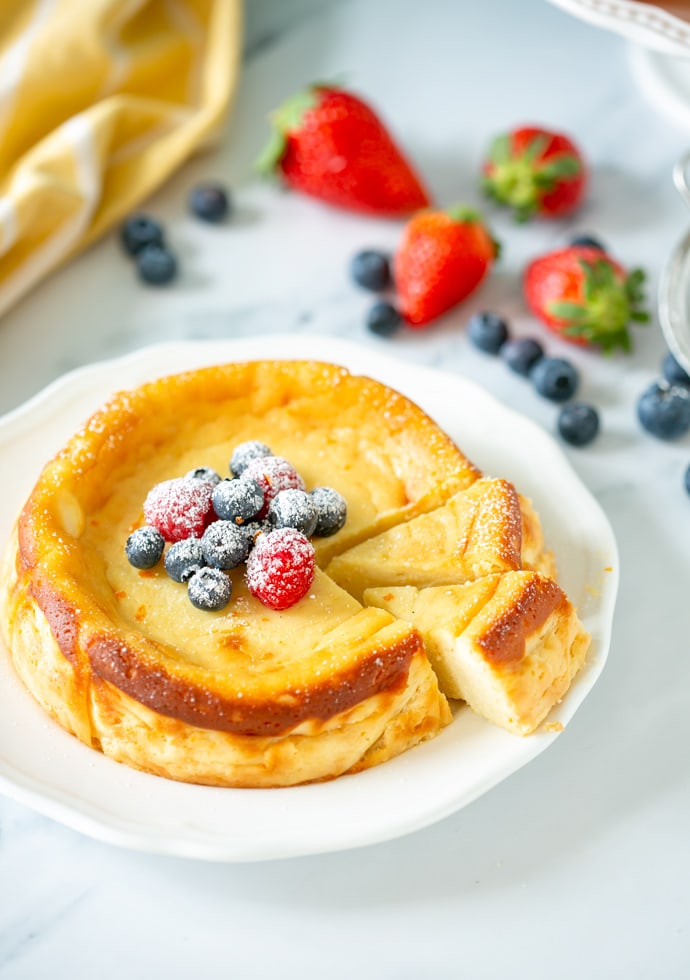
This crustless Italian ricotta cheesecake sits somewhere between a classic New York cheesecake and a burnt Basque cheesecake, and honestly, it might be better than both!
The biggest difference? No cream cheese.
Instead, this easy gluten-free cheesecake uses just ricotta, which gives it a lighter, fluffier texture and a subtly sweet flavor you simply don’t get from cream cheese.
It’s less dense, less rich, and far easier to make, and yet somehow just as satisfying.
If you’re after a healthier cheesecake that doesn’t compromise on taste, this is the one.
I make this recipe without a crust, but if you’d prefer some added crunch, I’ve included a few crust options below.
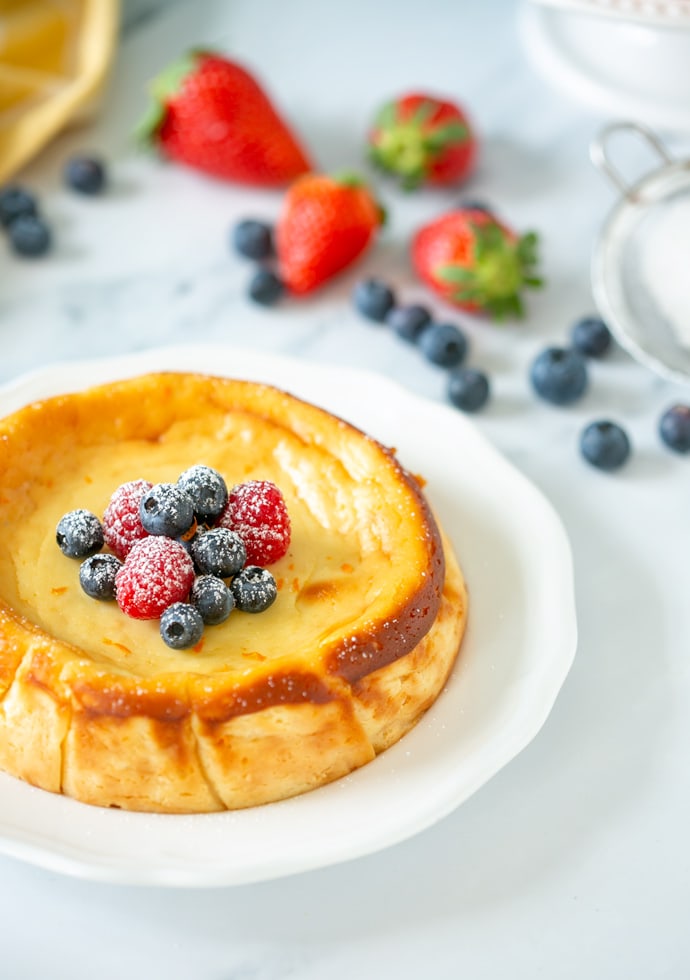
And while I love mine topped simply with fresh berries, it’s just as delicious with whipped cream, chocolate sauce, or a homemade strawberry compote.

Jump to:
Ricotta vs cream cheese: what’s the difference?
If you’ve only ever made cheesecake with cream cheese, switching to ricotta might seem like a bold move—but trust me, it’s one you’ll be glad you made.
The two cheeses behave very differently in baking, and understanding why helps you get the best out of this recipe.
Texture: Cream cheese is dense and thick, which is what gives New York cheesecake that heavy, almost fudgy consistency. Ricotta is much lighter, and bakes up soft and almost mousse-like. The result is a cheesecake that feels delicate rather than heavy.
Flavour: Cream cheese has a distinctive tangy and rich flavor. Ricotta is far milder and slightly sweet, with a clean, milky flavour that doesn’t overpower the other ingredients.
How they bake: Because ricotta has a higher moisture content than cream cheese, it needs to be drained before use (more on that below). Without draining, the extra liquid can make the cheesecake too soft or cause it to crack. Cream cheese goes straight in, no prep needed.
Which is better? Honestly, it depends what you’re after. If you want a rich, indulgent, classic cheesecake, cream cheese is your friend. If you want something lighter, more elegant, and with a genuinely Italian flavor, ricotta is the one.
Ingredients you’ll need
This Italian ricotta cheesecake is proof that you don’t need many ingredients to make a delicious dessert. In fact, you just need three!
Ricotta, eggs and sugar. That’s it! I told you, it’s magic!

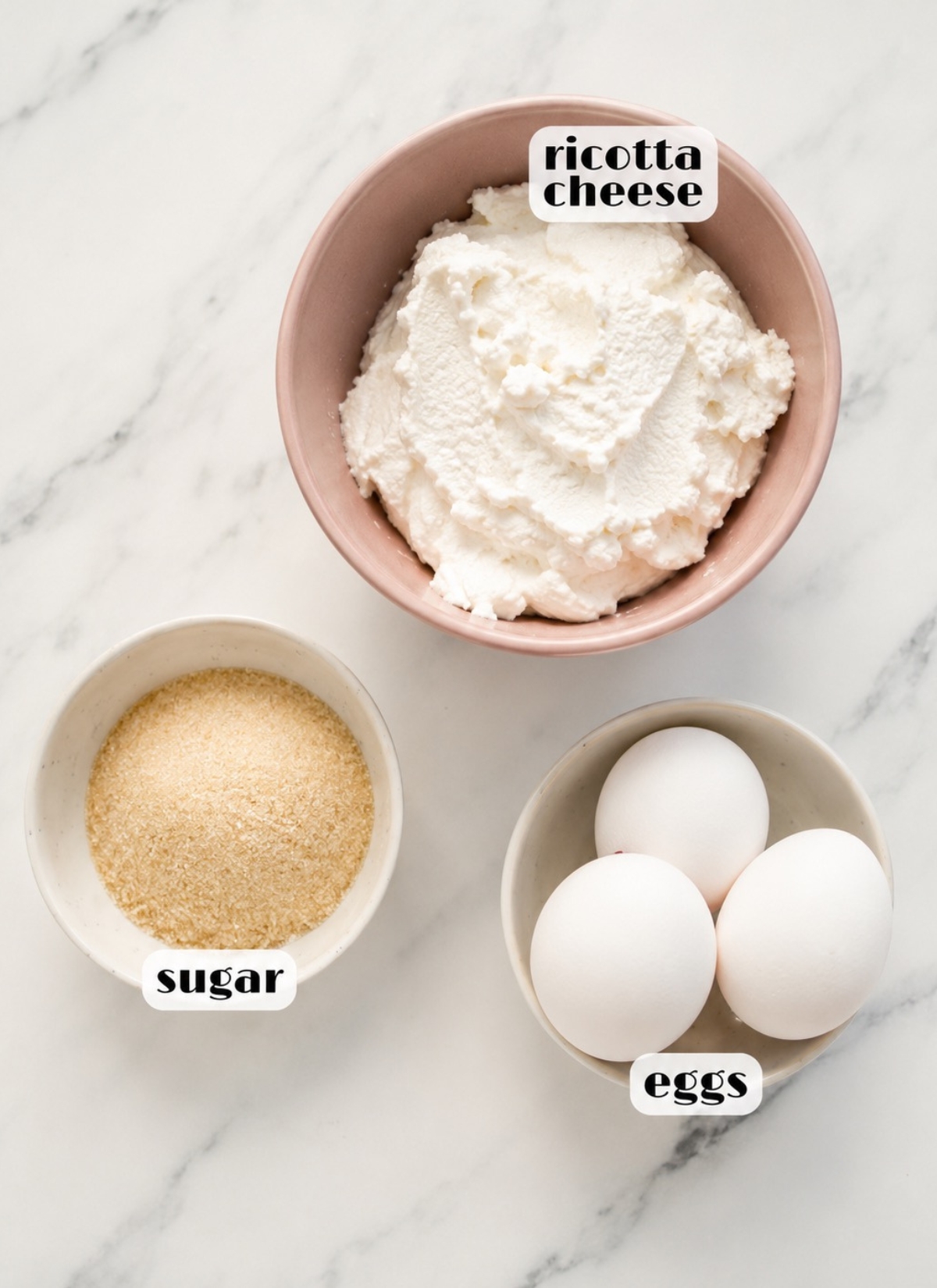
- Ricotta cheese: Go for fresh full-fat ricotta cheese for the best creamy texture. Follow my tips below on how to pick the best ricotta cheese.
- Eggs: Use room temperature eggs for a smoother batter and fluffier cheesecake.
- Sugar: I like to use raw cane sugar, but regular granulated sugar works just as well.
Ways to make it your own
I love how simple this recipe is, but here are a few easy ways to mix it up:
- Lemon or orange zest: A classic Italian touch that adds brightness. Use one or a mix of both.
- Dark chocolate chips: Fold a handful into the batter (freeze them for 30 minutes first so they don’t sink).
- Vanilla: A scraped vanilla pod or 1 teaspoon of vanilla extract adds lovely depth.
- Berry sauce: Top with a homemade berry sauce for a beautiful finishing touch.
How to choose the right ricotta
Not all ricotta is the same, and the quality really does affect the final result. Here’s what to look for:
Fresh vs packaged: Fresh ricotta from an Italian deli or cheese counter is far superior to the pre-packaged tubs you find on supermarket shelves. It’s creamier, less watery, and has a much better flavor.
What to look for: Good ricotta should be white, slightly grainy, and hold its shape. If the tub is sitting in a pool of liquid when you open it, that’s a sign it’s quite watery, and you’ll need to drain it well.
Supermarket options: If fresh isn’t available, full-fat supermarket ricotta works fine, just make sure you drain it properly. Avoid low-fat versions, which tend to be much more watery.
Can’t find ricotta at all? You can make homemade ricotta with just milk and lemon juice, it’s easier than you’d think!
In Sicily, we use ricotta in everything , savoury dishes like stuffed pasta and vegetarian lasagna, and iconic sweets like cannoli, ricotta cookies and Sicilian cassata. So, using it in cheesecake feels completely natural to me.
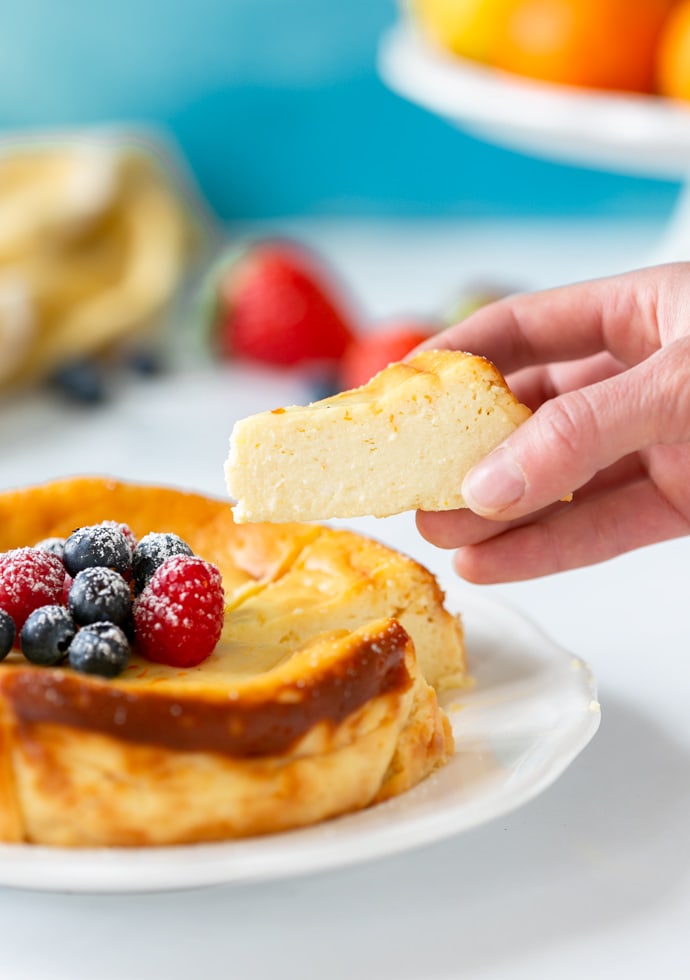
How to drain ricotta (don’t skip this)
This is the single most important step in the whole recipe, and the one most people skip. Don’t!
Fresh ricotta holds a lot of moisture. Use it straight from the tub and your cheesecake risks coming out watery, too soft, or prone to cracking.
A couple of hours of draining makes all the difference.
Here’s how:
- Line a fine-mesh sieve with cheesecloth or a clean, wrung-out kitchen towel.
- Spoon the ricotta in and set it over a bowl.
- Cover loosely and refrigerate for at least 2 hours, or overnight for the best results.
- Discard the liquid and use the thick, creamy ricotta in your recipe.
- You’ll be surprised how much liquid comes out. The ricotta left behind should be thick enough to hold its shape when you spoon it, that’s what you want.
How to make it
This magic 3-ingredient baked cheesecake is truly one of the easiest recipes I know.
Here below you can find the simplified recipe with step-by-step pictures, scroll down until the end of the post for the full printable recipe.

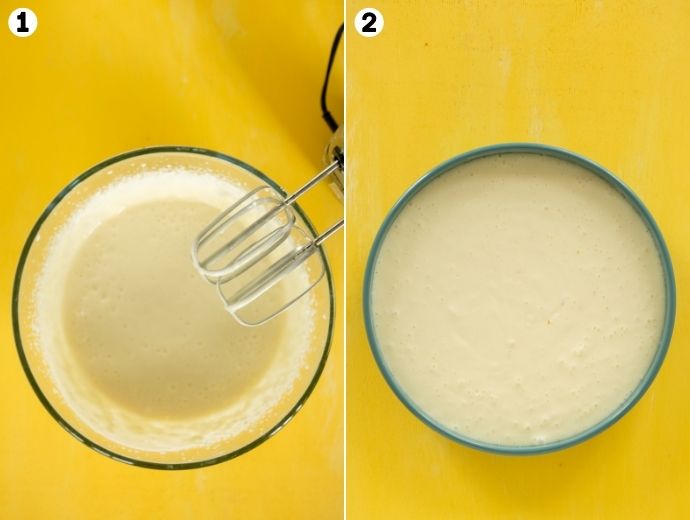
- Cool completely, refrigerate for a few hours (or overnight — it genuinely tastes better the next day), then dust with powdered sugar and top with fresh berries if you like.
- Mix all the ingredients together in a large bowl using a whisk or electric mixer. Beat until you have a smooth, creamy batter — but don’t overmix.
- Pour into a springform pan lined with parchment paper and bake for about 50 minutes at 170°C/340°F.
How to make a water bath
If you want extra insurance against cracking:
- Double-wrap the outside of the cake tin in foil.
- Place it inside a roasting tin.
- Pour boiling water into the roasting tin until it reaches halfway up the sides of the cake tin.
- Bake at 170°C/340°F for about 60 minutes.
The steam keeps the oven moist and prevents the surface from drying out and cracking. That said, I often skip this and get great results anyway, it really depends on your oven.
What to serve it with
Fresh berries and powdered sugar are the classic choice, and for good reason. But this cheesecake is mild enough to pair with almost anything, so don’t be afraid to get creative.
- Fruity toppings work really well with ricotta’s delicate flavour. A warm strawberry or raspberry compote, lemon or orange curd, or sliced fresh figs drizzled with honey all complement it beautifully.
- For chocolate lovers, a pour of warm dark chocolate ganache or a drizzle of melted dark chocolate turns this into something much more indulgent.
- For crunch, crushed pistachios scattered over the top are very traditional in Sicily and add a beautiful colour contrast. Toasted flaked almonds or a crumble of amaretti cookies work just as well.
Seasonal ideas: in summer, go with fresh peaches or cherries. In autumn, roasted figs or a spiced pear compote. In winter, a warm caramel sauce or a simple dusting of cocoa powder.
This cake works year-round, you just change what goes on top!
Want a crust? Try these
I love this cheesecake without a base, but if you want some added crunch, any of these options work beautifully:
- Pasta frolla: Roll out my sweet shortcrust pastry to about 3mm thick, press it into the base of the tin, prick with a fork, pour over the batter and bake.
- Graham crackers: Follow this easy 3-ingredient graham cracker crust, bake for 10 minutes, cool, then add the batter and bake as directed.
- Digestive biscuits: Mix 200g finely crushed digestives with 100g melted butter, press into the base, bake for 10 minutes, cool, pour in the batter and continue baking.
Equipment
You don’t need any professional equipment to make this easy ricotta cake, here are the kitchen tools I use:
- 7-inch springform cake pan – a small cake pan makes a taller cheesecake, but you can also use a larger one, although it won’t result in a tall cake. You may double up the ingredients in this case, and bake the cake for 15-20 minutes longer.
- Hand mixer – You can also use a stand mixer or a simple whisk. Just make sure to not overman the batter.
How to store and freeze it
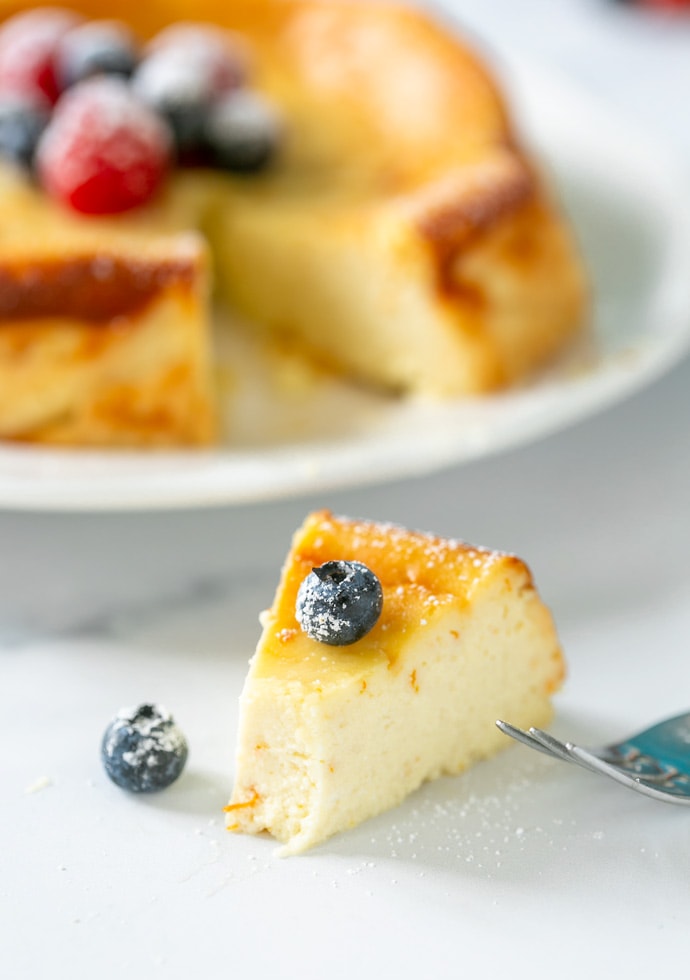
Let the cheesecake cool completely, then wrap in cling film and store in the fridge for up to 3 days.
To freeze: Slice into individual portions, place on a baking tray and freeze for 30 minutes until firm. Transfer each slice to a ziplock bag and freeze for up to 1 month.
To thaw: Move slices from the freezer to the fridge the night before and let them thaw slowly overnight. Slow thawing in the fridge keeps the texture intact, thawing at room temperature can make the cake go slightly grainy or watery.
My best baking tips
The recipe is pretty straight-forward but these useful baking tips will ensure the best results:
- Refrigerate before serving – a few hours is good, overnight is better.
- Drain the ricotta – see the section above. Non-negotiable.
- Don’t overmix – beat just until smooth. Too much air in the batter is one of the main causes of cracking.
- Lighter texture trick – separate the eggs. Add the yolks first, then whip the whites to soft peaks and fold them in gently. Not necessary, but it gives a beautifully airy result.
- Know when it’s done – the edges should be set but the centre should still have a gentle wobble, like Jell-O. An instant-read thermometer (I use a Thermapen) reading 65°C/150°F in the centre is the most reliable way to check.
- Cool slowly – let the cheesecake cool completely in the pan before removing it.
Questions I get asked a lot
Cracks are the most common cheesecake problem, and almost always preventable. Here’s what causes them and how to fix it.
The batter was overmixed
When you beat too much air into the batter, it expands in the oven and then contracts as it cools, and that’s when cracks appear. Mix just until smooth and stop.
The ricotta wasn’t drained
Watery ricotta creates uneven moisture in the batter, which can lead to cracking as the cake bakes unevenly.
It was overbaked
A cheesecake that’s left in the oven too long will dry out and crack. Take it out while the centre still has a jiggle.
It cooled too fast
Going from a hot oven to a cold kitchen too quickly causes the surface to contract and crack. Once baked, leave the cheesecake in the oven with the door slightly open for 30 minutes before moving it to cool at room temperature.
This usually means it was underbaked, or it cooled too quickly after coming out of the oven. Make sure the edges are fully set before removing it, and always let it cool gradually.
You can, but removing the cheesecake will be trickier. Line the pan generously with parchment paper and leave an overhang you can use to lift it out. Let it cool completely before attempting to remove it. A springform really is the easiest option here.
The edges should be set and the centre should still have a gentle jiggle. An instant-read thermometer reading 65°C/150°F in the centre is the most reliable check.
Did you try this recipe?
Please let me know how you liked it! Leave a comment below and share a picture on Instagram with the hashtag #thepetitecook!
Don’t forget to subscribe to my newsletter and follow along on Facebook, Pinterest and Instagram for the latest updates.
Recipe
Prevent your screen from going dark
Make this easy Italian ricotta cheesecake with just ricotta cheese, eggs, and sugar. Creamy, light, and simpler than classic cheesecake.
Serving: 12
Calories: 152kcal
- 600 g fresh ricotta cheese, well drained
- 150 g confectioner’s sugar
- 3 eggs
- 1 tablespoon fresh orange zest, (optional)
-
Preheat oven to 350°F/180°C with the fan option off. Arrange the baking tray onto the middle shelf of the oven. Line with parchment paper a 7-inch springform cake pan.
-
Using a hand mixer, beat the drained ricotta cheese on medium-low speed until smooth and lump-free, 1-2 minutes. Add the sugar and beat until smooth. Beat in the eggs, one at a time, until fully combined and you reach a creamy lump-free batter. Do not overmix.
-
Pour the batter over the prepared cake pan. Bake in the oven for 50-60 minutes. The cheesecake should be taken out of the oven when the edges are set but the center is still jiggly You can check whether the cheesecake is ready, with an instant-read thermometer. When the cheesecake inside reaches 65°C/150°F, it’s ready.
-
Let the cheesecake cool completely before removing the cake from the pan. Cover the cake with cling film and refrigerate for a few hours before serving. It tastes even better the next day!
- Drain the ricotta cheese over fine-mesh sieve lined with a cheesecloth. Leave it to drain for a few hours before using it. This will result in a thick and creamy cheese texture. Watery ricotta will effect the cake texture.
- If using a fan-forced oven, as a general rule, drop the temperature by 20°C to imitate conventional.
- Although not necessary, you can bake the cheesecake in a water bath (bain-maire).
Troubleshooting:
If the cheesecake surface cracks, it may be because you overmixed the batter, you opened the oven door during the baking time, or you overbaked the cheesecake.
It could also be that the oven temperature was too high, when in doubt, use the bain-marie method.
Calories: 152kcal | Carbohydrates: 14g | Protein: 7g | Fat: 8g | Saturated Fat: 4g | Polyunsaturated Fat: 1g | Monounsaturated Fat: 2g | Trans Fat: 1g | Cholesterol: 66mg | Sodium: 58mg | Potassium: 69mg | Fiber: 1g | Sugar: 12g | Vitamin A: 284IU | Vitamin C: 1mg | Calcium: 111mg | Iron: 1mg
The information shown is an estimate provided by an online nutrition calculator. It should not be considered a substitute for a professional nutritionist’s advice.
This post was originally published in 2021, updated in July 2026.


