











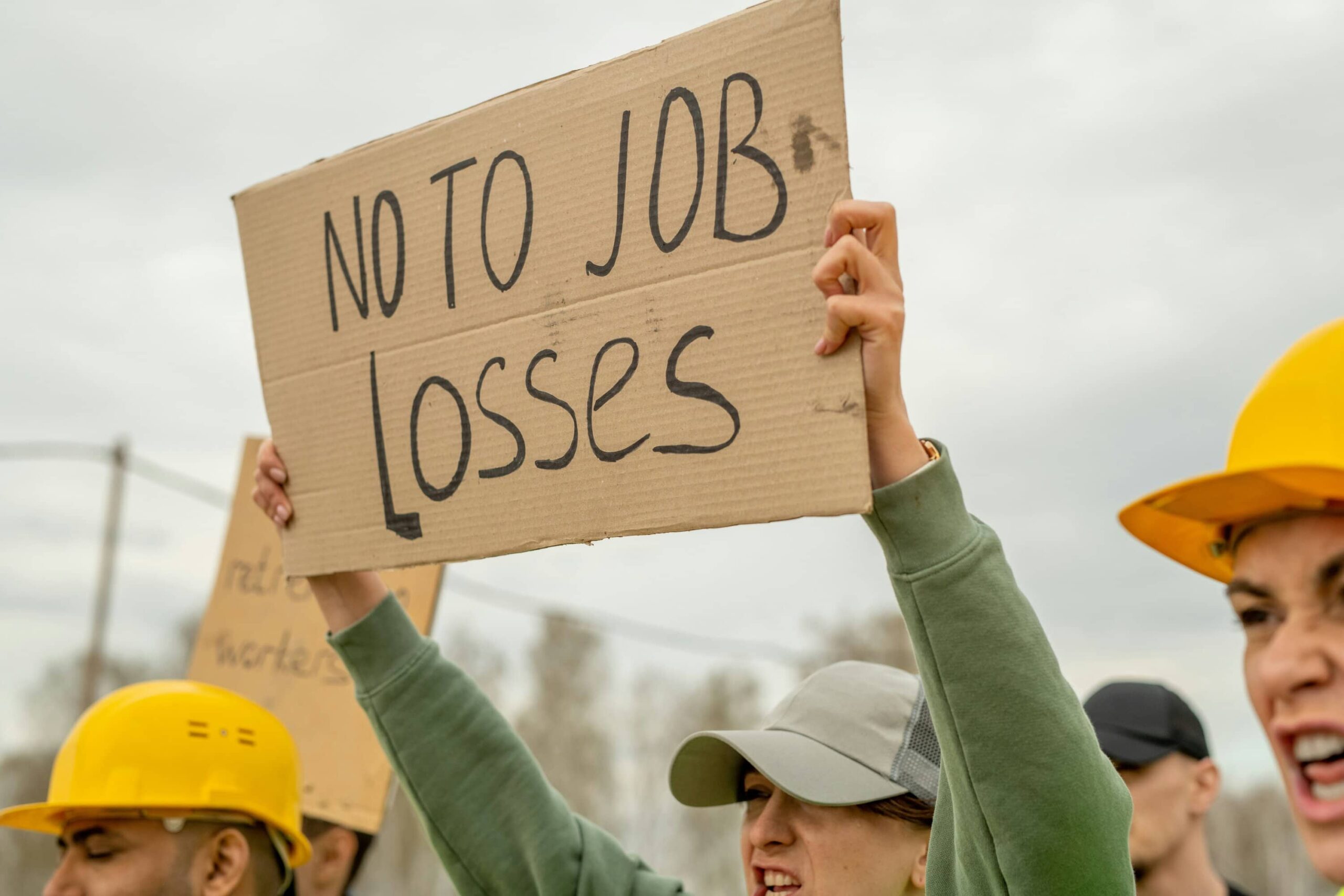
If there is one thing that is always said when it comes to company redundancy announcements this year, it’s this: AI is not replacing people.
It sounds reassuring – then you keep reading and find AI mentioned again and again.
Well, this exact thing happened this week when workplace software company Monday.com announced that about 620 employees, around 20% of its workforce, would be leaving the business. The announcement referred to AI, a new way of working and a company built for the years to come. It also made a point of saying the job losses were not about replacing people with AI.
Monday.com is one of many companies making that case. Uber has also said their next round of job losses relates to needing to fulfill its AI plans, saying the company first needs to reorganise before AI can take on more work. Business Times also reported that companies such as Block and Oracle have mentioned AI during recent layoff announcements.
Why Do So Many Redundancy Announcements Mention AI?
Monday.com’s memo almost reads as though its founders knew exactly what employees would be thinking because after explaining that the company wants things like fewer management levels and smaller teams, co founders Roy Mann and Eran Zinman answered the obvious concern before anyone had to ask it.
They wrote, “This decision was not made to reduce costs or replace people with AI. We see internal AI adoption as an accelerator of our growth. This change was made to adapt the company to our new vision.”
Earlier in the memo they wrote, “We entered a new era where AI is transforming the role of software, creating the greatest opportunity our industry has ever seen. We have a new market to capture. Without a fundamental change in how we operate, we will not be able to compete and win that market.”
Monday.com says the company itself has to look different if it wants to build AI products which means a flatter organisation with smaller teams that can make decisions faster, as well as new roles built around customers using AI.
The company also said improving profit margins was not the reason for the decision and that it plans to reinvest most of the savings into employees, products, AI and future growth. It also intends to keep hiring for areas related to that strategy.
More from Artificial Intelligence
How Is Uber Explaining Its Layoffs?
Uber’s announcement takes a different angle as the company announced that it has removed 10% of jobs in its customer service operations. Employees working remotely in that division have also been asked to relocate to one of Uber’s hub offices under its return to office policy.
According to Uber, the business first needs to simplify the way it works before AI can do more.
In a memo, Megha Yethatika, Uber’s Vice President of Global Community Operations, wrote, “Our organisation has become too complex and siloed.”
She added, “The department has made some strides in using AI, but to unlock this potential, we need an effective organisation to layer AI on. We cannot scale frontier technology on top of fragmented processes.”
Business Times said this is the first time Uber has linked layoffs to an AI efficiency drive.
What Are Businesses Planning?
Mercer’s Global Talent Trends 2026 report shows many businesses believe AI will leave them needing different skills rather than fewer people.
The survey that spoke to thousands of C suite execs, HR leaders, investors and employees says that 65% of executives expect between 11% and 30% of their workforce to be redeployed or retrained because of AI over the next two years. Also, 63% said their organisations need skills based talent practices to prepare people for AI.
Employees also want those opportunities after Mercer reports that 63% would rather receive opportunities to learn AI and digital skills than a 10% pay rise.
Pat Tomlinson, President and CEO of Mercer, said, “Leaders are striving for growth this year, but to achieve it, organizations need every team performing at their peak. Although executives view AI as the key to unlocking exponential performance and accelerated growth, realizing a true return on AI investments depends on intentionally redesigning work and building AI enabled operating models that amplify the workforce’s capabilities and experience.”
Mercer also says that 72% of investors believe companies that successfully bring people and AI together will gain a competitive advantage.
Recent redundancy announcements keep coming back to the same thing: companies say AI is changing how they are organised which may mean job losses, new hires in different areas and employees learning new skills. So, now, AI has become a regular explanation whenever businesses reorganise.