




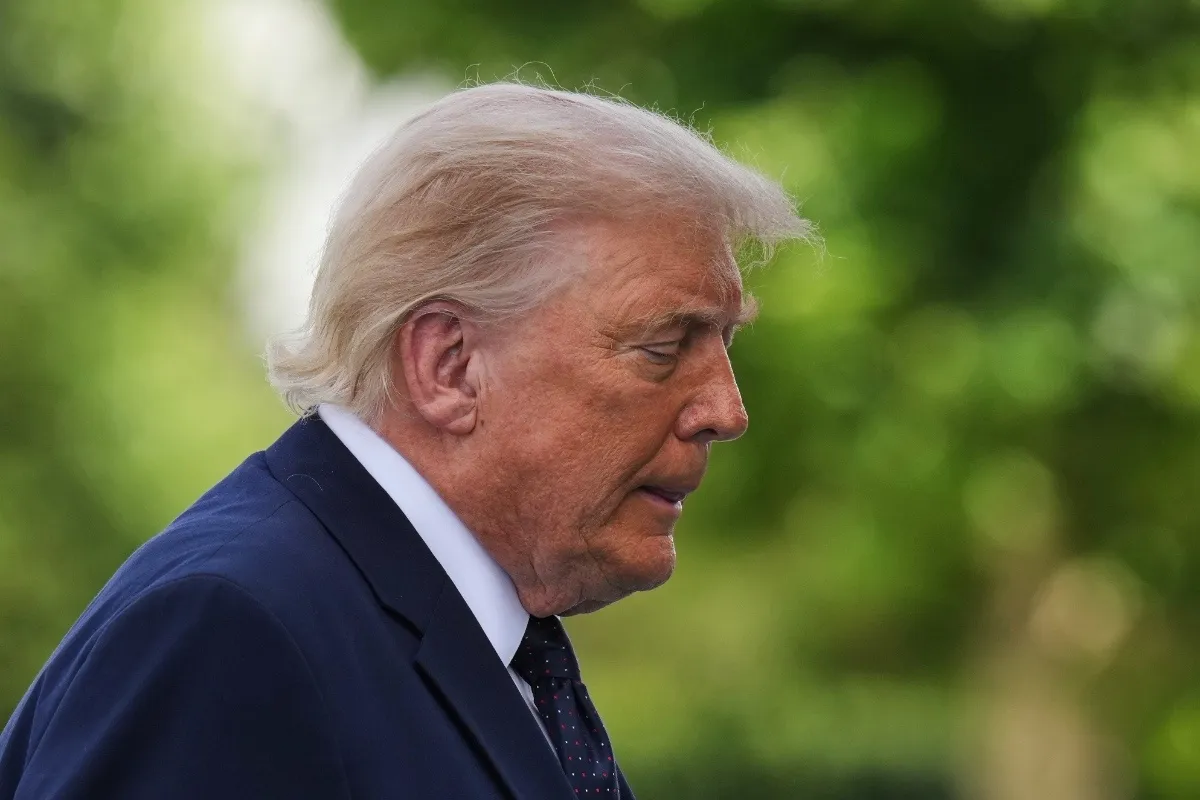
UK borrowing costs surged and the price of oil leapt to a two week-high on Wednesday after Donald Trump suggested his already-fragile ceasefire deal with Iran was over.
The yield on ten-year gilts – the primary benchmark for how much it costs the government to borrow – stormed 11 basis points higher to 4.96 per cent after the US launched a “series of powerful strikes” on Iran.
Brent crude, the international benchmark for oil prices, alose rocketed to a two-week high of $78 per barrel, rising from $72 earlier in the week.
Whilst it remained well-short of the $120 peak notched at the height of the crisis in May, the elevated price renewed the inflationary fears that had cooled over the last few weeks.
European gas prices rose five per cent to a month-high of €49 per MWh.
“Clearly higher oil prices raises stagflation fears and weighs on the growth outlook,” Neil Wilson, investor strategist at Saxo Markets, said.
Nato gets Trump’ed
Trump’s diatribe against Iran has dominated the Nato summit taking place in Turkey this week.
The US President said he didn’t “want to deal” with Iran anymore and branded the talks a “waste of time”. He labelled the leadership of Iran “cuckoo”.
Wilson said the remarks had “sent sparks flying” and “underscored fears that we could see further escalation”.
Mark Rutte, the head of Nato, defended the US’ latest round of strikes as “absolutely necessary”. Iran has hit back, targeting 85 US military sites across Bahrain and Kuwait.
The US and Iran had agreed to a memorandum of understanding on 17 June, which paused military action for 60-days as they negotiated a lasting peace deal.
But thornier matters, such as Iran’s capacity to possess a nuclear weapon and the control over the Strait of Hormuz have continued to provide challenges.
The jitters led to investors dumping their equities exposure with the FTSE 100 tumbling 1.5 per cent to 10,501.
Susannah Streeter, chief investment strategist at Wealth Club, said the “ramp-up in production” from oil producing nations OPEC+ helped “keep a lid on concerns about a fresh energy crunch”.
“Nevertheless, it’s a major setback just as nations around the world had been breathing a sigh of relief that a longer-term resolution looked to be within reach.”
Oil majors Shell and BP were the top performers on the FTSE 100 on Wednesday morning, up two per cent and 3.5 per cent respectively.
