




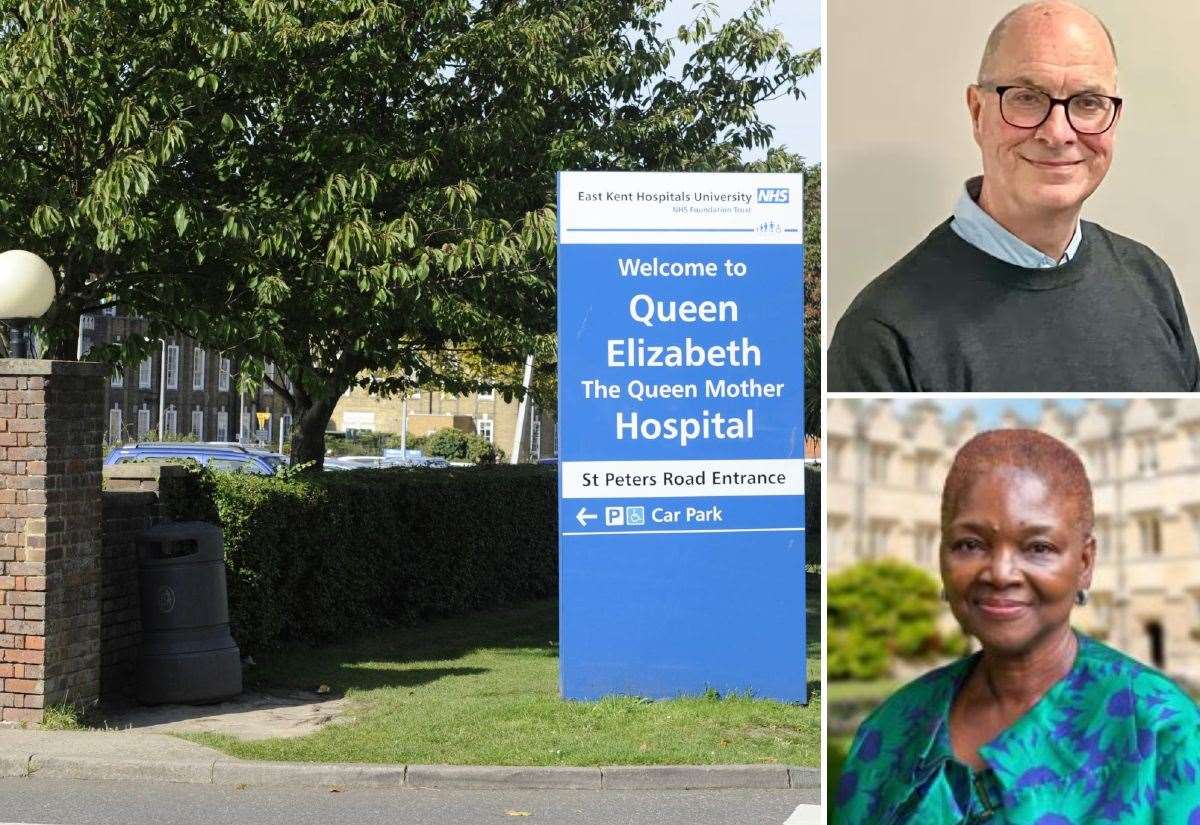
Families have told a national investigation that maternity care at a troubled trust is still “fragmented” but staff say morale has improved.
The findings of Baroness Valerie Amos’ independent Maternity and Neonatal Investigation have been published today (June 30).


It was launched by then health secretary Wes Streeting last year, aiming to drive urgent improvements in patient care and safety, and analysed 12 NHS trusts, including East Kent Hospitals University Foundation Trust (EKHUFT), which runs the William Harvey Hospital in Ashford and QEQM in Margate.
The trust was included to look at what had been done since the damning ‘Reading the Signals’ report by Dr Bill Kirkup in 2022.
It identified that some improvements have been made at EKHUFT, particularly in staff morale, culture and facilities.
However, when speaking to families, investigators found that some did not feel the affects of any changes made.
The report states: “Following the ‘Reading the Signals’ report there are mixed views on whether the report has made any difference in the care families are experiencing.

“Some families had no confidence that there had been any change, and that the report ‘might as well never have happened’.
“Others recognised that some processes or polices had changed but felt that these were fragmented and were often superficial and reactive rather than aimed at delivering long time change.”
Panels of parents were interviewed by investigators, away from maternity wards, who had used EKHUFT services over several years.
Some of them had babies at William Harvey or QEQM before the ‘Reading the Signals’ report.
In some cases where families escalated concerns formally after difficult experiences, they described the organisational response as challenging and hard to understand.
During formal complaint processes, some families were told by the Trust that their notes had been lost and when they raised questions, they were met with barriers or responses that made it hard to pursue their concerns further.
One told them: “To this day, I think, are they trying to almost, I felt like it was just a cover-up.

“Like, ‘Don’t look here, there’s nothing to see because we’ve done everything right’.”
The report says that families suffered missed warning signs, delayed interventions, poor risk assessment and inadequate monitoring.
Families felt that they were not listened to, that they were moved on quickly or that their interactions with staff were rushed, it added.
For those who suffered losses, they described the bereavement support as patchy and delayed.
However, some individual staff members in various stages of care were said to be kind and compassionate.
A visit was carried out to the trust’s hospitals in November 2025 and February 2026.
Inspectors said they witnessed “clutter free” maternity wards “with clear signage and visible infection prevention measures such as hand gel and sinks”, at the first visit.
We saw staff across maternity services who were motivated and positive about the changes that they felt had been implemented since 2022.
The report states: “We saw staff across maternity services who were motivated and positive about the changes that they felt had been implemented since 2022.
“The midwifery team described the improvements that had been made to the culture under the leadership of the Director and Deputy Director of Midwifery who had been appointed following the publication of ‘Reading the Signals’.
“Staff described improvements in managerial visibility and team cohesion as well as robust processes for incident investigation.
One staff member told investigators: “Now that the staff feel kind of included in… the governance things and being able to contribute to guidelines, there’s been a massive shift.
“Like now I’m really, really hopeful and I feel really confident that this trust is massively improving and I’m excited to see what the future holds as well.”
However, they revisited both hospitals at EKHUFT with a focus on their neonatal services following concerns raised by staff members.
“On this second visit, we were told that collaboration between neonatal and maternity services was limited and the strong maternity leadership described by staff on our first visit was not replicated in neonatal services,” it said.
“We also heard concerns about poor working relationships between medical and nursing staff and a lack of support from the executive team.
“On speaking to Trust leadership, it was clear that they are aware of the issues and they reported ongoing development work to improve team working and culture.”
Concerns over the IT system and equipment shortages were also raised, but the trust said they were working to resolve these issues.

One staff member on the neonatal team said: “It’s the maternity and neonatal improvement plan. I have no idea which bit of the improvement plan is for neonatal and what we’ve seen of that.”
The team said they felt “lumped in” with maternity services.
Staffing was also said to be an issue, with increasing levels of sickness due to the pressures of the job.
The facilities at EKHUFT were said to be a major issue, described as “ageing” and having a lack of privacy for patients.
The investigators said: “It is our view that the physical estate and facilities in EKHUFT are impacting staff’s ability to deliver good care as well as affecting the experience of women, birthing people and their families.
“Overall, the evidence we heard suggests that estate and facilities restricted dignity, privacy and emotional safety for families and influenced how easily staff could deliver compassionate, family-centred care.
“The improvements that we saw at EKHUFT among the midwifery staff in terms of morale and initiatives to improve care following ‘Reading the Signals’ were very positive.
“On our visit and in subsequent interviews we repeatedly heard that strong and stable midwifery leadership was driving the improvements.
“Additionally, the Trust informed us about restorative efforts that were being made with families.
“However, it is a concern that the sense of team and purpose expressed by midwifery staff is not consistent in neonatal services.
“In addition, the sustainability of the Trust’s improvement plan could be at risk, based on the current instability in the executive team structure and the fact that the Director and Deputy Director of Midwifery have both left the Trust.”
In April, KentOnline revealed that the number of mums living in East Kent who chose to give birth outside their local trust spiked after the Kirkup report was released, and has remained high.
Nationally, the report sets out eight recommendations to redesign the maternity and neonatal system and deliver fundamental change.
They include the creation of a statutory national Maternity and Neonatal Commissioner, which the government has announced it will enact.
An additional £41million investment will also be given to improve safety at maternity and neonatal facilities.

Dr Des Holden, acting chief executive for East Kent Hospitals, said: “We recognise and are truly sorry for the devasting and ongoing impact for families of failings in our service. We know that the experiences highlighted in Baroness Amos’ report are not acceptable.
“Today’s report identifies a number of positive changes within our maternity service since the publication of Dr Bill Kirkup’s ‘Reading the signals’ investigation in 2022. It also describes concerns raised by families and staff that we fully acknowledge and are responding to.
“We are committed to continuing our improvement programme to ensure long-term, consistent and sustained change in maternity and neonatal care, for families and staff.
“We are grateful to staff and service users who enabled the CQC to rate our services as ‘good’ at both WHH and QEQM in 2025.
“We will ensure the learning from today’s report is addressed and taken forward, and we will openly report on our progress through our Trust Board held in public.”
