










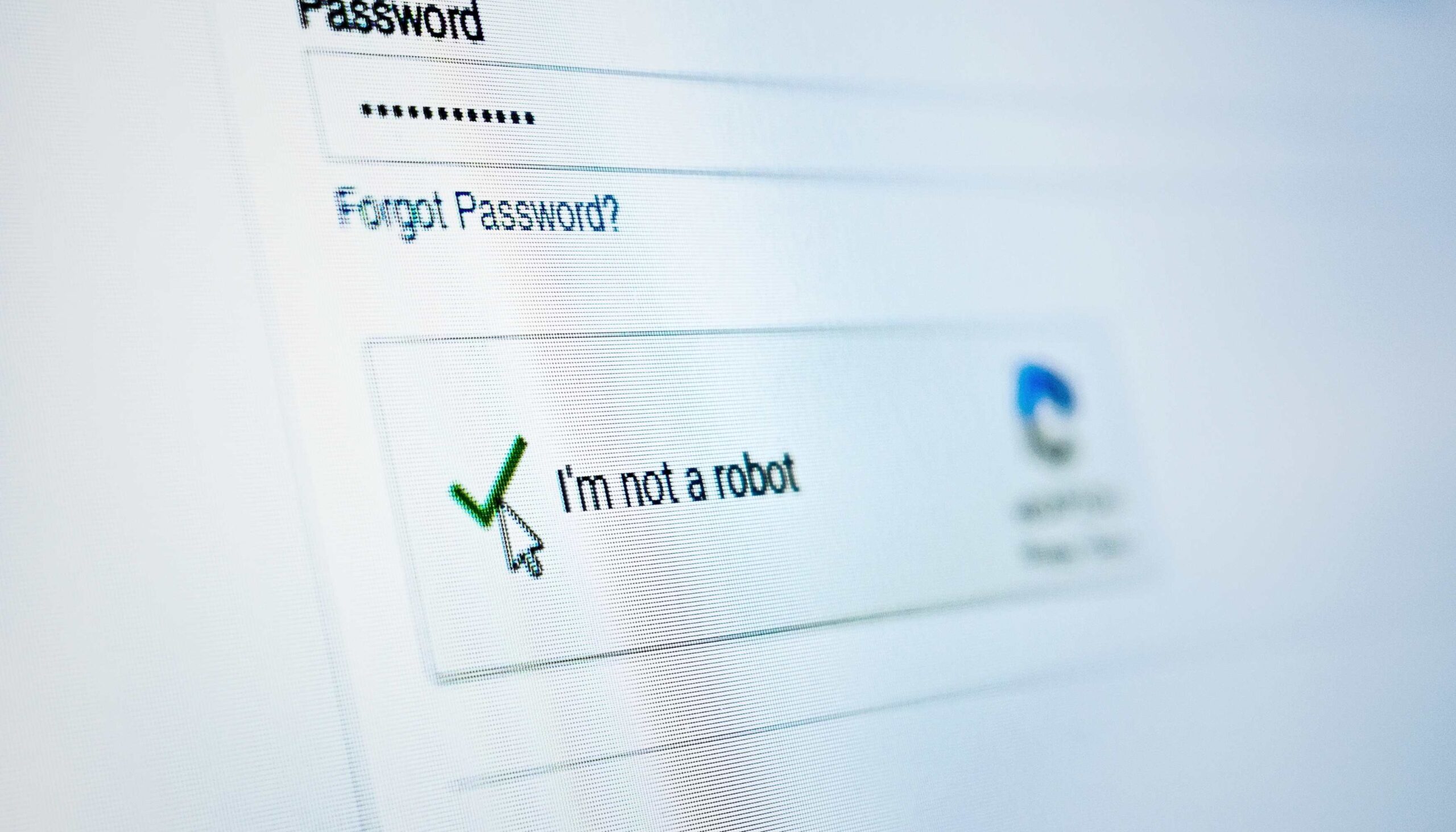
You’ve clicked on traffic lights, identified crosswalks and selected every image containing a fire hydrant. Google’s reCAPTCHA has, for years, turned the experience of proving you’re human into a mildly irritating visual puzzle. Now Google is testing something different: it wants you to wave at your camera.
The new system asks users to perform a hand gesture in front of their device camera. Google records a short clip, extracts 21 hand-knuckle coordinates to confirm a live human is present, and says the video is deleted after verification. Audio isn’t recorded and the camera permission can be revoked later through browser settings.
The reason for the change is straightforward: AI systems have become capable enough to solve image-grid CAPTCHAs reliably, so the old format no longer works as a bot filter. A live hand is harder to fake than a correctly labelled traffic light.
Why This Is A Bigger Deal Than It Sounds
The gesture itself isn’t the problem – the precedent is.
What Google is testing isn’t a facial recognition system or an identity check – it’s a hand movement. That’s a relatively low-stakes form of biometric verification, and the company says the extracted landmark data isn’t linked to a user’s identity. The privacy critique isn’t that Google is secretly watching your face.
It’s that camera access is being normalised as a standard condition for basic web use. Verifying humanity online used to be a simple puzzle; now, Google is testing a method that demands camera access. This creates a divide – whether due to hardware limitations, strict corporate security policies, or privacy concerns, many people cannot, or will not, grant camera access. This new ‘gesture CAPTCHA’ acts as an exclusionary barrier that the traditional image puzzle never was.
There’s also the question of what “deleted after verification” actually means in a technical pipeline operated by a company of Google’s size. The claim is plausible – there’s no particular reason to doubt that Google deletes the raw clip. But “temporary processing” still involves capture, transmission and processing of a video of your hands. Whether that creates a biometric-adjacent trace anywhere in the pipeline, and what consent standard should apply to that, is a question privacy advocates are already raising.
The answer is “trust us,” from a company whose entire business model is built on data collection. That’s not an unreasonable basis for scepticism.
Why This Matters In The Bigger Picture
“Prove you’re human” systems have been escalating for years, and each iteration asks more of the user.
The first CAPTCHAs asked you to read distorted text, then identify objects in photos, then click on specific items across multiple images, then pass behavioural tests that ran in the background analysing your mouse movement and browsing history. The gesture CAPTCHA is the next step: now the system wants access to your camera.
The technical logic is coherent – AI is solving each format faster than the previous one, so the format has to keep advancing. A hand movement is harder to replicate than a cursor pattern, which was harder to replicate than a labelled image grid. The digital competition is escalating, and Google isn’t inventing the problem. But the solution each time is to push deeper into sensing the user – and the cumulative effect of that trajectory is a web where routine browsing involves a progressively more intimate relationship between the user and the sites they visit.
Google says this is a test, not a universal rollout, and reports describe the gesture option as supplementary rather than a replacement for existing image or audio challenges. Overstating this as “Google will now always film you” would be wrong. The trajectory is clear: privacy is becoming something users negotiate challenge by challenge, rather than a baseline expectation of ordinary web use.
The hand-gesture test is probably going to work well as a bot filter. It’s worth pausing to think about what the internet will look like in ten years if this keeps up – and whether we’re comfortable trading incremental access to our cameras and bodies for the right to access websites without solving a puzzle.


