




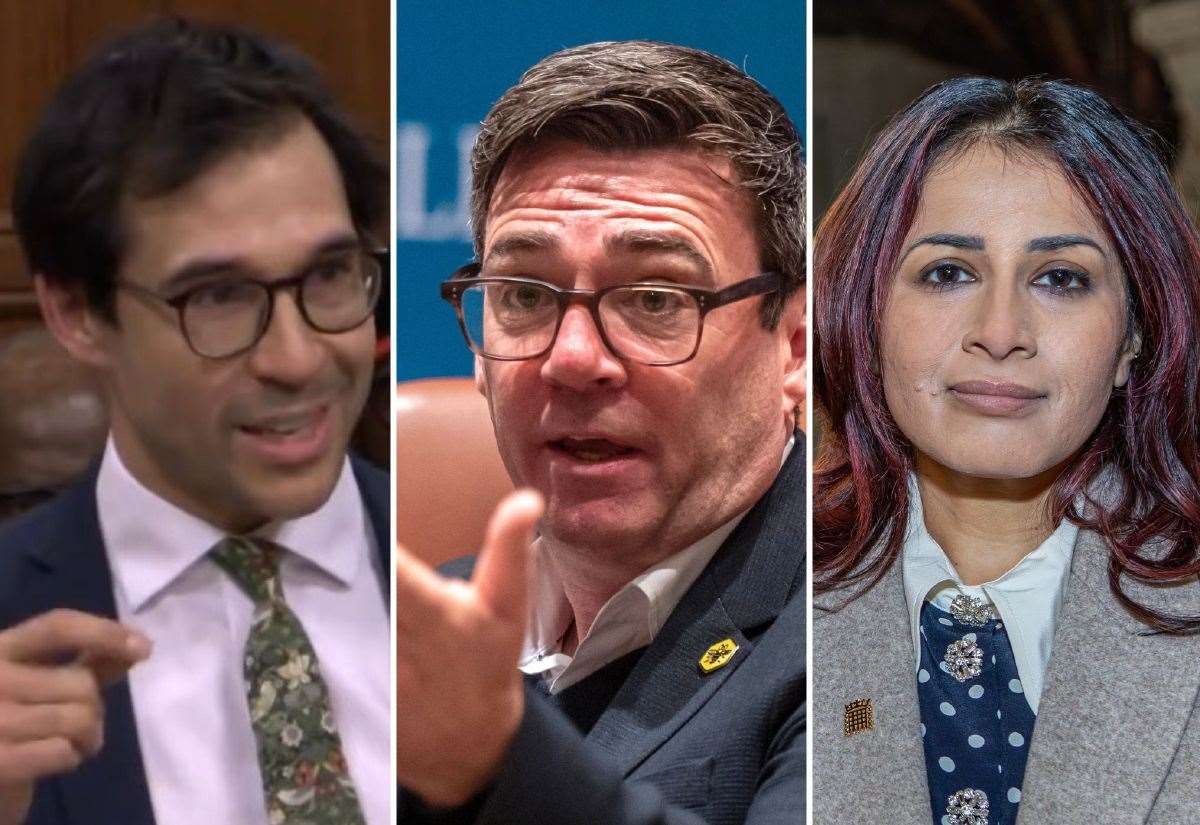
In the past several days, Andy Burnham’s ascension from Manchester Mayor to Prime Minister has gone from the dewy-eyed hope of MPs and activists to a sure thing.
With Sir Keir Starmer’s resignation announcement this morning, the newly elected member for Makerfield looks certain to be the next PM, with his only viable challenger, Wes Streeting, announcing his support for Burnham’s coronation.


Anybody who keeps their ear to the ground in Labour politics in recent months will have noticed that the leader-in-waiting draws his support from every quarter of the party.
Formerly loyal Starmerites elected for the first time in 2024, the ‘soft-left’, the post-Corbynite remains of Labour’s former leftmost flank, ‘Blue Labourites’ – all but the most dedicated of the Blairite right see Burnham as their one hope for survival.
The future PM will now need to accommodate these often competing factions, while also governing the country and fending off the electoral threat of Reform UK.
With Kent on the symbolic frontline of the immigration debate – and, since 2024, hosting many new Labour MPs for the first and perhaps last time – what would a Burnham leadership mean for the county?
Will there be a general election?
Mike Tapp, Dover MP and junior immigration minister under Keir Starmer, has found an unlikely ally in Nigel Farage this week, as both have called for a new general election given the change of personnel at the top.

There is almost no chance of that.
As it stands, the next election is scheduled for 2029 – though a Prime Minister can personally call one ahead of schedule if they choose.
Officially, the PM just happens to be the person best placed to lead a majority in the House of Commons to deliver on the mandate given to them and their manifesto by voters.
Our system is not Presidential, though the idea that a change of leadership requires a new election treats it as if it is.
Labour won a landslide in 2024, on an incredibly low turnout of 59.7%, which is even lower if you factor in those who would be eligible to vote but weren’t even registered to do so. By contrast, the turnout for the EU referendum was 72.21%.
The real problem is further upstream than the name of the head honcho. Labour’s mandate, outside of a promise of “change” and reduced immigration, is thin – and most within the party know it.
Nonetheless, when all the polls say Labour would take a beating at a general election held now, why would a new leadership willingly call one?
A new election would be political Russian Roulette. Labour would be lucky to survive it hobbled – and more likely would be ejected from government. It would scupper their only chances to ensure their future survival as a party – which is the explicit goal of a Burnham premiership.
More changes of personnel?
A new PM needs a new cabinet. No MP goes into Parliament planning to stay a backbencher for their whole career, so some will already be hoping for a role under the new management.

The only Kent MP with a ministerial position is the aforementioned Mr Tapp of Dover – a loyal Starmer supporter and vocal proponent of the government’s perceived hard-line immigration stance.
He said on Sunday: “Is it time to legislate; if a change of leader is forced by its own Party then a General Election must be called. That would stop the constant churn and focus all politicians on delivery.”
Given this and his bemoaning of “workplace politics”, he may find himself banished to the backbenches quite soon.
Gillingham & Rainham’s MP Naushabah Khan served as a Parliamentary Private Secretary to the Cabinet Office from September 2025 until resigning in May this year, citing Sir Keir having “lost the confidence of the public.”
A few weeks ago, Wes Streeting visited her to make a video about housing on her patch.
However, with him no longer in the running – presumably thanks to being offered a nice position in a Burnham cabinet – Ms Khan’s natural move is to fall in behind the new leadership. Perhaps she will be rewarded with a new posting in exchange for being early to jump ship on Starmer.

Another early and prominent critic of the outgoing PM is Folkestone’s Tony Vaughan.
A former immigration lawyer, he has been very critical of the hard line on that issue trumpeted by Keir Starmer and Home Secretary Shabana Mahmood.
As a competent, well-regarded backbencher, many see him as a natural fit for a ministerial role of some sort.
However, a Burnham leadership does not automatically mean a ‘softer’ position on immigration, despite many of his backers wanting one.
Andy Burnham becoming Prime Minister could mean a return to the Labour Party for Canterbury’s Rosie Duffield.
She previously told KentOnline she would be keen to rejoin under a new leader, having quit Labour in September 2024 because she felt “hounded” over her views on gender.
Immigration
Perhaps the only part of Labour’s mandate which is clear – the public want reductions in both legal and illegal immigration.

The government under Starmer has indeed reduced it, but the growing popularity of Reform seems to imply the public still isn’t happy on this front.
Under Starmer, the government’s rhetoric on immigration was so enthusiastic for crackdowns that it has alienated a great many Labour MPs and members, many of whom are disposed to being pro-immigration.
They may not have been enthused to read reports in recent days that Shabana Mahmood, the public face of the government’s position on immigration, is likely to remain in post as Home Secretary under Burnham.
So a radical shift in actual policy is unlikely, but if Burnham takes a more conciliatory tone on the issue, he will no doubt create ammunition for Reform.
During the Makerfield by-election, Nigel Farage took to referring to him as ‘open borders Burnham’ – an attack line itching for re-use if Burnham is seen to compromise on immigration.
With Reform running Kent County Council, and fancying their electoral chances in many of the county’s seats, one imagines their local councillors and operators here may be licking their lips at the prospect of a new national foe.
The most significant impact of Andy Burnham becoming the PM may not be anything he does himself, but rather the new form of opposition he generates in his enemies.
