




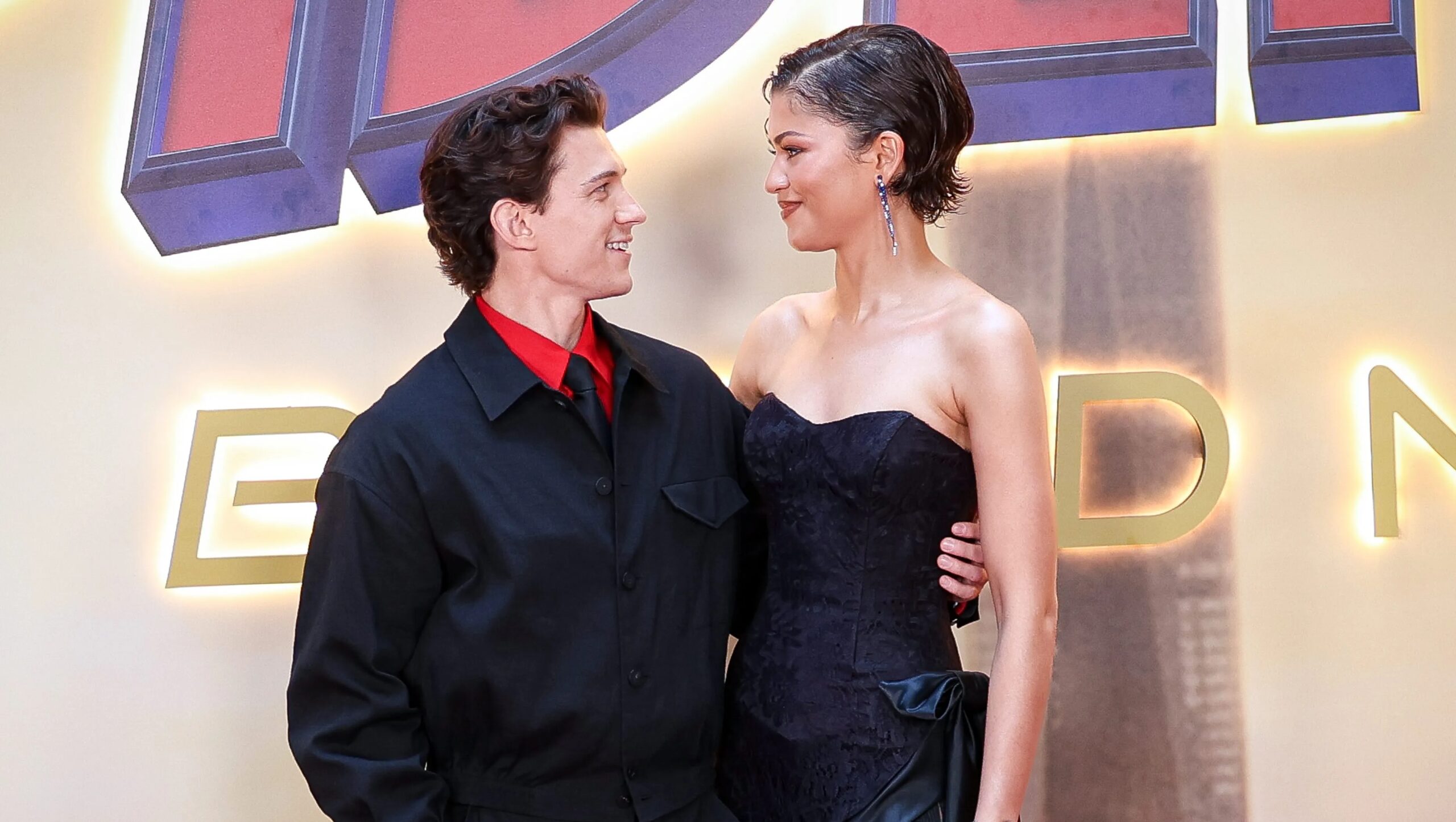
Tom Holland just said the quiet part out loud. He’s married to Zendaya. He called her his person. He said he’s the happiest he’s ever been.
And the internet melted, as it should. These two have been the most quietly devoted couple in the Marvel orbit for years. No messy red carpet drama, no cryptic Instagram unfollows, just two people who seem genuinely steady around each other.
So why, reading his quote, did I feel a small therapist-flinch of protectiveness for them?
Because “I found my person, I’m the happiest I’ve ever been” is one of the most beautiful, and most precarious, sentences a human can say out loud. I hear it in my office all the time. Usually, about a year before the first real fight.
The biology of “my person”
Here’s what’s actually happening when Tom says that about Zendaya. He’s not being poetic. He’s describing a biological event.
Attachment theory is the best theory we have of what love is. And in short, love is the need to be emotionally bonded to another person. According to that theory, everybody needs this. From the cradle to the grave, it’s not optional, no matter how good your Netflix subscription is.
When you were born, you didn’t just need food and shelter. You needed a good enough other on the other side of your birth, someone who would be there for you and show you that you were enough. Without that, you would have died. That wiring doesn’t go away when you grow up. It just transfers.
For Tom, Zendaya is now that person. His whole organism is scanning her, all the time, asking two questions. Are you there for me? And am I enough for you?
That’s what “I found my person” actually means. He has installed her as his primary attachment figure. Which is gorgeous. And it’s also why the stakes just quietly went up for both of them.
In the honeymoon period, everything your partner says and does feels like further evidence of “I am loved, I will be cherished forever, I knew this day would come.” You’re both living in an elevated state, sure you’ll feel this way forever.
And then, inevitably, something shifts.
The buffalo nobody noticed
In my office, I see this transition happen over the most mundane thing imaginable.
You’re driving along in the car. You say to your spouse, “Hey, look at that buffalo over there.” And they don’t respond. Or they pull the blanket toward themselves a little too quickly and you think, what did you do?
That’s it. That’s the moment. The first tiny tear in the honeymoon fabric. Your nervous system clocks it before your brain does, and suddenly your partner is asking, where did you go, are you upset with me? Your partner is asking the same questions about you.
Couples are in these cycles with each other constantly. Most of the time people only notice when it escalates into something that looks like a fight. But it’s been happening the whole time, the same way little kids check in with a parent across a playground. Mom, are you there? Where are you now?
The more one of you feels abandoned, the more you reject the other person. The more rejected they feel, the harder it is for them to show up and love you. So you feel more abandoned, so you reject some more. This is where most couples get stuck, and it has nothing to do with whether they’re each other’s person. They are. That’s exactly why it hurts.
If you want to find out your relationship pattern before the first big rupture finds you, I’d rather you do it now than at 2 a.m. after the fight you didn’t see coming.
Disconnection is a feature, not a bug
Here is the thing I wish someone had told Tom and Zendaya at the wedding, and that I tell every couple sitting on my couch in the glow-stage of their love.
Disconnection between two people who love each other is a feature, not a bug. Everyone walks around acting like disconnection is something gone wrong, a glitch to squash. It isn’t. Disconnection is evidence that you actually love each other and that you scare each other because you mean so much.
Your worst fights with your partner only happen because you love them so much and they love you back. The fight is a wild miscommunication of that love. The only reason people do the painful dance is because they’re both hurting inside, both feeling unloved in the moment.
And here’s something gentler I want Tom to hear. If you really think the goal is for you to get to be your fully authentic self in every corner of your life and never scare your partner, you’re going to struggle. You’re guaranteed to scare the living daylights out of Zendaya at some point just by being you. She’s guaranteed to do the same to you. There’s a whole science behind enmeshment and the way couples accidentally try to manage this by becoming too fused, and it does not save you from the scary part. Nothing does. The scary part is the price of admission for the love.
The part of you that needs love the most is not a weak or needy part. It’s the best part of you, and it deserves love.
What being his person actually asks of her, and her of him
So if disconnection is coming for Tom and Zendaya, what’s the actual move?
Give up the dream of never fighting again. Good relationships aren’t defined by the amount of good times you have. They’re defined by how good each of you gets at giving yourselves and each other a chance to repair.
When you fight, try to see it through an attachment lens. Can you see your own reactivity as being driven by the need to be important to your partner, or the need to be enough for them? If you can, you’ll realize you only fight because you love each other. Nothing else is going on. That reframe, repeated over a thousand small moments, is what actually keeps a marriage alive.
Repair is the proof. Not the absence of rupture. The return.
One more thing for the happiest he’s ever been
Tom, if you ever read this, congratulations. You really did find her. And the day she does something tiny that knocks the wind out of you, or you do it to her, that’s not the love ending. That’s the love getting real.
The happiest you’ve ever been isn’t a finish line you crossed at the altar. It’s a thing you’ll build, again and again, every time one of you reaches back across the disconnection and says, I’m here, come back.
____________________________________________________________________________________
Figs O’Sullivan, the founder of Empathi and his wife, Teale, are couples’ therapists in San Francisco, relationship experts to the Stars and Silicon Valley, founders of Empathi, and built Figlet, our AI relationship coach, an AI relationship coach trained on their clinical work.
