




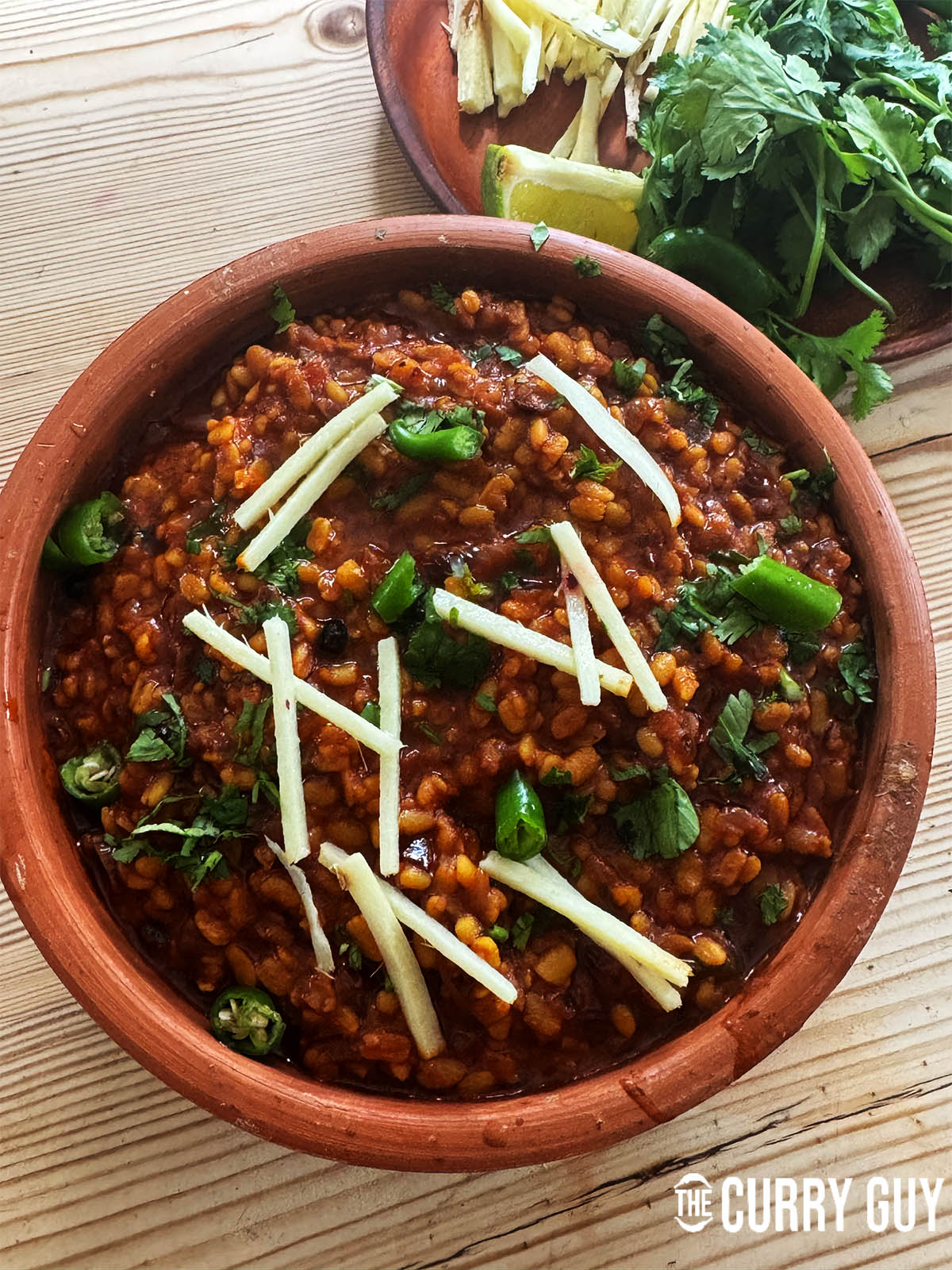
Whenever I see urad daal mash or mash ki dal on a menu, I order it. Although it isn’t as common in British Indian restaurants as dishes like dal makhani or tarka dal, it remains a favourite in Pakistani homes and specialist Pakistani restaurants throughout the UK and beyond. If you’re a fan of authentic Pakistani and North Indian food, this urad dal mash recipe is one you absolutely need to try this daal mash recipe!

About This Daal Mash Recipe
The beauty of this dish lies in its simplicity. Split urad dal is cooked until until about 80% ready. Then it’s added to a delicious masala to continue cooking until rish and creamy.
If you’ve never made urad dal mash before, prepare to discover your new favourite dal recipe.About
What is Urad Daal Mash – Mash Ki Dal?
Urad dal mash is a traditional Pakistani lentil dish made using split and skinned black gram lentils, often referred to as white urad dal.
The word “mash” refers to the type of lentil used rather than the texture of the finished dish. Although the lentils soften beautifully during cooking, they retain enough structure to provide body and character. I liken the finished texture to being similar to cooked rice. It has some bite but it is still very soft.
Unlike dal makhani, which is often enriched with cream and butter, urad dal mash relies on slow cooking and a simple masala base or sometimes a tarka poured over the top at the end to develop its flavour.
It is commonly served alongside rice, chapatis, naan or other curries and is enjoyed both as an everyday family meal and at special gatherings.
Want to try Daal Mash before you make it?
In the UK, you’re more likely to encounter urad daal mash in Pakistani restaurants than in traditional British Indian curry houses.
Many Pakistani cafés, restaurants and takeaways serve it as part of a daily special alongside dishes such as nihari, haleem and chicken karahi.
It’s also popular in areas with large South Asian communities and can often be found at community events and family celebrations.
If you live in North America, look for Pakistani-owned restaurants rather than generic Indian buffets, where dal makhani tends to dominate the menu.
Ingredients
Fresh ingredients are key to getting the best flavour from this daal mash recipe. You’ll find the ingredients listed below, while the precise amounts are provided in the recipe card at the end of the page. For smooth cooking and the best outcome, it’s a good idea to have everything measured and prepared before you begin.

See recipe card for quantities.
- Ghee
- Garlic cloves
- Ground turmeric
- Water
- White split urad lentils
- Green bullet chillies
- Cloves
- Black peppercorns
- Red onions
- Salt
- Kashmiri chilli powder
- Red chilli flakes
- Ground cumin
- Ground coriander
- Tomatoes or passata
- Kasoori methi
- Garam masala
- Black pepper
- TO GARNISH
- Julienned ginger
- Chopped chillies
- Coriander
Step by step photos
Below, you’ll see step-by-step photographs to guide you through the recipe. At the bottom of the page, you’ll also find the full recipe card, which includes the complete list of ingredients and written instructions in an easy, printable format.

- Step 1: Melt 4 tbsl of the ghee in a saucepan over a medium-high heat. Add the garlic and fry it gently in the ghee until golden brown. Be careful not to burn the garlic. If it is getting too dark, take the pan off the heat.

- Step 2: Add the turmeric and sliced bullet chillies along with one litre (4 cups) of water and bring to a rolling simmer.

- Step 3: Wash your urad dal in several changes of water and let soak for 30 minutes. Then add it to the simmering water. Bring back to a simmer and then reduce the heat to medium and cook it gently for about 50 minutes or until almost cooked through.

- Step 4: Skim any foam that rises to the top as the daal simmers.

- Step 5: While the lentils cook, heat the remaining ghee in another pan. Add the cloves and peppercorns and let them flavour the ghee for 30 seconds. Then stir in the chopped onions and fry for about 10 to 15 minutes or until golden brown.

- Step 6: Then stir in the chilli powder, dried chilli flakes, cumin and ground coriander. Stir well to combine.

- Step 7: Add the chopped tomatoes or passata. Stir in about 70ml (1/4 cup) water to thin the sauce some. This can simmer gently over a low heat until the lentils are ready, adding a drop of water from time to time if needed.

- Step 8: When the lentils are about 80% cooked, strain them and add the lentils and all the other solids to the base masala and stir it all well to combine.

- Step 9: Continue simmering over a medium heat until the lentils are soft like rice and creamy. You can add a drop more water to help do this but not too much. When the ghee begins to separate and rise to the top of the dal, add the kasoori methi by rubbing it between your fingers. Then sprinkle in the garam masala and season with salt and pepper to taste.

- Step 10: To serve, garnish with julienned ginger, chopped chillies, fresh coriander squeeze in lemon or lime juice at the table to taste.
Useful Equipment
You don’t need any special equipment to make daal mash – mash ki dal but the following will come in handy.
Large Saucepans: A heavy-based saucepan distributes heat evenly and helps prevent sticking.
Fine Mesh Sieve: Good for rinsing the lentils thoroughly.
Wooden Spoon: Ideal for stirring the dal without damaging the lentils excessively.
Pressure Cooker or Instant Pot: If you’re short on time, both work brilliantly. Cook the lentils under pressure for approximately 10 to 12 minutes, followed by natural pressure release.
Storage and Reheating
One of the best things about urad daal mash is that it tastes even better the next day.
Refrigerating
Allow the daal to cool completely before transferring it to an airtight container.
Store in the refrigerator for up to four days.
Freezing
Freeze in portion-sized containers for up to three months.
Defrost overnight in the refrigerator before reheating.
Reheating
Reheat gently in a saucepan over medium heat.
Add a splash of water to loosen the consistency as the daal thickens considerably when chilled.
.
Top Tip
Don’t rush the lentils.
Although it can be tempting to increase the heat, gentle simmering is what produces that luxurious, creamy consistency. Stir occasionally and add water gradually rather than all at once.
The final texture should coat a spoon but still show individual lentils.
FAQ
Not necessarily. Split white urad dal cooks relatively quickly without soaking, though soaking for 30 minutes or longer will shorten the cooking time.
You can, but the texture will differ significantly and the cooking time will increase.
No. It is generally mild, with the chilli powder and dried chilli flakes contributing more aroma than heat.
No. Dal makhani uses whole black urad and often kidney beans and is usually enriched with butter and cream. Urad dal mash is lighter and more rustic.
Absolutely. Use vegetable oil or dairy free ghee instead of the ghee.
Looking for other recipes like this? Try these popular dals!
Pairing
You can serve Daal Mash or Mash ki Dal as a side dish or make it a main with one of these popular sides.
Have you tried this daal mash recipe?
If yes, please give it a star rating in the recipe card below and leave a comment. I love receiving your feedback and I’m sure other readers of my blog do too. Thank you.
If you are not already doing so, please follow The Curry Guy on YouTube, Instagram and Facebook for all our latest recipes.
Yield: 6
Daal Mash – Mash Ki Dal
This daal mash is very rich and delicious. At Pakistani restaurants, you will see a lot more ghee floating at the top because they use about twice as much as I did. You can reduce the amount of ghee even more if you like but the ghee makes this dal perfect for soaking up with naans and chapattis so I recommend using as much as I do or going all out and doubling it for the full experience.
Prep Time
10 minutes
Cook Time
1 hour
Total Time
1 hour 10 minutes
Ingredients
- 125ml (1/2 cup) ghee
- 10 garlic cloves, skinned and sliced in half through the centre
- ½ tsp ground turmeric
- 1L (4 cups) water
- 1 tsp salt
- 1 cup white split urad lentil
- 3 green bullet chillies, thinly sliced
- FOR THE BASE MASALA
- 3 cloves
- 10 black peppercorns
- 2 medium red onions
- 1 tsp salt
- 1 tsp Kashmiri chilli powder
- 1 tsp red chilli flakes
- 1 tsp ground cumin
- 1 tsp ground coriander
- 200g chopped tomatoes or passata
- 70ml (1/4 cup) water
- 1 tsp kasoori methi
- 1 tsp garam masala
- Salt and pepper to taste
- TO GARNISH
- Julienned ginger
- Chopped chillies
- Coriander
Instructions
- Melt 4 tbsl of the ghee in a saucepan over a medium-high heat. Add the garlic and fry it gently in the ghee until golden brown. Be careful not to burn the garlic. If it is getting too dark, take the pan off the heat.
- Add one litre (4 cups) of water and the turmeric and bring to a rolling simmer. Wash your urad dal in several changes of water and then add it to the simmering water with the salt and chillies. Bring back to a simmer and then reduce the heat to medium and cook it gently for about 50 minutes or until almost cooked through.
- While the lentils are cooking, you can start preparing the base masala. In a high sided frying pan, Heat the remaining ghee over a medium-high heat. When the ghee begins to shimmer, stir in the cloves and black peppercorns. Let these spices flavour the ghee for about 30 seconds and then add the chopped onions and salt.
- Fry the onions in the ghee for about 10 to 15 minutes or until golden brown and soft. Then stir in the chilli powder, dried chilli flakes, cumin and ground coriander. Stir well to combine and then add the chopped tomatoes or passata.
- Stir in about 70ml (1/4 cup) water to thin the sauce some. The base masala should be thick but soupy. When the lentils are about 80% cooked, strain them and add the lentils and all the other solids to the base masala and stir it all well to combine.
- Continue simmering over a medium heat until the lentils are soft like rice and creamy. You can add a drop more water to help do this but not too much.
- When the ghee begins to separate and rise to the top of the dal, add the kasoori methi by rubbing it between your fingers. Then sprinkle in the garam masala and season with salt and pepper to taste.
- To serve, garnish with julienned ginger, chopped chillies, fresh coriander squeeze in lemon or lime juice at the table to taste.
Recommended Products
As an Amazon Associate and member of other affiliate programs, I earn from qualifying purchases.
Nutrition Information:
Yield:
6
Serving Size:
1
Amount Per Serving:
Calories: 128Total Fat: 3gSaturated Fat: 2gUnsaturated Fat: 2gCholesterol: 6mgSodium: 848mgCarbohydrates: 22gFiber: 7gSugar: 4gProtein: 6g
