




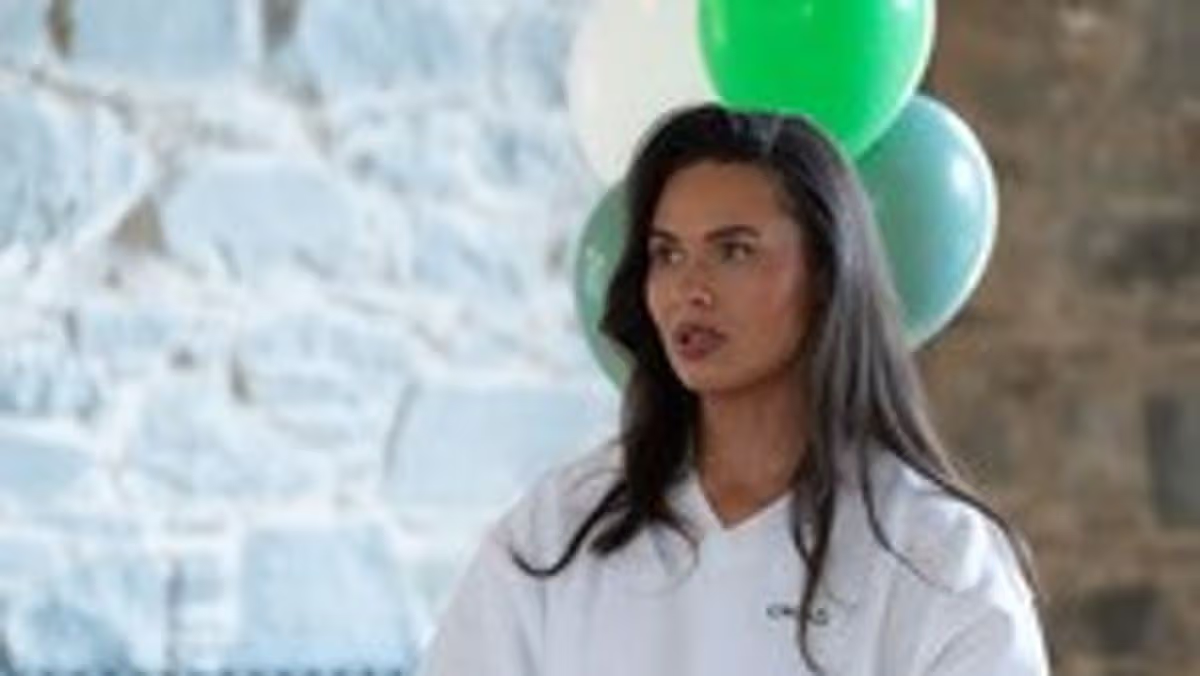
Cáoileánn Conway describes living with constant rumination, fear and exhaustion from over-thinking – planning for worstcase scenarios before they happened, managing panic before simple interactions, and feeling drained by the constant anxiety

Cáoileánn Conway
When Cáoileánn Conway picked up her phone and called Lifeline in the early hours of the morning, she didn’t know what to say – she just knew she couldn’t cope.
For a long time when growing up Caoileann, who is now a performance dietitian and social media personality, didn’t have the language to explain how she was feeling.
“When I was younger, mental health just wasn’t really a thing,” she says. “It wasn’t something we were even aware of or spoke about.”
At the time, Cáoileánn was 19 and struggling silently through her first year of university. What had started as feelings of anxiety in her teens had intensified, turning everyday interactions into overwhelming challenges.
“I would describe it as starting with anxiety and then moving more into a combination with depression, where I would feel numb but constantly worried at the same time,” she explains. “With anxiety you’re constantly worrying, constantly thinking ahead about all the worst possible scenarios – how am I going to get through today?”
She describes living with constant rumination, fear and exhaustion from over-thinking – planning for worstcase scenarios before they happened, managing panic before simple interactions, and feeling drained by the constant anxiety.
“I’d get into the car at the end of the day by myself and just feel absolutely exhausted. It was affecting absolutely everything – I didn’t want to go to uni, see friends, go to football training. I didn’t want to socialise much because I was trying to be a different person for each situation, but I didn’t even know who I actually was. It’s really exhausting when you’re constantly just troubleshooting. Which is probably hard to believe considering what I do for work now.
“I just wanted the thoughts to stop. I wasn’t suicidal, and I’m always really clear about that, as I’m so aware people go through much worse. I just knew I couldn’t keep living like this every day.”
For years, Cáoileánn tried to manage these feelings largely on her own, but the night she called Lifeline was a turning point.
“It must have been about half twelve or one in the morning and I was scrolling through social media,” she recalls. “I was sitting in the middle of my bed, I couldn’t breathe and my thoughts were spiralling. I had never had a panic attack before and I didn’t know what to do. I just typed ‘Lifeline’ into Google and rang the number.”
Lifeline – available on 0808 808 8000 – is Northern Ireland’s crisis response helpline. Trained counsellors are available 24 hours a day, seven days a week, offering free, confidential support to anyone in Northern Ireland feeling overwhelmed, distressed or unable to cope. Lifeline counsellors are experienced in working with suicide, self- harm, abuse, trauma, depression, anxiety and many other issues.
Cáoileánn remembers the moment the call connected: “This man answered. He had a really deep voice, and he was just so kind. He didn’t push me to explain anything. He just helped me breathe. He told me that in that moment, I was safe. That nothing was going to harm me right now. All I had to do was stay on the phone.”
For Cáoileánn, that reassurance made all the difference.
“When he asked what was wrong, I just kept saying ‘I don’t know how to make the thoughts stop.’ And that’s when he started giving me direction. For the first time, I felt like – oh my God – there are things I can do. There are solutions here.
“That was my catalyst to start getting more professional help. If I hadn’t got that help at that time, I would be a completely different person today.”
Kathy Owens from the Public Health Agency, who commissions the Lifeline service, says: “When someone phones Lifeline, they speak directly to a trained counsellor who introduces themselves and creates a calm, supportive space. Many callers don’t know exactly why they’ve called – and that’s okay.
“Lifeline uses a compassionate approach aimed at providing support and finding positive solutions, helping callers make sense of what they’re feeling and identify next steps.
“Cáoileánn’s experience highlights the power of just lifting the phone and starting a conversation, and shows that talking really helps.”
For Cáoileánn, support continued beyond the initial call. Where appropriate, Lifeline can provide follow-up calls or short-term crisis counselling, or helps connect people to other services that may further support their needs.
Cáoileánn was offered a sixweek counselling programme.
“Those six weeks were the start of everything,” she says. “It helped me realise I didn’t have to feel like that forever. That was the start.”
Now, Cáoileánn uses her platform ‘Be a Better You’ to talk not only about nutrition, but also openly about mental health. She believes mental wellbeing needs to be treated with the same care and consistency as physical health.
“I can teach you everything about nutrition, but if your mental health isn’t there, you will struggle to act on it. I always say mental health is like a muscle. The way I train five or six days a week physically, I have to do the same for my mental health. And if I stop, I could easily slip back into old ways.”
Her message to others is direct and grounded in experience.
“There’s absolutely nothing to lose, because what you’ve been doing hasn’t worked,” she says. “Unless I called Lifeline that time, I would never have known there were solutions.”
Lifeline is available 24/7, free of charge on 0808 808 8000, for anyone in Northern Ireland who needs support. Talking really helps. For more information on Lifeline visit www.lifelinehelpline.info.
For all the latest news, visit the Belfast Live homepage here and sign up to our daily newsletter here.
