










| Updated:
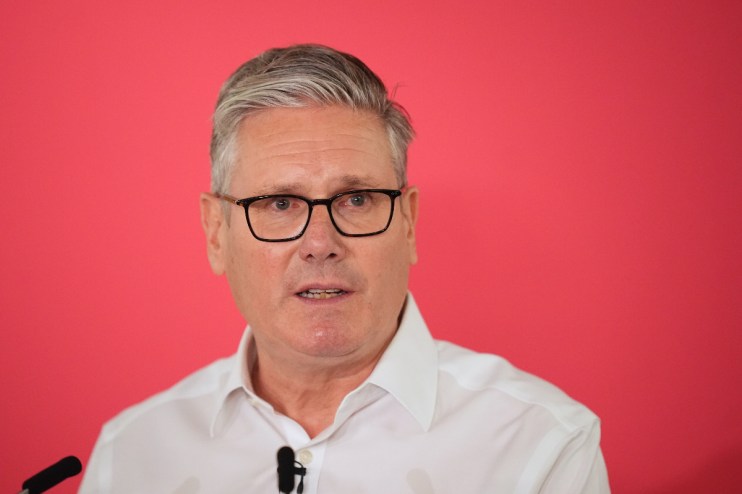

An era is distinctively over, but what takes its place, both in terms of who will lead the country and in the direction they will take, is far from clear, says Matthew Lesh
“The old world is dying,” the Italian Marxist Antonio Gramsci said, “and the new world struggles to be born.”
Last week was a death knell for Britain’s two-party system. The local election results across England, along with the Welsh and Scottish devolved administrations, are as sure a sign as any that British politics has fragmented. A multiparty system has exploded from the public’s frustrations with the status quo and deep cultural and economic divides that the two parties can no longer contain.
But how Britian moves forward – what the new world looks like – is far from clear.
There’s at least one major character from the old world who is unlikely to play a starring role for too much longer: Prime Minister Keir Starmer. As revealed by today’s City AM / Freshwater Strategy Poll, a clear majority (63 per cent) think Starmer should go, with less than one-third (30 per cent) backing him to stay on; while one-quarter of voters say they would be more likely to vote for the party under a different leader.
Suicidal
It would be suicidal for Labour to go to the next election with such an unpopular leader. But exactly how and when the leadership change will occur remains an open question. Particularly since the public’s favoured candidate, Andy Burnham (backed by 29 per cent, well-ahead of Angela Rayner and Ed Miliband on 12 per cent each or Wes Streeting, favoured by just nine per cent) is not yet even in Parliament.
But even more important for those currently plotting is the direction that the party takes the country. A change in personnel at the top without addressing the public’s frustrations may provide a political sugar hit, but it will not be sustained if people ultimately don’t feel their concerns are being addressed. Despite being local elections, the top issue for voters last week, regardless of party, is distinctly national: the cost of living. The second-ranked issue, immigration, is one over which councils have virtually no say.
Labour is in a challenging position. Not only are they struggling to fulfil their manifesto pledge for ‘change’, but they seem totally rudderless in respect to where they’re taking the country – and being pulled in all sorts of contradictory directions.
Labour is bleeding votes to the Greens in progressive London strongholds like Hackney and Southwark. Though the Green Party appears to have underperformed expectations amid its antisemitism row, 59 per cent of those aware see it as a genuine problem. Leader Zack Polanski’s net approval has slumped nine points to -17, with 58 per cent lacking confidence in him. While 42 per cent say the controversies make them less likely to back the Greens, a troubling 11 per cent say they’re now more likely to.
On the other hand, the obvious and big winners are Reform, who picked up more than 1,450 council seats last week. Nationally, Reform maintains a clear polling lead at 29 per cent, well-ahead of Labour at 18 per cent. This is a party who have promised to cut back state spending and red tape on business, as well as take a hardline stance on immigration and conservative views on cultural issues. Also on the right, Kemi Badenoch is personally becoming more popular, up eight points to a net approval of +4, now positive for the first time, and leads Starmer as preferred Prime Minister by 49 per cent to 31 per cent. But her Conservative Party is still languishing at 20% in vote share.
When asked about the direction the country should take on the economy, there is a clear mismatch between where the leadership hopefuls, including Burnham, are positioning themselves to win a ballot among Labour party members and where the general public stands. A clear majority (64 per cent) would prefer the government to tax and spend less and to reduce government borrowing, even if that means less investment in public services and infrastructure. Fewer than one-third (27 per cent) lean towards a bigger state. A new leader who comes in promising to rip up fiscal rules is unlikely to be popular for very long. Indeed, a majority (52 per cent) worry that a new Labour leader would pursue a more left wing economic agenda.
An era is distinctively over, but what takes its place, both in terms of who will lead the country and in the direction they will take, is far from clear.
Matthew Lesh is country manager at Freshwater Strategy


