










| Updated:
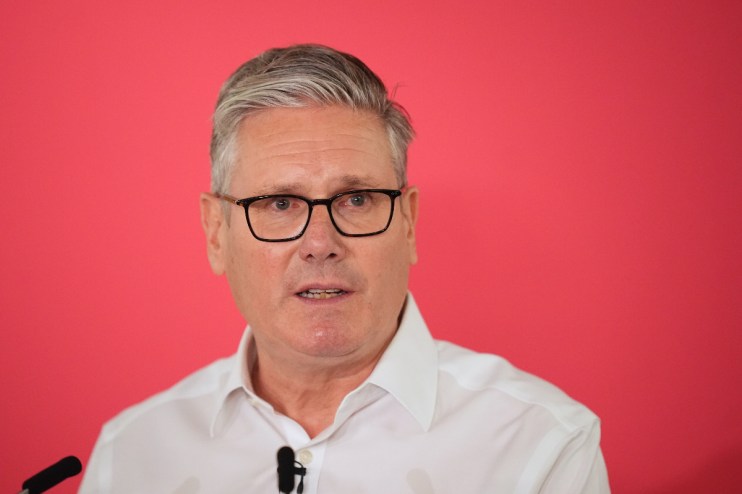

Keir Starmer’s Downing Street operation was plunged into a full-blown crisis on Monday, after three cabinet ministers urged him to set a timeline for his resignation despite the robust defence of his premiership he launched in a make-or-break stump speech earlier in the day.
Speculation over the future of his government reached fever pitch into the evening, when it emerged that home secretary Shabana Mahmood and two of her other cabinet colleagues told the Prime Minister to consider his position.
The triumvirate of of ministers, whose intervention was first reported by The Times, joined a chorus of more than 70 Labour MPs urging Starmer to lay out a timetable for his departure in the wake of Labour’s ballot-box battering last week, one of the party’s worst local elections results in its 125-year history. Several ministerial aides – including Wes Streeting’s parliamentary private secretary Joe Morris – also resigned from their posts in order to call for Starmer to step down, pushing the government to the brink of a full-blown mutiny.
Earlier, Starmer rebuffed calls for him to resign, and promised to “take responsibility for navigating us through a world that is more dangerous” than any period in his lifetime.
“For the British people, tired of a status quo that has failed them, change cannot come quickly enough,” he told a party event in London. “And truth be told, I’m not sure that they believe that we care. I’m not sure they believe that we see their lives. That’s tough to say when you come from a working-class background like me.”
The Prime Minister’s response comes despite the latest City AM/Freshwater Strategy poll showing 63 per cent of voters believe he should resign as leader of the Labour party. His personal approval rating fell by six points to -40, the lowest of any leader since the 2024 general election.
In an effort to win over his fractious backbenchers, Starmer promised to bring forward legislation that would nationalise British Steel as part of the King’s Speech on Wednesday.
The UK’s largest steelmaker has been stuck in limbo for over a year, after the government seized control of operations at the loss-making steelworks from its Chinese owner Jingye, without taking on full ownership. Its foreign backer had threatened to shutter the blast furnaces in April 2024, after it failed to reach an agreement with ministers on the level of state support for its Scunthorpe site.
Starmer hailed the announcement as an example of “public ownership in the public interest”. “Making Britain stronger with the hope of industrial renewal – that is a Labour choice,” he added.
The Prime Minister also vowed to pursue closer ties with the European Union that would “put Britain at the heart of Europe”. As part of the push, the UK would build on its restoration of the Erasmus scheme for students and offer young Brits a mobility scheme that will grant them the ability to travel and work freely in the bloc.
The flurry of announcements, which also included a previously announced promise to provide every young person looking for a job “a guaranteed offer of a job training or work placement”, was enough to stop backbencher Catherine West from launching an immediate leadership challenge.
Ministers round on Starmer after dire election defeat
The MP for Hornsey and Friern Barnet had threatened to launch a campaign to unseat the Prime Minister on Saturday if cabinet front-runners refused to table their own formal challenge before Monday. But she declined to follow through on the threat, instead joining calls for Starmer to lay out a path for him to stand down by the autumn.
Labour politicians have been reluctant to call for their leader’s immediate defenestration, fearful that none of the current crop of lawmakers has sufficient support to topple the Labour leader. Starmer made it abundantly clear that he would fight any immediate challenge to his leadership, telling the event: “I’m not going to walk away.” Asked if he would stand in a leadership race, he said: “Yes.”
Many MPs – including influential voices like former cabinet members Angela Rayner and Louise Haigh – are instead urging the Prime Minister to let Manchester mayor Andy Burnham pursue a seat in parliament. Sadiq Khan also called for Burnham to be installed as an MP via a byelection. The move, which Starmer said would be the decision of Labour’s ruling National Executive Committee, would then pave the way to Burnham’s coronation as Starmer’s replacement.
The febrile political atmosphere sparked another sell-off in the UK’s long-term government debt, with traders slashing exposure to Britain’s ballooning debt pile on fears any leadership reset would result in a leftward lurch on economic policy. The yield on the 10-year gilt rose by nearly 10 basis points to more than five per cent, while 30-year gilt yields returned their 27-year high struck last week.
The City AM/Freshwater Strategy polling also showed voters are fearful of any new leader introducing a wave of tax rises and spending commitments. Some 52 per cent said they feared a new government would pursue a more interventionist economic agenda. Nearly two-thirds (64 per cent) said they would prefer the government to tax less, spend less, and reduce borrowing, even if it means less investment in public services and infrastructure.
Other front-runners to be Starmer’s replacement include health secretary Wes Streeting, who is understood to be preparing his own leadership bid should the Downing St operation fall apart. Any swift challenge to the Prime Minister’s authority would benefit Streeting and his former cabinet colleague Rayner, as Burnham, who is not a Member of Parliament, would not be able to challenge under Labour party rules.


