













| Updated:
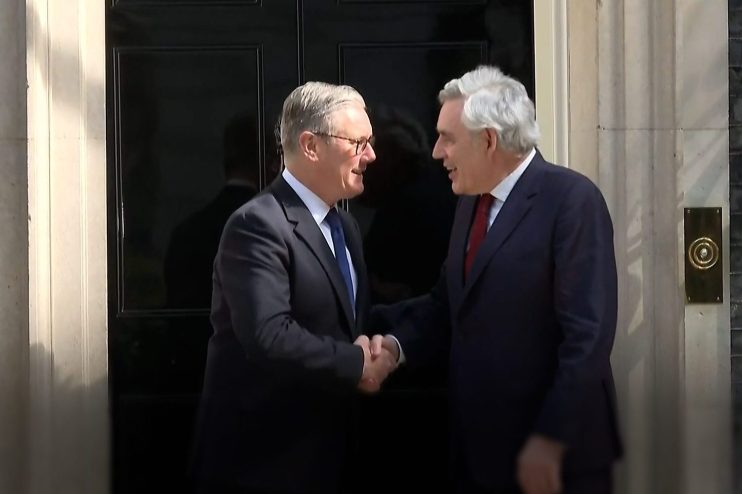

Former Prime Minister Gordon Brown has returned to government in a new role as Sir Keir Starmer has scrambled to save his premiership amid discontent among Labour MPs.
Brown will serve as the government’s special envoy for global finance. He will likely be tasked with sorting finance for defence ahead of the publication of the Defence Investment Plan.
Starmer also turned to Labour veteran Baroness Harriet Harman, once the party’s deputy leader, as his adviser for women and girls.
The appointments were made after bruising election results across the country, particularly in Wales and Scotland where Labour lost to nationalist parties, giving up control to Plaid Cymru and losing to the SNP again.
Starmer resisted calls for his resignation as he took responsibility for what he described as a “tough” set of local election results.
“I’m not going to walk away and plunge the country into chaos. We were elected to deal with these challenges and that’s what we will do,” Starmer said on Friday.
In another media appearance on Saturday, he echoed his statement that he would he would not quit and claimed appointments of Brown and Harman were “forward-looking”.
“It’s very future-looking, because this is about making sure that every woman has the opportunities that she deserves. And so Harriet will lead on that work, working with the Cabinet, working with the team.
“For Gordon obviously, one of the big challenges we face is global finance. The war in Iran is causing real problems, economic impact.
“We need more spending on defence and security, that needs to come together around international mechanisms and Gordon’s got a track record on that, and so that is building the strong economy of the future.”
His political manoeuvres came as at least 30 Labour backbenchers publicly called for Starmer to resign.
Former transport secretary Louise Haigh led the campaign against the Prime Minister on Friday as several MPs suggested Starmer should set out a “timetable” for his exit.
Starmer dealt blow by damning election results
Most Cabinet ministers came out in support of the Prime Minister in a co-ordinated effort to dampen leadership speculation although the likes of Lisa Nandy and Wes Streeting spoke in vague terms about their support for Starmer.
Andy Burnham and Angela Rayner also had not made any public comments by Saturday afternoon, long after it became clear that Labour had conceded significant losses.
Labour lost some 1,400 council seats while Reform UK gained around 1,300 across England. It lost control of Wales for the first time this century while SNP beat Labour by some distance.
In London, the party held on to some key London boroughs, including Merton and Redbridge, though it lost Wandsworth and Westminster in tightly-fought battles with the Tories.
The Greens took Hackney from Labour as well as Waltham Forest.

Nigel Farage hailed a “historic change in British politics” as Reform gained Havering, its first London council, as well as a swathe of seats in the North of England.
Tory leader Kemi Badenoch said her party is showing “signs of renewal” despite losing hundreds of council seats. The Tories kept Kensington and Chelsea and Hillingdon, plus Bromley and Bexley.
Nigel Farage’s Reform, on the other hand, were hopeful they could take outer boroughs like Hillingdon, Bromley and Bexley. They failed in each of the three councils but took Havering.
Markets held their nerve on Friday, but analysts warned the “woo-woo” bond market could fall into chaos as the political aftermath of the elections takes hold.


