




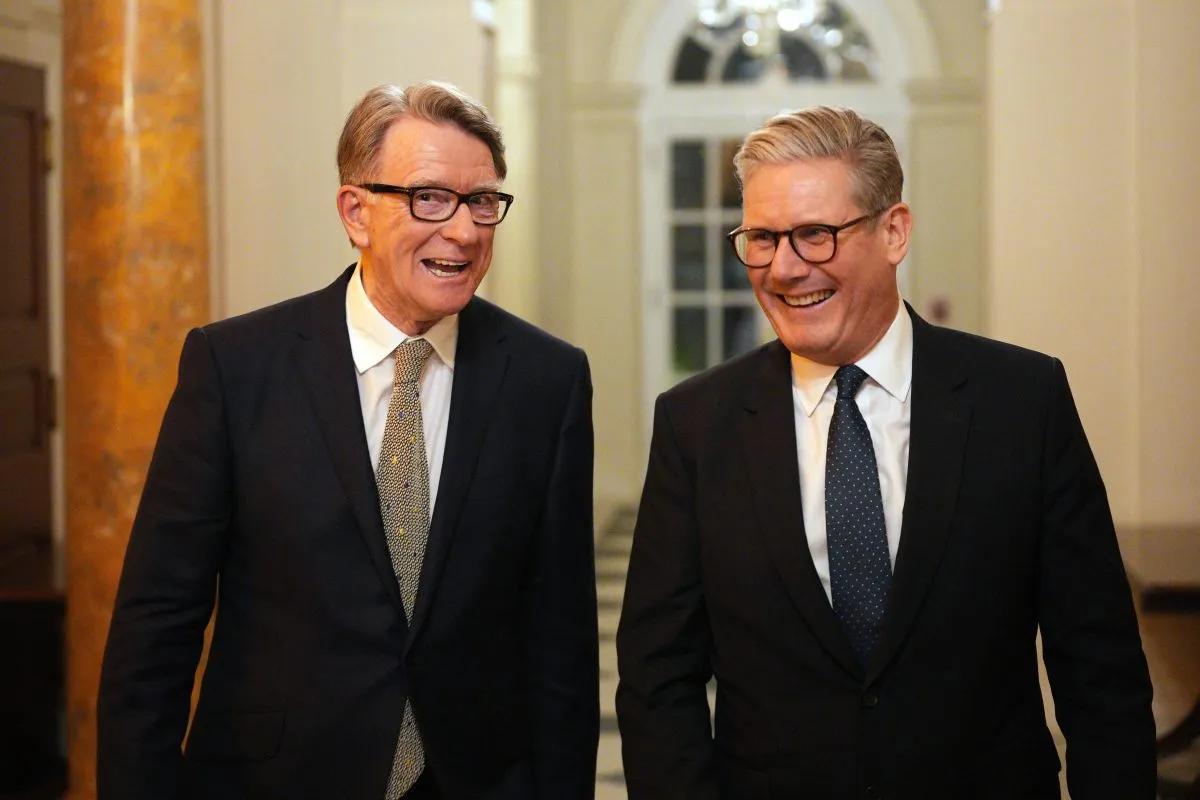
Keir Starmer will face a vote on whether he should be referred to a parliamentary sleaze inquiry over claims that he misled the House of Commons about the appointment of Mandelson as ambassador to the US.
The prime minister said earlier this week that Downing Street had put no pressure “whatsoever” on the Foreign Office, with comments appearing to contradict those of Olly Robbins
Robbins told MPs that No 10 had exerted “constant pressure” to install the Labour peer in Washington.
Opposition parties have been urging Speaker of the Commons, Sir Lindsay Hoyle, to allow a vote on whether to refer Starmer to the privileges committee, according to reports in The Times.
The committee ended Boris Johnson’s career in UK politics after it found that he had lied about lockdown parties during the pandemic.
Ministers believe there could be a vote on Tuesday before the parliamentary session ends, but Labour’s majority means the motion is unlikely to pass.
Other evidence
The vote could be held on the same day that Philip Barton, former permanent secretary at the Foreign Office, gives evidences to MPs on the scandal.
His testimony is considered to be critical after Robbins said that his predecessor had been put under intense pressure to push Mandelson’s appointment through.
This includes a claim that Starmer’s former chief of staff, Morgan McSweeney, told Barton to “just f***ing approve” the appointment.
McSweeney, who is set give evidence the same day, denies having sworn.
The committee also wants to hear from Ian Collard, another senior foreign office official, who took the decision with Robbins to give Mandelson security vetting.
On Friday Dame Emily Thornberry, the committee chair, wrote to Yvette Cooper, the foreign secretary, asking for her to make sure he attended.
Thornberry wrote: “His evidence would fill gaps in our investigation, and as he and Sir Olly Robbins were potentially the only people in the meeting to discuss Lord Mandelson’s security vetting, we must insist on seeing him personally in this instance.”
Damaged trust
Speaking to Times Radio, Philip Rycroft, a former senior Whitehall official who worked closely with Robbins, said that the scandal had deeply damaged trust between ministers and the civil service.
He said: “I can see right on both sides of this debate, and I can see wrong on both sides of this debate … I think that that argument has almost come out as a score draw in terms of misleading parliament, who said what, when, to whom, and how the process was transacted.”
But Downing Street has rejected claims that Starmer misled parliament.
A spokesman told The Times: “We don’t accept that asking for updates on the progress of an appointment amounts to pressure in relation to the vetting process or outcome.”
They said that he was referring to the vetting process, rather than to the appointment, when he said there had been “no pressure whatsoever”.
Barton was said to be strongly opposed to Mandelson’s appointment because of concerns about his suitability and “reputational risks”.
However, Barton was overruled by Starmer, who announced the appointment in December 2024. Barton was succeeded by Robbins in January last year.
