












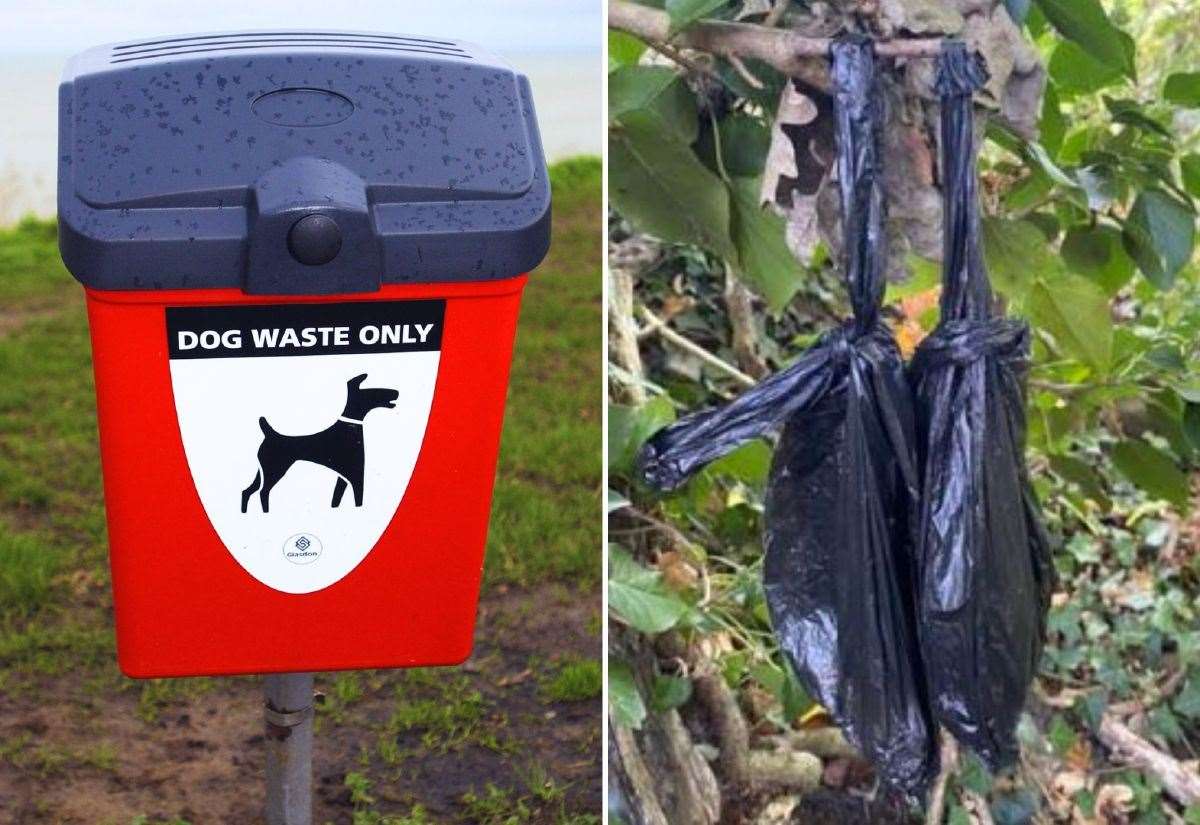
Dog mess is still being left across streets, parks and footpaths by “lazy and selfish” owners – with a new survey highlighting the scale of the problem in one Kent district.
Almost 80% of parish councils in Canterbury, Herne Bay and Whitstable say dog fouling remains a “significant issue”, despite years of warnings and the threat of fines.


Yet in the past 12 months, just one fixed penalty notice has been handed out.
The new study shows four out of five parishes in the Canterbury district say dog fouling continues to plague their communities.
It follows an investigation by parish councillor James Hodgkinson, who says his findings paint “a clear picture of a widespread problem”.
He believes a small but significant minority of dog owners are “letting the side down”.
“Anyone who uses our footpaths, parks, or community spaces will recognise that dog fouling remains a real problem,” he says.


“Of the 14 parish councils who responded to the survey, 79% recognised it as a ‘significant issue’ within their boundaries.
“Even more worryingly, only 7% of parishes said they had seen a reduction in fouling during the last 12 months.”
Cllr Hodgkinson, who became Kent’s youngest parish councillor when he joined Upper Hardres Parish Council last October, aged just 18, believes it is important to recognise the issue is about “more than just messy shoes at the end of a countryside walk”.
“Dog fouling can have serious repercussions,” he says.
“Their faeces can cause conditions including toxocariasis, salmonella, and yersiniosis.
“While often fortunately non-serious, these diseases can have a profound impact on the most vulnerable: children, the elderly, and those with compromised immune systems.
“In rural areas, people are not alone in being at risk. Livestock, too, can be harmed by bacteria found in dog faeces.
“Yet for an issue so severe, the solution is strikingly simple. Dog waste can be disposed of in any council-owned waste bin.


“Of course, the usual suspects – a lack of bins and relatively low fine enforcement – have a role to play.
“More waste bins and a more visible enforcement presence may well help to tackle the problem.”
But, according to the survey, parish councils believe the “number one barrier” to addressing the issue is lack of awareness around the impact of dog fouling.
Cllr Hodgkinson said: “Everyone can help by spreading the word about the ‘any bin’ rule to friends, neighbours and family, and sharing information on the potential harms that dog faeces can cause.
“Remember, bag it, bin it, and protect the open spaces we all share.”
But he also condemns the common practice of owners bagging dog poo, but then hanging it in bushes, trees, or simply dumping it in roadside verges.
CCC spokesman Rob Davies says the authority agrees with many of Cllr Hodgkinson’s findings, and also lays the blame on a small minority of “lazy and selfish” dog owners who fail to pick up after their pets.
“It’s something that takes just a few seconds to do, but those people who just leave it there for others to step into must take a long hard look at themselves and think about why they are so irresponsible in their actions,” he said.


“Where we must push back against Cllr Hodginson is on his comments about litter bins.
“We have more than 1,500 litter bins across the district for the public to use, located in the right places along the seafront, in parks and gardens, in the street and in rural locations where people are out walking their pooches.
“And because you can put a dog poo bag in any council litter bin, not just the dedicated dog poo bins, you’re never far from a bin – or just take the bag back with you.
“Cllr Hodgkinson also refers to enforcement, and of course there are challenges with that. For us to be able to issue a fixed penalty notice, the offence needs to be witnessed in person by one of our enforcement officers.
“As our officers are uniformed, it tends to be the case that when people see them, they do the right thing.
“But if we have persistent issues reported to us of an individual not picking up the poo, or a particular location where there is a problem, we do run special operations to try and tackle this.
“All in all, though, we definitely agree with Cllr Hodgkinson’s sentiments and welcome his efforts to spread the word about the health dangers of dog poo and the blight it causes to local communities.”


