










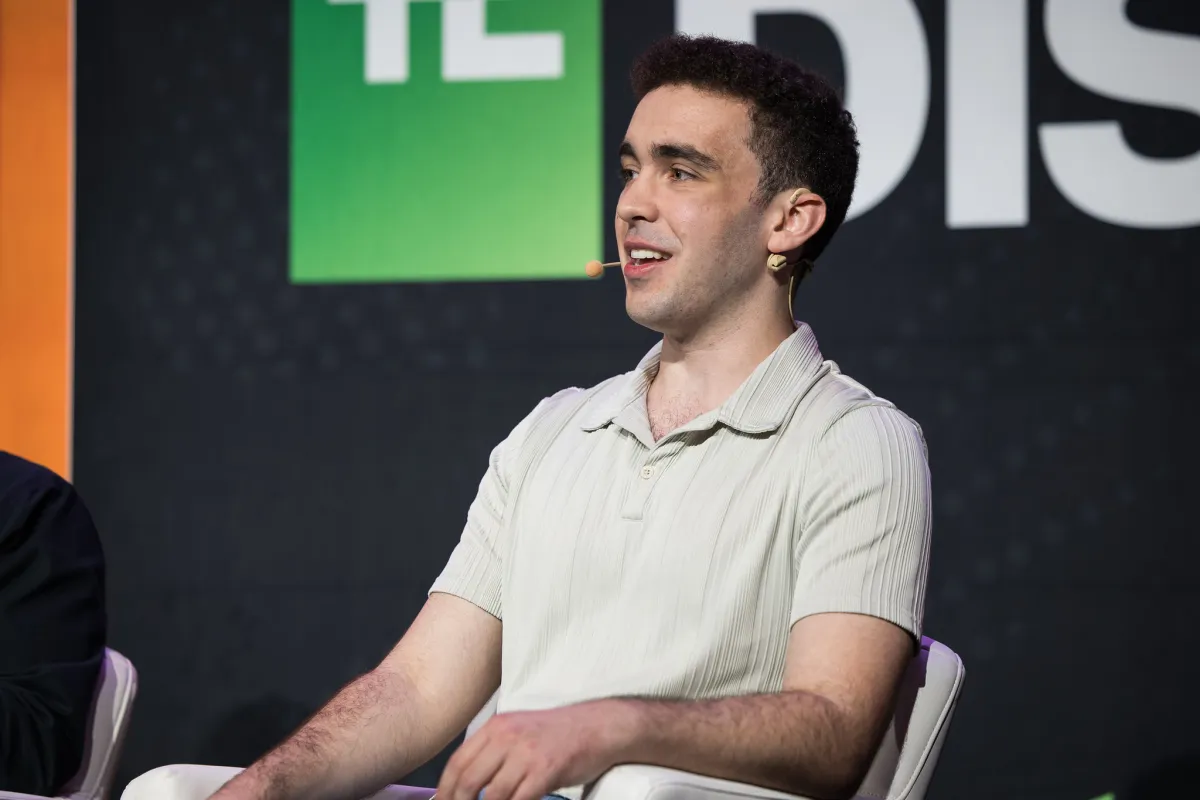
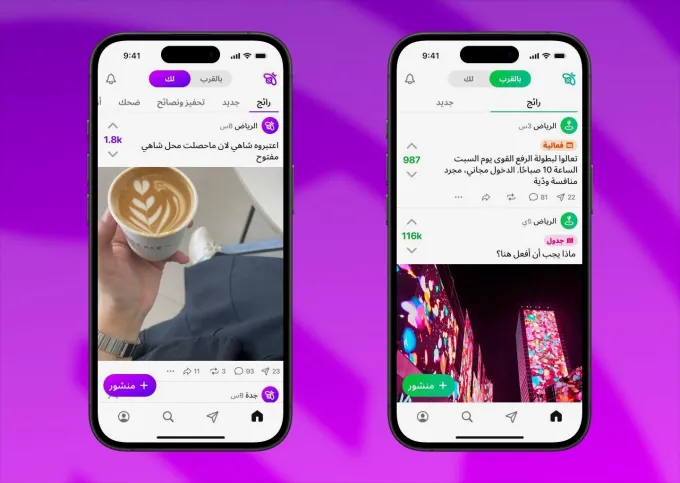
Fizz, an anonymous social app that started on college campuses, is going global in more ways than one. Its Global Fizz feed is enabling the app to grow beyond college communities and cater to a broader user base, and the app has made a mark with its first overseas launch in Saudi Arabia.
When Fizz quietly debuted in Saudi Arabia in the middle of March, founder and CEO Teddy Solomon wasn’t expecting the app to catch on like it did. Within 48 hours, the app hit number one overall on the App Store charts; it remains number one in the news category, Solomon told TechCrunch. He added that Fizz users have sent more than one million messages in the past week.
“We’ve always known that our big goal is to be a generational social product, rather than a college social app, and now we’re finally executing on it,” Solomon said.
Fizz has not previously spoken about its international expansion.
Solomon and his co-founder, Ashton Cofer, started Fizz in 2022 while they were students at Stanford, before dropping out. After raising $40 million and launching on 700 campuses, the app is trying to grow the Global Fizz feed, which allows people who are not students to join location-based communities. Users have the option of posting with a handle, but they can choose to remain anonymous if they wish. It’s similar to Reddit’s main feed, but without the ability to create or join topic-specific communities — the equivalent of Reddit’s subreddits.
Solomon said that when he attended a conference in Dubai, he saw the potential for Fizz’s expansion into the Middle East. Soon after, Fizz marketing analyst Michael Fonseca moved to Saudi Arabia to make connections in the area and better understand the culture, which paved the way for Fizz’s international launch.
“Mike was really welcomed with open arms,” Solomon said. “I think [Saudi Arabia] changed quite a bit in recent years.” The country is “jumping right now,” said Solomon. “Business is booming. The social scene and social landscape is booming. Snapchat’s huge there. And social apps are just massive in the region, whether it’s Snap, or WhatsApp, or TikTok — whatever other app it might be.”
Techcrunch event
San Francisco, CA
|
October 13-15, 2026

This shift in the country’s image is intentional. In 2016, Crown Prince Mohammed bin Salman launched a government plan called Saudi Vision 2030, which aims to decrease the country’s financial dependence on oil. This strategy involves modernizing the country’s image – women can now legally drive, for instance – and investing in Western technology companies, like Google and Uber. More recently, the crown prince launched a state-funded AI company called Humain.
Despite these changes, Saudi Arabia remains an absolute monarchy, ruled by a royal family that suppresses free speech. In 2024, the Saudi government sentenced Manahel al-Otaibi to 11 years in prison for the “terrorist offense” of tweeting about women’s rights and posting photos on Snapchat in which she was not wearing a traditional abaya, according to Amnesty International.
Operating in Saudi Arabia, Fizz has to be aware that the monarchy could monitor its app for posts it deems offensive, demand that certain content be taken down, or even arrest someone based on their Fizz posts. Solomon doesn’t have a clear plan for how Fizz would handle such situations.
“The answer is, [we will] cross that bridge when we get there,” he said. “We have a lot of confidence in our guidelines. We are moderating very strictly and in a way that is satisfying people in the region and making sure that we’re abiding by the rules of the region and rules of the country.”
Fizz says it has not received investment from any Saudi Arabian entities and has not communicated with any members of the government.
Solomon said that Fizz has invested heavily in Arabic natural language processing tools to support its content moderation efforts. The company has also onboarded “hundreds” of volunteer moderators from the Saudi Arabian Fizz community. Fizz uses a similar strategy in its college communities — it uses AI content moderation tools, but it also seeks out volunteer moderators who have a better understanding of the nuances of campus culture, giving them more context when making moderation decisions.
“There’s a lot of care for their community,” Solomon said. “There’s a lot of pride in their country, a lot of pride in the city that they live in, and they like the platform. They want to keep the platform safe, and they take a lot of honor in doing so.”


