













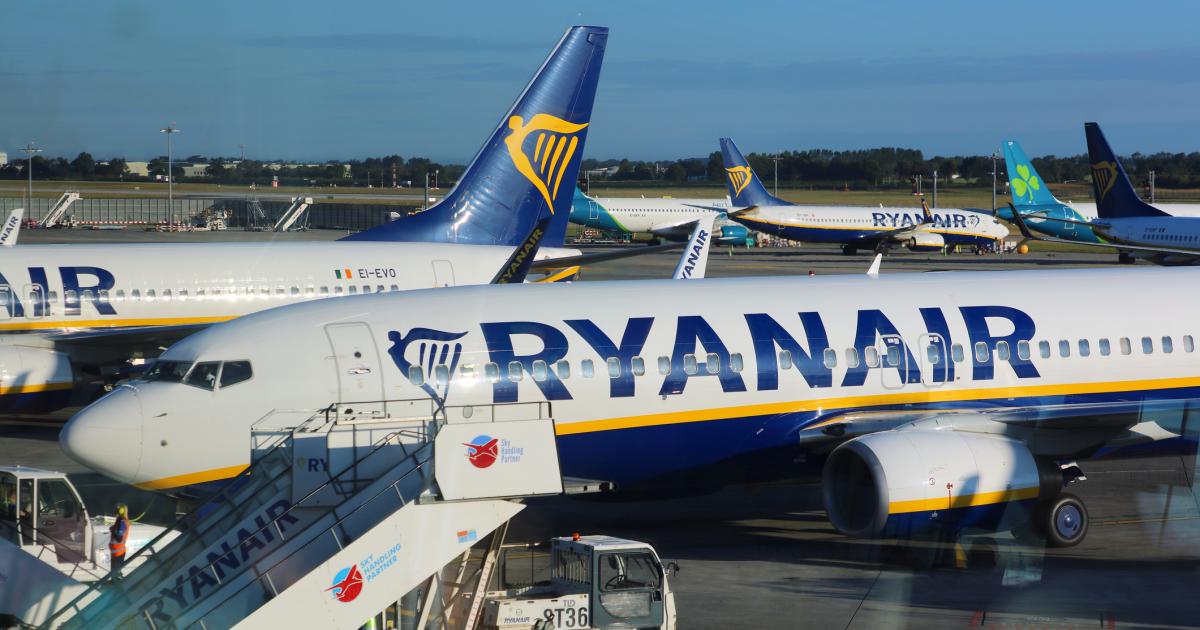
The warning from CEO Michael O’Leary is due to the war in Iran affecting jet fuel prices.
He said the airline may be forced to cancel 10% of its flights in the early summer if the war continues to impact supply.
“We’re all facing an unknown scenario,” Ryanair boss Michael O’Leary told ITV News.
“And we are certainly looking at maybe having to cancel 5%, 10% of flights through May, June and July.”
READ MORE:
O’Leary added that the message from the airline industry is “the sooner this war is over the better”.
He said that the UK was the most vulnerable country in Europe when it comes to rising jet fuel prices “because of the market share that the Kuwaitis have here”.
The Financial Times reports that the UK is set to receive its last tanker of jet fuel from the Middle East this week.
However, no British airlines have cancelled flights as of yet.
British Airways told the broadcaster: “UK airlines are currently not seeing disruption to jet fuel supply and continue to engage with fuel suppliers and government to monitor the situation.”
Dan Jorgensen, energy chief for the European Commission, warned that Europe is facing a “very serious situation” amid a fuel shortage and a looming cost-of-living crisis, with no end in sight to the conflict.
Although the UK has not implemented any fuel-saving measures, a raft of countries around the world have already begun introducing them.
In Australia, two states have made public transport free to incentivise people to avoid driving.
Egypt, which relies heavily on imported oil, has also introduced temporary measures, including requiring non-essential workers to work from home one day a week.
Meanwhile, the Philippines has declared a national emergency, with its government offering subsidies to transport drivers, reducing ferry services, and implementing a four-day workweek for civil servants.
“Sorry not in use” signs hung on pumps across the city (Image: Newsquest)
Today, fuel stations across Glasgow have been forced to close amid relentless panic buying of petrol and diesel.
“Sorry out of use” signs hang from many pumps across the city, and forecourts have been blocked off as swarms of cars line up to try and fill both their tanks and fuel cans.
The Glasgow Times visited several fuel stations across the city; some were closed because they had run out of fuel, while others were open and had varying supplies.
Staff at all locations assured us that fuel deliveries were arriving as usual and that the pumps running dry were due to customers’ panic buying amid soaring prices.


