




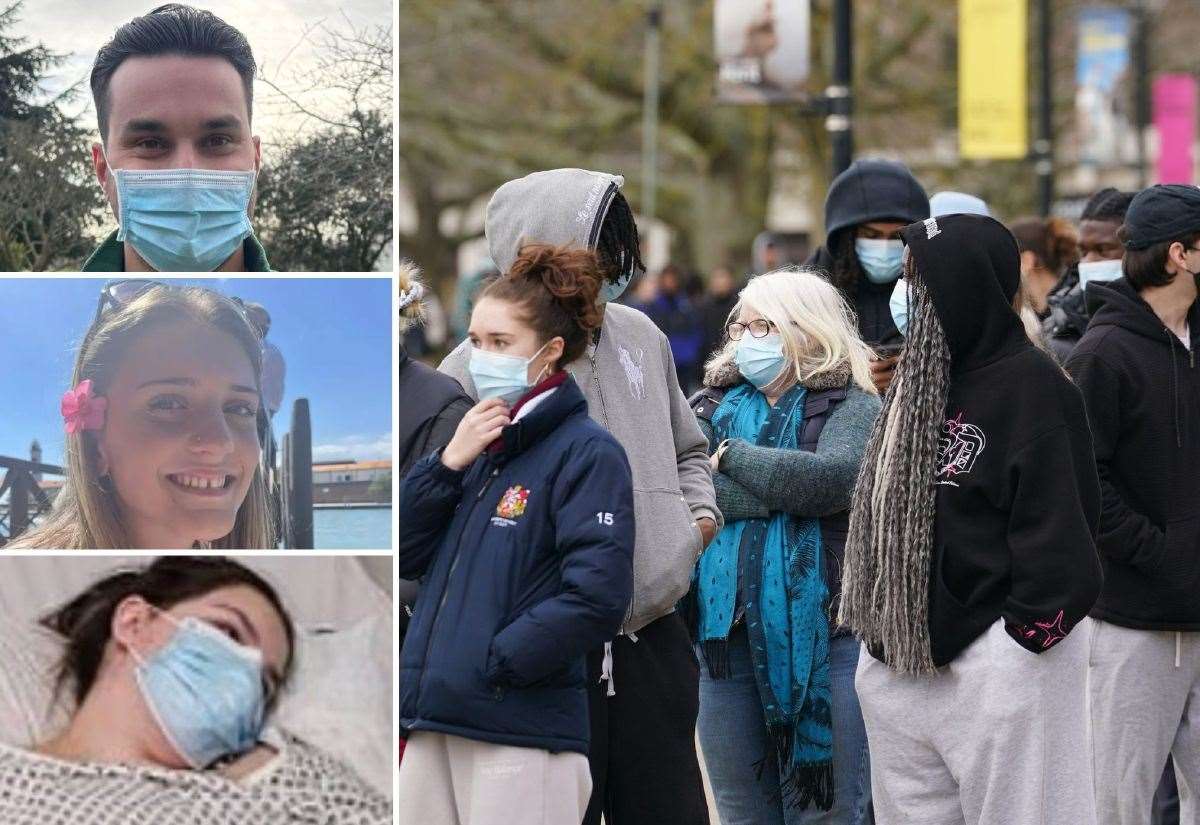
With a targeted vaccination campaign being rolled out at the University of Kent in Canterbury, here is everything we know so far about the “unprecedented” meningitis outbreak.
Two young people have died, several others are seriously ill – and health officials are now tracing thousands of people and urging anyone who visited a city nightclub earlier this month to take antibiotics as a precaution.


Authorities say the situation is still evolving, with cases linked to students and schools across east Kent. Health Secretary Wes Streeting has described the outbreak as “unprecedented”.
What has happened so far?
The number of confirmed and suspected cases linked to Canterbury has now risen to at least 15, all of whom have required hospital treatment.
Health officials have confirmed four laboratory-confirmed cases of meningitis B (MenB), with the remaining cases still under investigation but showing similar symptoms.
Tragically, two people have died and a number of others remain seriously ill, with some understood to have required intensive care.
The deaths include a University of Kent student and Juliette, a Year 13 pupil at Queen Elizabeth’s Grammar School in Faversham, described by her head teacher as a “much-loved and treasured member of our school community”.

The UK Health Security Agency (UKHSA) continues to investigate the cluster alongside NHS teams, schools and the university.
A national incident has now been declared, after a related case was identified outside Kent, prompting a wider public health response.
‘Super-spreader event’
Health officials are now issuing stark warnings about the unprecedented speed of the infection.
UKHSA chief executive Susan Hopkins has described the cluster as a “super-spreader event” driven by intense social mixing, while England’s Deputy Chief Medical Officer, Dr Thomas Waite, said: “This is by far the quickest-growing outbreak I’ve ever seen in my career.”

While the outbreak has predominantly affected teenagers and young adults, KentOnline revealed on Tuesday that a nine-month-old baby girl is critically ill in intensive care, marking her as the youngest known victim of the outbreak so far.
Where did the outbreak begin?
Public health investigations indicate that some of those infected visited Club Chemistry in Canterbury shortly before falling ill.
Anyone who attended on March 5, 6 or 7 is being urged to come forward for preventative antibiotics.

More than 2,000 people are believed to have attended the nightclub across those dates, creating a significant contact-tracing challenge.
The venue has since closed until further notice.
While patrons have been the primary focus of the antibiotic rollout, the impact has also reached those working at the venue.
Club owner Louise Jones-Roberts confirmed that one staff member has been hospitalised with meningitis, while two other employees were sent to A&E with suspected cases.
The outbreak has also been linked to a house party in Whitstable.
Schools and universities affected
The University of Kent has contacted around 16,000 staff and students, with those at highest risk urged to take antibiotics “without delay”.
A targeted vaccination programme is now being rolled out, starting with students in halls of residence on the Canterbury campus.
The university has also cancelled in-person exams and assessments as a precaution.
Cases have been linked to several schools, including: The Canterbury Academy; Queen Elizabeth’s Grammar School, Faversham; Simon Langton Grammar School for Boys, Canterbury; Norton Knatchbull School, Ashford; Highworth Grammar School, Ashford; and Dane Court Grammar School, Broadstairs.
In addition, two specialist schools on Sheppey – Nore Academy and Estuary Academy Island – have been closed due to links with suspected cases.
Some pupils have been hospitalised, while others have been told to stay home as investigations continue.
Has the outbreak spread beyond Kent?
Health officials now say there has been limited spread beyond Kent, with at least one linked case identified outside the county, prompting the national incident declaration.
However, the UKHSA continues to stress that the outbreak is largely concentrated in Canterbury and surrounding areas.
The agency’s Dr Gayatri Amirthalingam said meningitis does not spread easily.
“It really requires very close, prolonged contact or intimate contact such as kissing,” she said.
On Monday, Josh Risby told KentOnline his sister – who he says lives and works in London – was in hospital with suspected meningitis.
Where people can get antibiotics
People who attended Club Chemistry on the specified dates are being urged to collect antibiotics as a precaution.
Students living on the University of Kent’s Canterbury campus are also being told to attend “without delay”.
Collection sites include: The Senate Building, University of Kent; The Gate Clinic at Kent and Canterbury Hospital; Westgate Hall, Canterbury; and Thanet Community Health Hub in Broadstairs.
Health officials say the antibiotics are preventative, aimed at stopping the disease from developing in those exposed.
The UKHSA has also confirmed that a targeted MenB vaccination programme is now being deployed at the university’s Canterbury campus.

What meningitis is
The outbreak involves invasive meningococcal disease, caused by Neisseria meningitidis bacteria.
It can lead to meningitis (infection of the lining of the brain and spinal cord) and septicaemia (blood poisoning).
Both conditions can become life-threatening very quickly.
Why students can be particularly at risk
Teenagers and young adults – especially university students – are among the most vulnerable groups.
Close contact in shared housing, social settings and crowded venues increases the risk of transmission.
In England, there were 378 confirmed cases of invasive meningococcal disease in 2024-25, with young people making up a significant proportion.
The strain identified in this outbreak is meningitis B (MenB).
While a MenB vaccine has been part of the routine childhood programme since 2015, most current university students would not have received it.
Symptoms people should look out for
Symptoms of meningitis can appear suddenly and may include:
*high temperature
*severe headache
*stiff neck
*vomiting
*confusion
*sensitivity to light
*rash or unusual skin markings
*extreme sleepiness or difficulty waking
Health officials say symptoms can appear in any order and can worsen quickly, so anyone concerned should seek medical advice immediately.
What health officials are saying
The UKHSA says the risk to the wider public remains low, but the response has been escalated due to the number of linked cases.

Close contacts are being traced and offered antibiotics, while vaccination is being used to protect those at highest risk.
Officials continue to emphasise that the disease spreads through close or prolonged contact, such as living together, kissing, or sharing drinks.
The agency has faced criticism over the timing of public warnings, but maintains it acted “as quickly as possible” once the cluster was identified.
The Prime Minister has expressed his full confidence in the agency.
What did the Health Secretary say?
Wes Streeting has confirmed that MenB vaccines are being rolled out to students in halls at the University of Kent in Canterbury.

He told MPs: “This is an unprecedented outbreak. It is also a rapidly developing situation.”
He added that while the vaccine has been part of childhood immunisations since 2015, most students would not have been vaccinated.
A review is now underway into whether eligibility for meningitis vaccines should be expanded more widely.
Mr Streeting said he remains confident in the UKHSA’s response, adding that early diagnosis and rapid antibiotic treatment are critical.
“The onset of illness is often sudden,” he said. “It doesn’t spread very easily, but it does require close and prolonged contact.”
Mr Streeting said the agency was notified about the first case on Friday, March 13.
“On Saturday, the UKHSA were in touch with the University of Kent to ensure they had the necessary support, advice, and guidance, and to establish where the patient was living,” he said.
“Also on Saturday, the French authorities alerted UKHSA to a second confirmed case in France from an individual who had attended the University of Kent. Both cases lived in private accommodation, and at that stage, there was no apparent link between the two.”
He said the strain associated with this outbreak is meningitis B, known as MenB.
“It is uncommon, and as we have seen, a serious and potentially lethal strain of meningococcal disease,” Mr Streeting said.
“The onset of illness is often sudden, and early diagnosis and treatment with antibiotics are vital. It doesn’t spread very easily. The bacteria is passed to others after a long period of close contact. For example, living with someone in shared accommodation, through prolonged kissing, or sharing vapes and drinks.”
Private vaccine shortages
Because the routine NHS MenB rollout only covers children born since 2015, panicked parents and students have rushed to secure the vaccine privately.
This sudden surge in demand has left some local pharmacies completely out of stock.
The situation escalated after reports emerged of some pharmacies charging several hundred pounds for a single dose, prompting Health Secretary Wes Streeting to publicly condemn the companies for “immoral” price gouging.
