










| Updated:
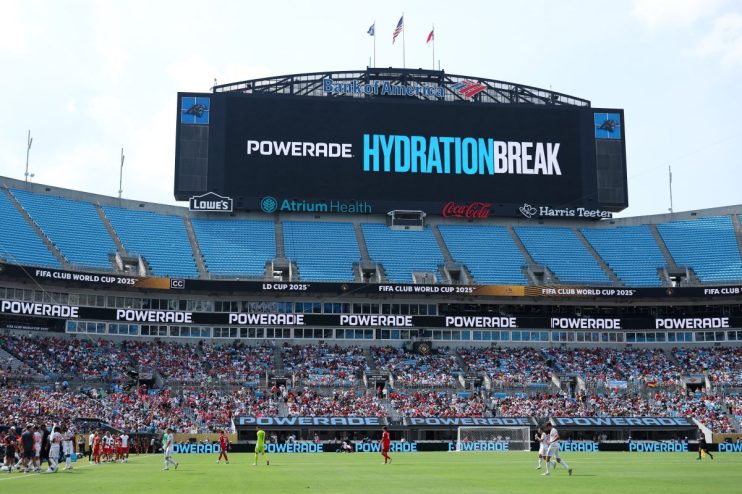

Hydration breaks at the World Cup could usher in major changes to advertising during live sport, writes Jonathan Haines.
As broadcasters prepare for the 2026 World Cup, an unexpected talking point has emerged. The tournament will feature mid-half hydration breaks, introduced to protect players from the searing heat predicted this summer in North America. But for commercial broadcasters like ITV, those pauses represent something else: a new monetisation opportunity.
Reports that ITV is considering running advertising during these pauses, potentially via split-screen or picture-in-picture formats rather than traditional commercial breaks, highlight a much bigger shift in sports broadcasting. This is not simply about squeezing in more ads but a gradual overhaul of the traditional ad break itself.
Live sport has long been one of the last safe havens for interruption-based advertising. While streaming services and on-demand viewing have trained audiences to expect fewer ads, live events – particularly sport – still abide by the rules of scheduled broadcasts. Half-time breaks, time-outs, and natural pauses have all been jumped on as major ad spots for years.
But today’s audiences, especially those watching through smart TVs or streaming platforms, are less tolerant of interruptions that pull them away from the action. When every moment of a match feels meaningful, switching away to a full commercial break risks losing attention altogether.
That’s why sport is increasingly becoming the testing ground for a new generation of advertising formats designed to work around attention, rather than interrupt it.
Picture-in-picture advertising is one example. Instead of cutting away from the match entirely, broadcasters can maintain the live feed while displaying brand messaging alongside the action. The viewer stays immersed in the event, while advertisers gain valuable exposure during premium moments.
We have seen this in action at the Six Nations this year before scrums. Early reactions may have been mixed, but the newness of a format like this is also likely to increase audience attention. This trial of the format gives broadcasters strong initial feedback about how to and how not to deploy in-screen advertising. Using this to improve the experience may mean that next time it is better received.
But this is just the start. Contextual and in-play advertising formats are also gaining traction, allowing brands to align messages with the live narrative of the game. These include dynamic overlays, contextual sponsorships tied to key moments, or branded data graphics that enhance rather than disrupt the viewing experience.
Beyond live broadcast, the engagement of sports is still a major draw for attention elsewhere. Dynamic online ads that include live sports results or the latest scores for Premier League matches can improve attention by up to 91 per cent among sports fans, research has found.
For broadcasters, the appeal is clear. Live sport remains one of the most valuable assets, attracting large, engaged audiences in an increasingly fragmented landscape, but maintaining that value requires balancing revenue with viewer experience.
For advertisers, the shift represents a challenge and an opportunity. As viewing behaviour evolves, brands will need to think more creatively than a traditional 30-second spot about how they stand out without standing in the way.
That means designing advertising that feels additive rather than disruptive. A contextual message that appears alongside a key moment in a match can be more memorable than a generic spot inserted between phases of play.
Similarly, formats that integrate naturally into the broadcast – whether through branded statistics, real-time insights, or subtle visual placements – can create mental links between brands and sports fans at moments of excitement .
Connected TV technology is accelerating this transformation. As more live sport is delivered on streaming platforms or via Smart TVs, broadcasters gain greater flexibility to experiment with formats, target audiences, and measure attention in ways that weren’t possible before.
The hydration breaks at the 2026 World Cup may seem like a small operational change to the game, but in reality, they are a huge opportunity for brands and broadcasters worldwide.
Like the introduction of VAR during the 2018 World Cup, the first trial of this new ad slot has the potential to change the game. Advertisers who prepare now have the best chance of taking home the trophy – and we can alldrink to that.
Jonathan Haines is managing director for the UK and Northern Europe at global ad platform Equativ.


