










| Updated:

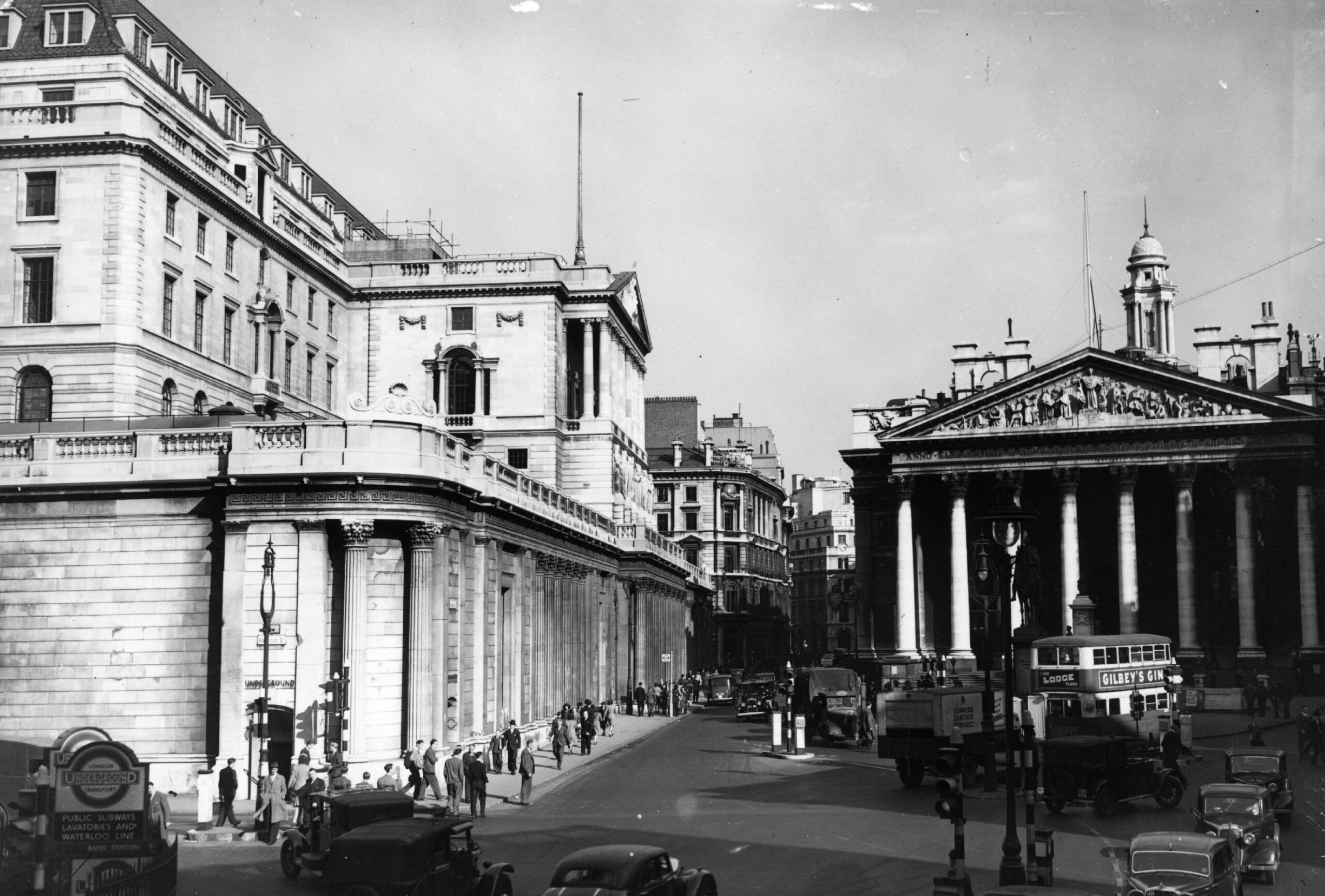
The Bank of England Act 1946 came into effect 80 years ago today, formalising a compact and a degree of cooperation between the Bank and the Treasury which had been developing for years, writes Eliot Wilson
The Bank of England is the second-oldest central bank in the world. Only the Sveriges Riksbank in Stockholm, which was established as the Riksens Ständers Bank in September 1668, is of greater antiquity.
Locked in an expensive rivalry with France, England needed £1.2m to rebuild and expand the Royal Navy after its defeat at the Battle of Beachy Head in 1690. That was a titanic amount when the Crown’s total annual income was around £5m; there were no available public funds and the government had a poor credit rating.
The Bank of England Act 1694 provided for a royal charter which incorporated the Governor and Company of the Bank of England, and the new joint stock corporation attracted 1,520 subscribers to raise £1.2m in just 12 days. The scheme was a dazzling success; King William III and Queen Mary II invested the maximum permitted sum of £10,000, but more than two-thirds of the subscribers put in less than £1,000 and most of them came from the mercantile middle classes. Twelve per cent of the original investors were women.
The financial expertise and innovation which had followed William III from his native Netherlands when he and Mary ascended to the throne in 1689 helped to revolutionise the English state.
It was not just that the establishment of the Bank of England allowed for the expansion of the Royal Navy, leading to two centuries of maritime dominance, and spurred a boom in shipbuilding, industrial development and global trade. It fundamentally changed the scope and ambit of the state. The capacity to borrow money on a scale previously unimaginable, and the creation of the National Debt, meant that there would be no more catastrophes like the Stop of the Exchequer in 1672.
The Crown now had a credit card which was almost impossible to max out
The Crown now had a credit card which was almost impossible to max out.
History never takes place in a vacuum. This financial innovation enabled the commercial revolution of the Long Eighteenth Century, and that in turn laid the foundations of the industrial revolution: factories, steam power, metallurgy, railways and urbanisation. Britain would become the first predominantly urban society, rural dwellers becoming a minority in 1851.
The first central bank
At the beginning of the 20th century, Britain was an outlier. Two-thirds of sovereign states had no central bank, and the US Federal Reserve System only came into being in 1913 as a safety net against repeated economic shocks and panics.
Where central banking institutions did exist, they were almost always privately owned, like the Federal Reserve, the Banque de France or the Reichsbank. Until the First World War, the Riksbank was the only state-owned central bank outside the Russian Empire. The Bank of England remained in the hands of the Governor and Company, just as it had been in 1694. But change was in the air.
In 1920, Montagu Norman was appointed Governor of the Bank of England. He was 48, an elusive and enigmatic figure from an established banking family who had been a director since 1907. Britain had emerged from the First World War burdened by debt, its trade disrupted and industrial unrest growing. Norman pushed for a return to the gold standard, which he thought “knaveproof”, began moving the Bank away from commercial transactions and started employing economists and statisticians in significant numbers.
Norman was the longest serving Governor in the Bank’s history, stepping down in 1944 after nearly a cautious and orthodox quarter of a century. He was succeeded by a diminutive 65-year-old Scot, Lord Catto, a businessman and financier who had been an adviser to HM Treasury on international currency and lending since 1941.. He had been Governor for 15 months when Labour won a landslide victory at the 1945 general election and Clement Attlee became Prime Minister.
The Second World War had led many to think central planning and direction of the economy represented the future. Calling for “hard work, energy and sound sense”, Labour’s manifesto pledged that “the Bank of England with its financial powers must be brought under public ownership”. A bill was introduced into the House of Commons in October 1945, went to the Lords in January and gained Royal Assent on 14 February 1946.
The Bank of England Act 1946 came into effect 80 years ago today. Its 17,000 shareholders received 3 per cent Treasury Stock 1966 or after in exchange for their Bank Stock, and the government now owned the central bank. In day-to-day terms, however, little had changed: the Bank retained broad operational autonomy, and Catto had dissuaded the Chancellor, the gratingly booming Eton-and-Cambridge Hugh Dalton, from giving him supervisory powers over the banking sector. With echoes of Lampedusa’s Tancredi Falconeri, Catto seemed to think that everything must change for everything to remain the same. He hoped that:
“directions and regulations will never be needed and that the Treasury and the Bank will be able, without them, to obtain from the Banking Community, as in the past, all the co-operation necessary to conform to Government policy.”
The Bank struggled. It was trying to balance low interest rates, a fixed exchange rate and management of inflation through credit and exchange controls, and saw inflation double in 1946-47 then fall back in 1948-49. Catto used the Bank’s influence to guide financial institutions towards positions which supported government policy, but it is hard to identify any significant areas where a privately owned bank would have pursued a markedly different course to the one it did.
The nationalisation of the Bank of England was totemic, as the first majority Labour government swarmed over the ramparts of high finance. But in practice it formalised a compact and a degree of cooperation between the Bank and the Treasury which had been developing for years. Labour might bleed the scarlet of public ownership, but swathes of the state had tacked leftwards to meet them. Although Gordon Brown gave the bank operational independence to set interest rates in 1997, no administration has made serious attempts to return the Bank to private hands.
Eliot Wilson is a writer and historian


