











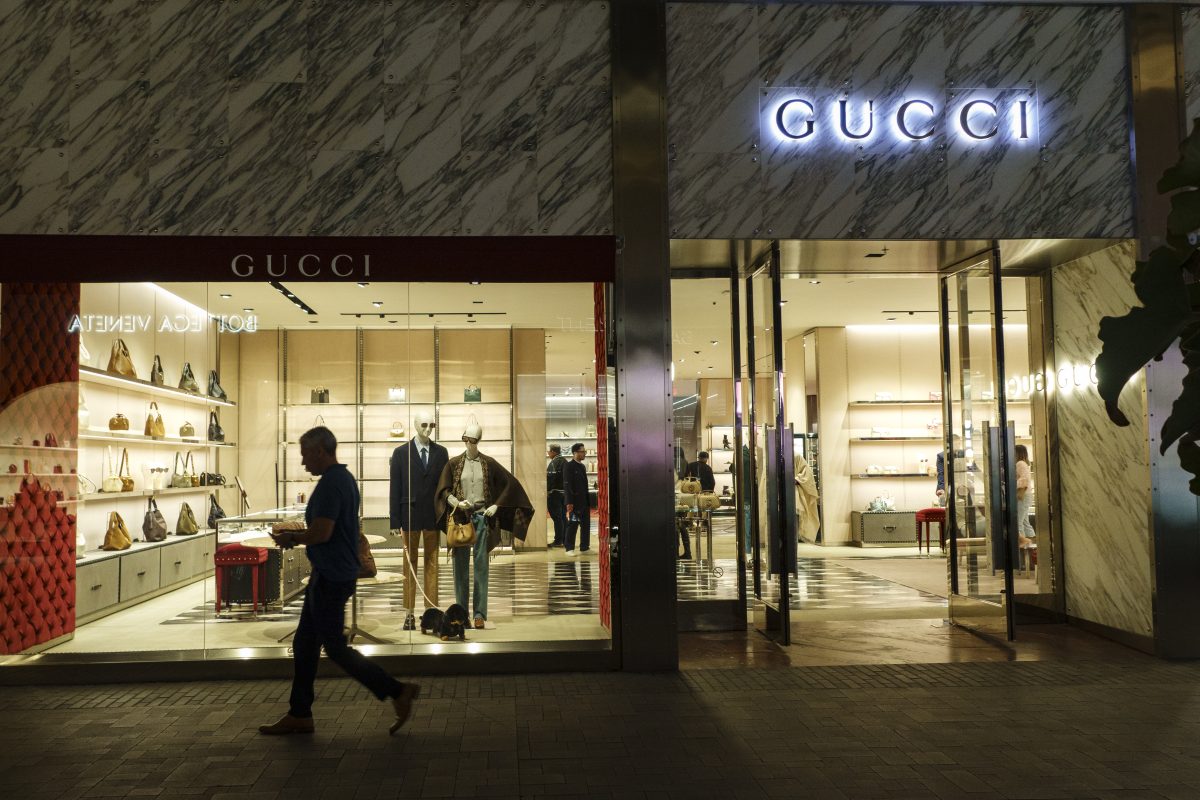

Gucci has come under fire after using AI to create images promoting its upcoming show at Milan fashion week, raising concerns that the luxury house is cutting corners ahead of a runway debut.
The Italian brand posted a series of glossy visuals on social media this week, some labelled ‘created with AI’, to tease creative director Demna Gvasalia’s first show for the house on Friday.
The images include a glamorous older woman in a fur coat striding through a restaurant, stylised car pictures and models posed under a night sky.
While clearly marked as AI-generated, the posts quickly drew criticism from followers who questioned how synthetic imagery aligns with Gucci’s traditional emphasis on craftsmanship and heritage.
“Bleak days when Gucci can’t find a real human Milanese grandmother,” one user wrote in response to an image of an older woman in a vintage Gucci look.
Others described the visuals as “cheap” and “AI slop”, a term used online for low-quality, mass-produced AI content.
Luxury retail meets AI
Gucci’s dalliance with AI follows various fashion houses, as they experiment with the technology amid rising costs and pressure to modernise their brands.
Gucci has previously dabbled in digital art, commissioning AI-generated works that were later auctioned as NFTs by Christie’s.
In December, the brand released an AI-created runway video of photographers tumbling over one another to capture a model.
But the stakes are higher when AI replaces photographers, make-up artists, stylists, models and production teams in core marketing campaigns, particularly for a brand whose handbags retail for hundreds to thousands of pounds.
Dr Priscilla Chan, senior lecturer at Manchester Metropolitan University’s Fashion Institute, said: “Luxury brands need to pay attention to whether the latest technology can create a positive image for their brand”.
Tati Bruening, a photographer known online as Illumitati, also added: “There is a difference between editing simple things with AI versus creating the entire image”.
Valentino recently faced a similar backlash after posting AI-generated adverts described by followers as “lazy” and “embarrassing”.
A spokesperson for Valentino declined to comment at the time.
AI-generated models
Meanwhile, on high streets, Zara has rolled out AI-generated models and a virtual try-on feature, while H&M has announced plans to create digital twins of real models.
City AM reported last month that 69 per cent of British retailers plan to invest heavily in AI-driven technology in 2026 to reduce costs.
Elsewhere, earlier on this month, City AM revealed that Zara was using AI to alter images of human models for its e-commerce platforms to cut costs.
Models who had previously worked for the brand had been contacted by the retailer and asked for permission for their photos to be digitally altered to dress them in new clothes.
With IMF recently predicting that AI will affect 40 per cent of jobs, and LinkedIn reporting that by 2030, 70 per cent of jobs will be transformed due to the technology, this causes concern among creatives about job stability.
And it seems like these roles, those working across the production of e-commerce content like that of Zara’s, lie in the crux of the labour market decline, where AI gains directly turn into mass displacement.


