










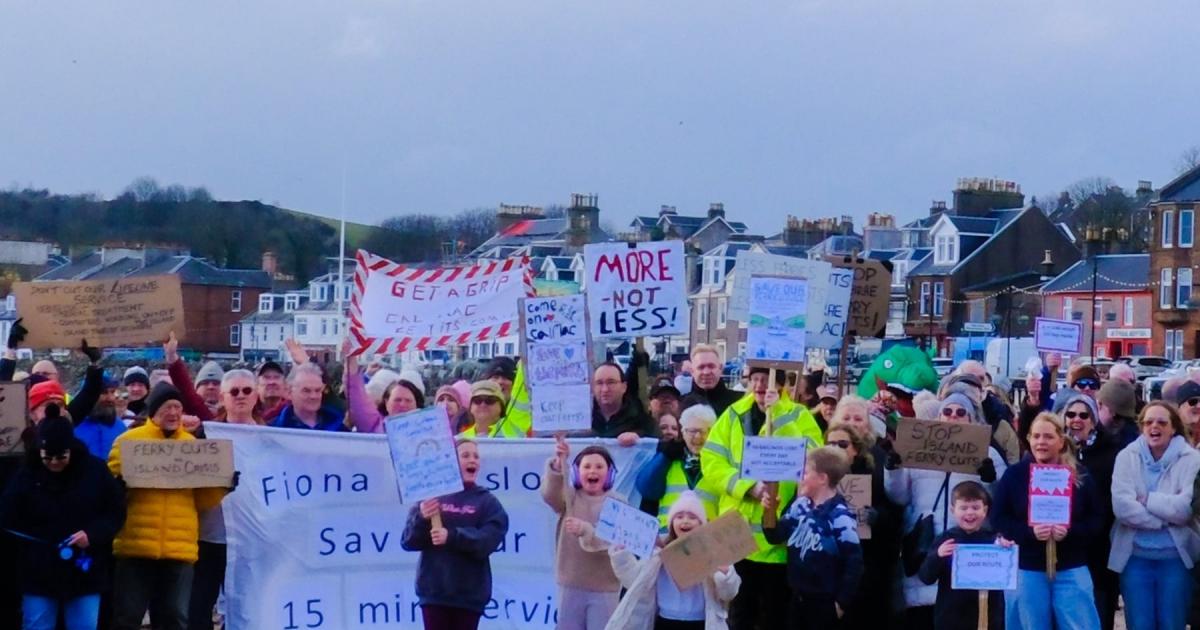
Residents have hit out at proposals which would reduce ferry frequency and capacity by 25% to and from the Isle of Cumbrae.
A community drop-in session with ferry operators CalMac on Friday was marked by “palpable frustration and anger”, campaigners said.
Angus Campbell, chair of the Cumbrae Ferry Committee, remarked: “When almost one in four islanders turns out to a ferry consultation, Ministers must recognise the seriousness of the situation. The strength of feeling on Cumbrae is not political theatre — it is genuine fear about our island’s future.
MV Isle of Cumbrae. (Image: Newsquest)
“A 25% reduction in peak sailings during the busiest months risks long queues, lost visitors, disrupted commutes and lasting economic harm. For a fragile island economy, that is not a minor adjustment — it is potentially transformational.”
The “lifeline service” between Largs and Cumbrae in the Firth of Clyde has operated a 15-minute, “turn-up-and-go” timetable for four decades.
Plans to end the simultaneous loading and unloading of passengers and vehicles would reduce sailings from four to three per hour.
Meanwhile, new maintenance windows would remove the main vessel from service during daytime hours.
CalMac CEO Duncan Mackison has said that the changes occurred following a “thorough review”.
In January, he told The Herald: “We are not comfortable with the risk to customers, crew and shore staff when loading and unloading cars and foot passengers at the same time.
“The consequence of this is that turnaround times at Largs and Cumbrae will be ten minutes, but it brings the service in-line with how we operate on all other routes with slipways.”
Read more:
Mackison said that the ferry operator met with campaigners in October 2025 and has remained in “regular dialogue” with residents.
Campbell added: “The Scottish Government has consistently stated that island services must be community-focused and service-led. That principle must now be demonstrated in practice.
“Islanders are not asking for special treatment — we are asking for protection of our lifeline. The responsibility ultimately rests with Ministers to ensure that island communities are not weakened by decisions taken elsewhere.”


