






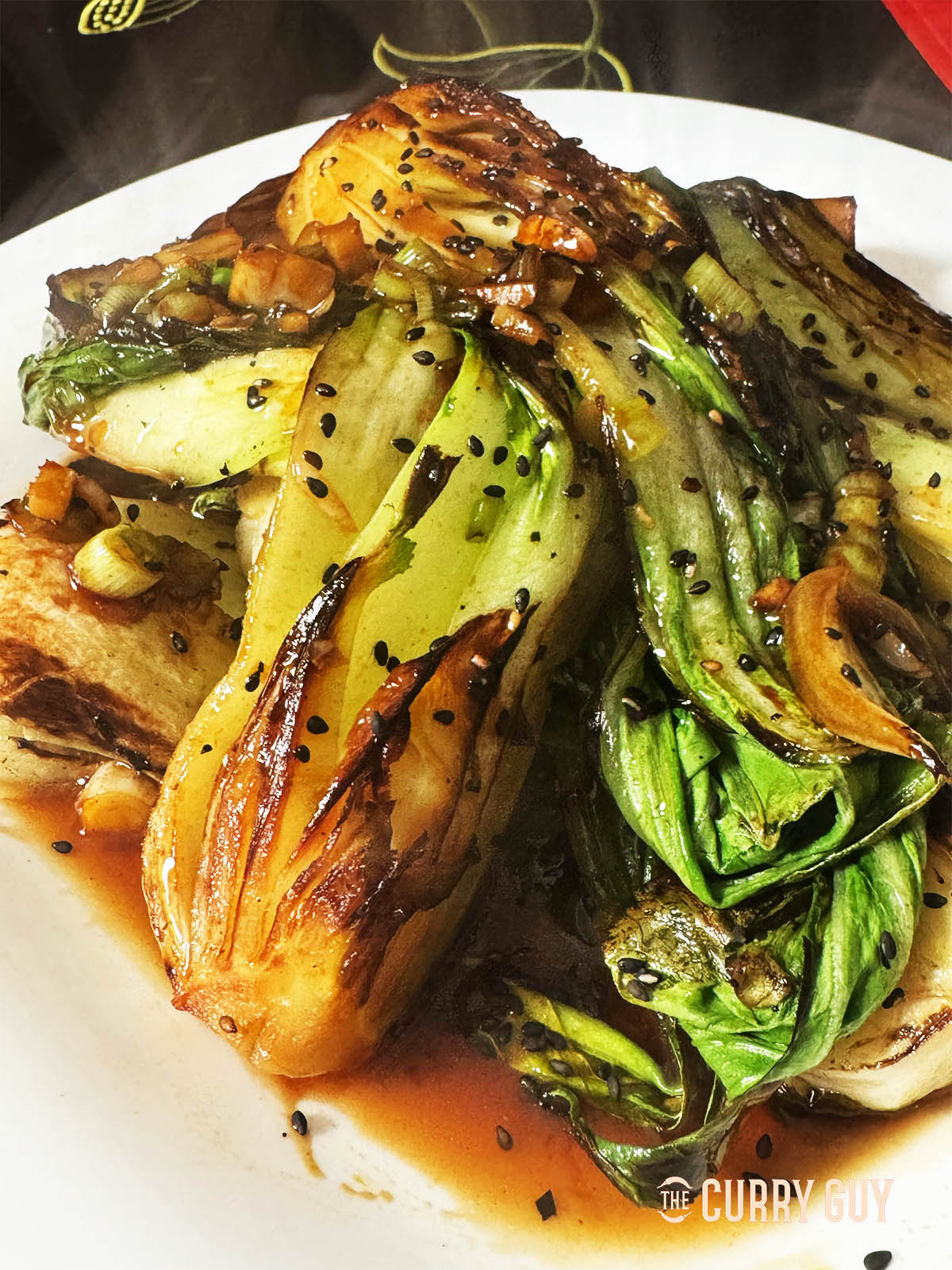
There are some dishes that quietly steal the show. They’re not flashy, they don’t come swimming in sauce, and they’re often treated as “just a side”. Chinese-style seared pak choi is one of those dishes. Cooked properly, it’s crisp, juicy, savoury, and packed with flavour and once you know how to make it, you’ll wonder why you ever ordered it as an afterthought.
This is one of those recipes I absolutely love because it proves that simple food done properly is unbeatable. A hot pan, a few carefully chosen ingredients and a couple of minutes of confident cooking is all it takes to turn humble greens into something you genuinely look forward to eating.

What Is Chinese-Style Seared Bok Choy?
Bok Choy (also spelled pak choi) is a type of Chinese cabbage with crisp white stems and tender green leaves. In Chinese cooking, it’s often blanched, stir-fried, or quickly seared and finished with a light sauce.
Seared pak choi is all about contrast. The stems stay crunchy and juicy, the leaves wilt just enough to become silky, and the whole thing is lightly coated in a savoury glaze made from soy sauce, garlic, and sometimes oyster sauce or sesame oil. It’s not heavy, it’s not complicated, and it’s meant to complement richer dishes rather than compete with them.
A Bit of History
Bok Choy has been used in Chinese cooking for hundreds of years, particularly in southern China where quick cooking methods are prized. Vegetables were often cooked fast over high heat to preserve texture, colour and freshness, especially in times when fuel was precious.
In traditional meals, vegetables like pak choi weren’t treated as filler. They were there to balance richer meats and sauces, cleanse the palate and bring freshness to the table. That philosophy carries through to Chinese restaurants and takeaways today, where a simple plate of greens often accompanies roast meats, noodles, or stir fries.
Ingredients
Get all your ingredients together before you start cooking. These are the ingredients I used but as you will see below, there are many variations. Try some of the variations or make up your own.

See recipe card for quantities.
- Baby pak choi, quartered lenghwise
- Neutral oil (vegetable or groundnut)
- Garlic
- Ginger
- Spring onions (scallions)
- Light soy sauce
- Oyster sauce
- Water or light stock
- Sugar (optional, to balance)
- Sesame oil
- Chinese chilli crisp (optional)
Step by step photos
Check out my step by step cooking photos to see for yourself how easy it is to make seared bok choy.
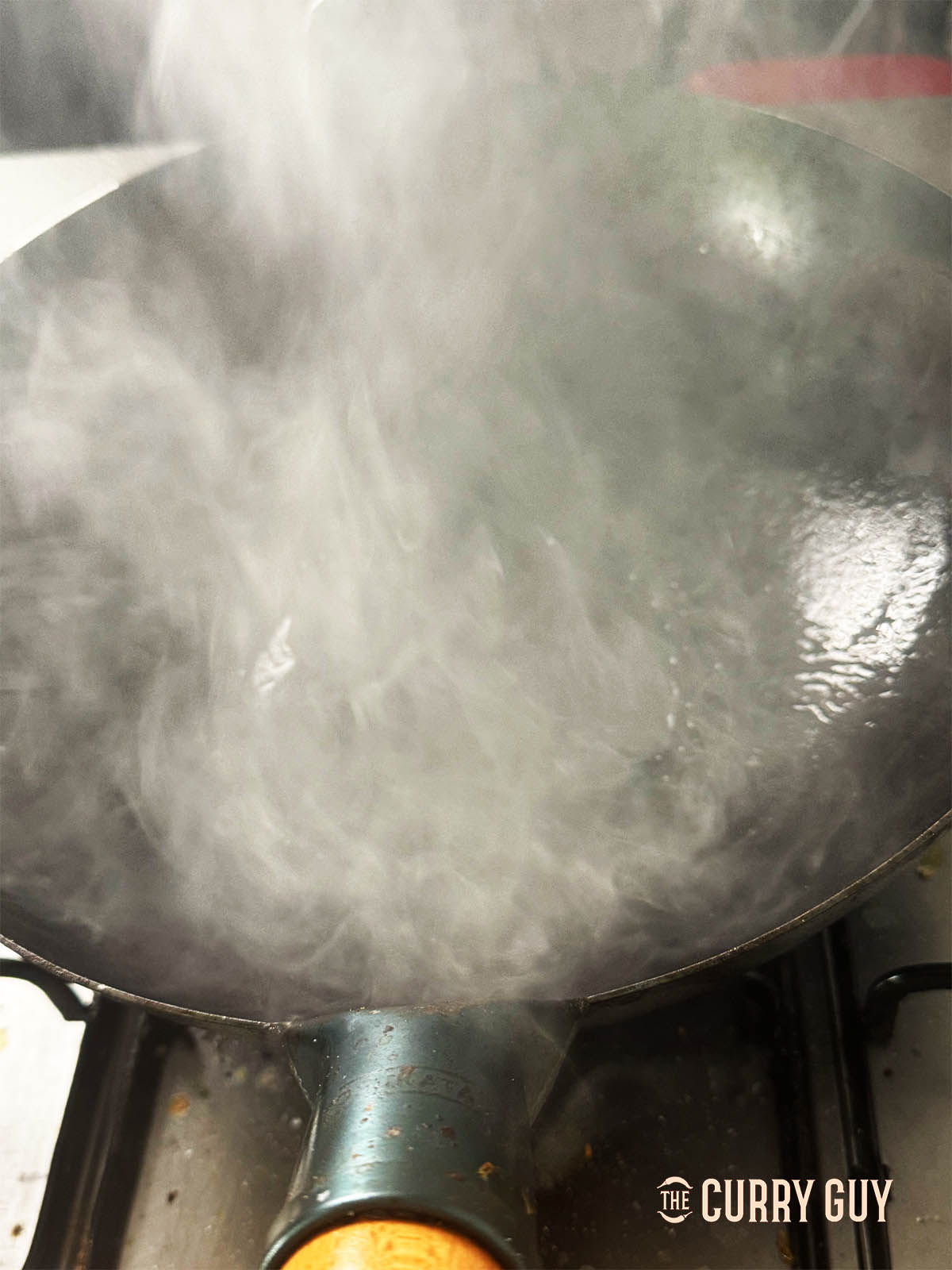
- Step 1: Place your wok or pan over high heat and let it get hot. Smoking hot! When you add the oil, it should shimmer almost immediately. This is where a lot of people go wrong. If the pan isn’t hot enough, the bok choy will steam instead of sear.
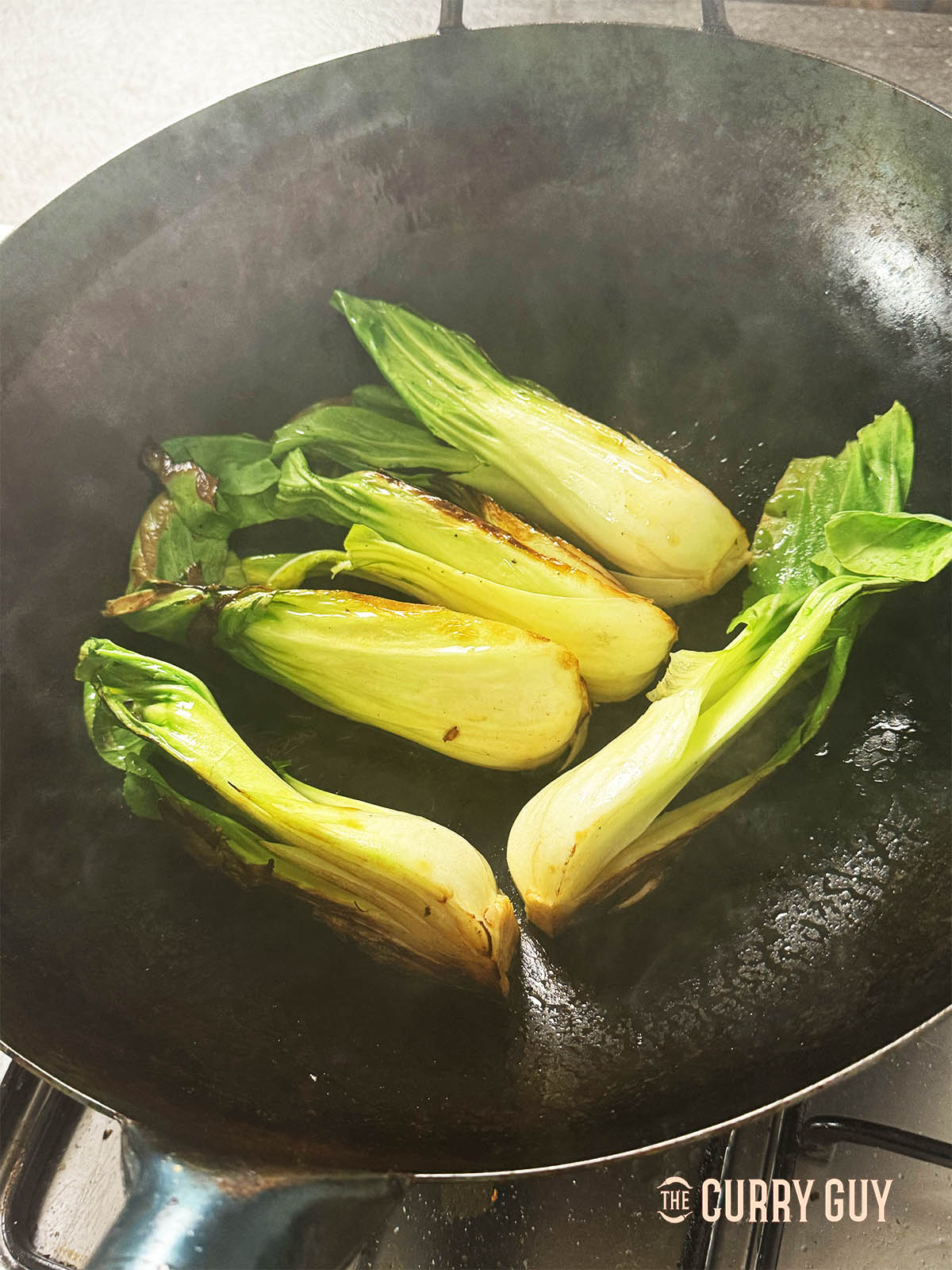
- Step 2: Add the oil. Slice the bok choy in half or quarter larger pieces. Then carefully place the pak choi cut-side down in the pan. Don’t move them. Let them sit for about 60–90 seconds until the stems start to caramelise. You’re looking for light browning, not burning. Turn to the other cut side and repeat.
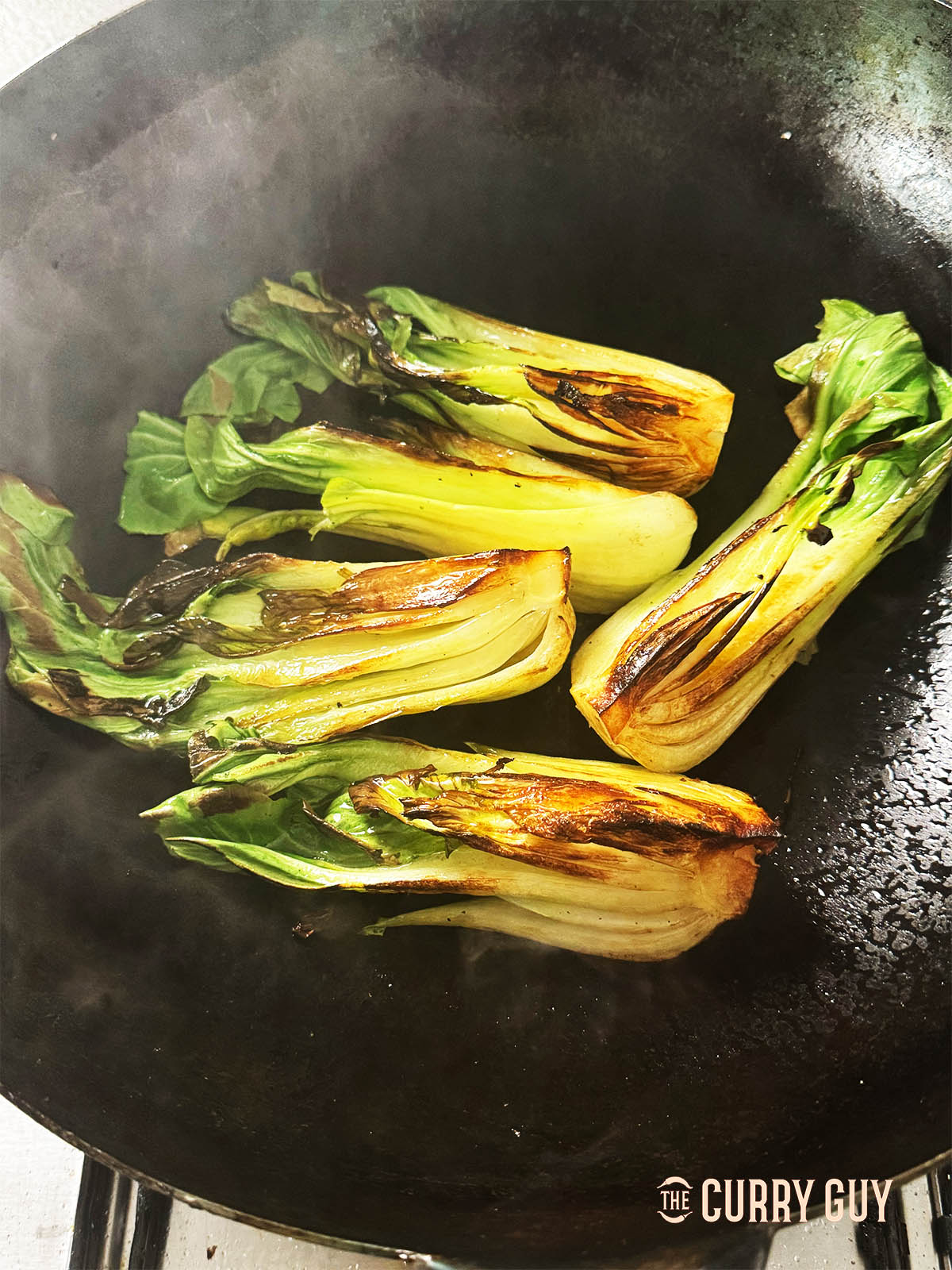
- Step 3: It is important not to over fill your wok or it will cool down. Cook in batches if necessary.
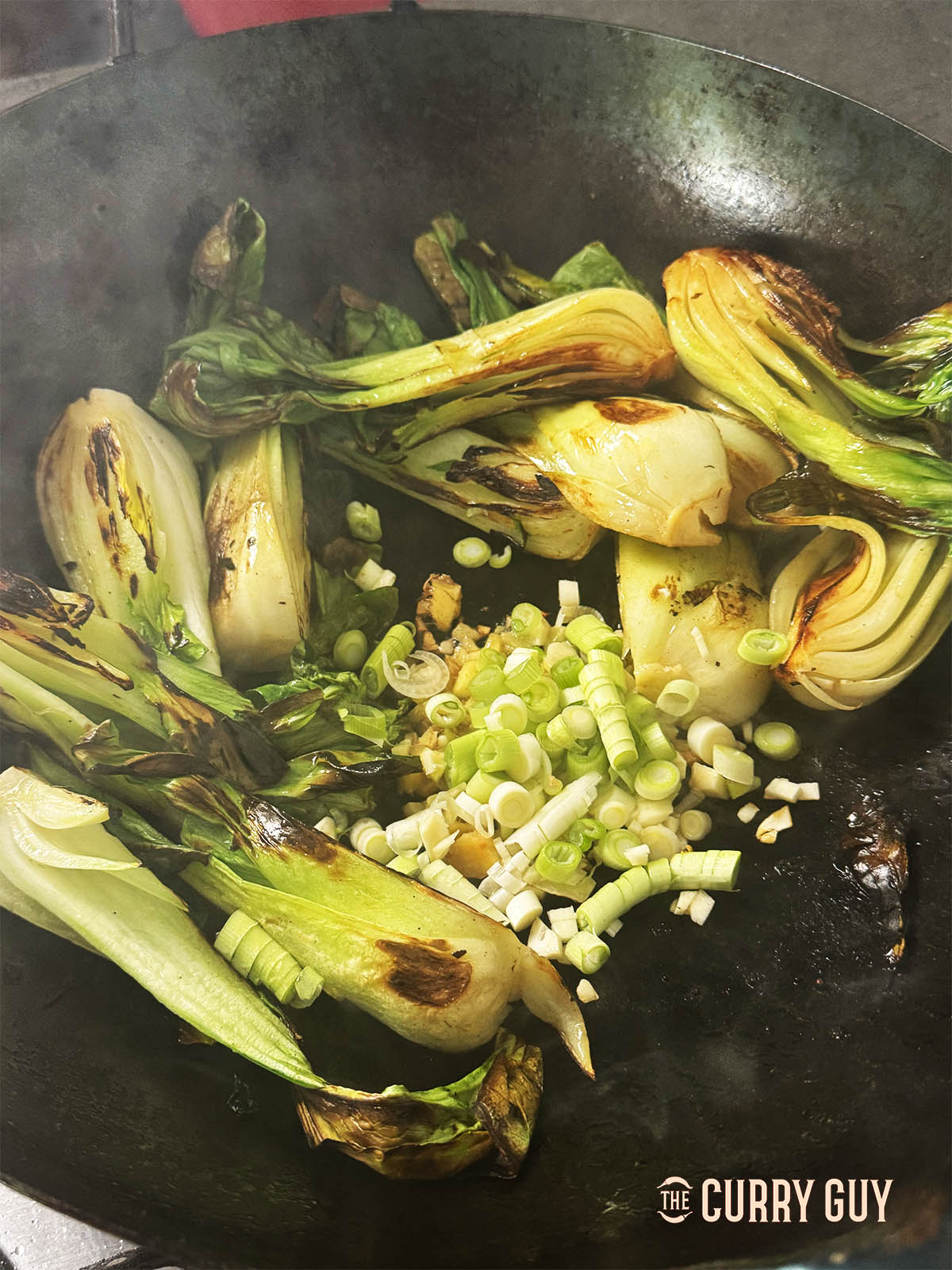
- Step 4: Once the pak choi has colour, add the garlic, ginger and spring onions and stir quickly so it doesn’t burn. Pour in the soy sauce, oyster sauce, water, and sugar if using.
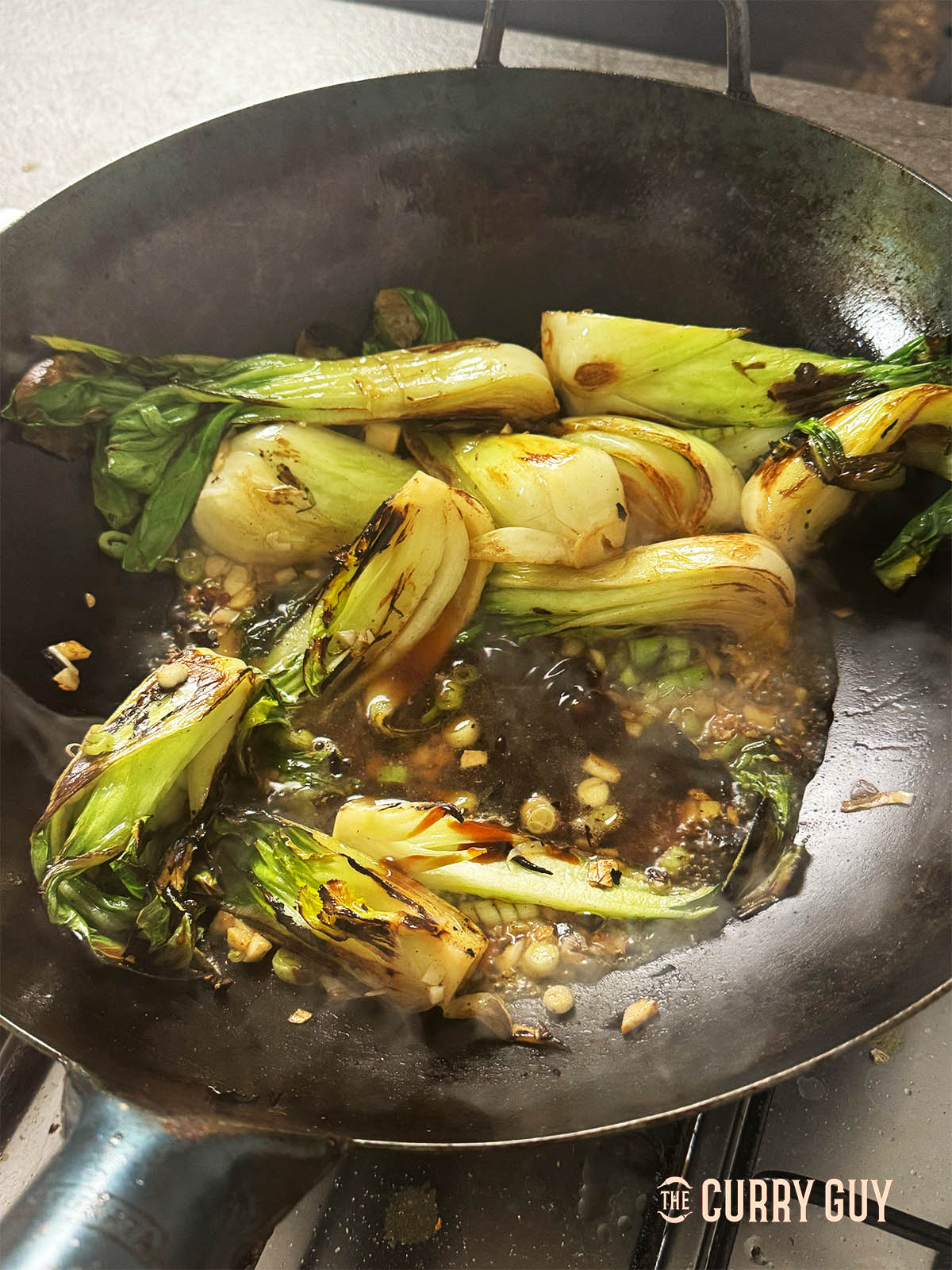
- Step 5: The liquid will sizzle and steam, finishing the cooking and glazing the pak choi beautifully. Flip the pak choi so the leaves just wilt, drizzle in a few drops of sesame oil, and remove from the heat.

- Step 6: Serve immediately while it’s hot and glossy. If you like, garnish with sesame seeds.
Why You’ll Love Making This at Home
First of all, it’s fast. Proper Chinese-style seared pak choi takes less than 5 minutes from pan to plate. Second, it’s healthy without feeling like health food. And third, it tastes far better when you make it yourself because you control the heat, seasoning, and texture.
This is also a brilliant gateway recipe if you’re new to cooking Chinese food at home. It teaches you about heat control, timing, and balancewithout any stress. Once you nail this, everything else gets easier.
Variations
Once you know the basic method, it’s easy to mix things up:
- Chilli Pak Choi – finish with chilli oil or fresh chillies
- Vegetarian Oyster Sauce Version – use mushroom stir-fry sauce
- Black Bean Pak Choi – add a teaspoon of black bean paste
- Soy & Shaoxing – a splash of Shaoxing wine adds depth
Useful Equipment
You don’t need much, but the right pan helps:
- Wok or large frying pan
- Sharp knife
- Chopping board
- Tongs or spatula
- Small bowl for sauce
A carbon steel wok is ideal, but a heavy frying pan works perfectly well.
Storage and Reheating
This dish is best eaten fresh, straight from the pan. That said, leftovers can be stored in the fridge for up to 2 days.
To reheat:
Avoid microwaving if possible
Use a hot pan with a splash of water
Reheat quickly to avoid sogginess
Tips for perfection
- Dry your veg well before cooking
- Less sauce is more – this isn’t a stew
- Serve immediately for best texture
- Treat vegetables with respect – they deserve it
Top Tip
Heat is everything – don’t be timid! Get that wok fiery hot!
Final Thoughts
Chinese-style seared bok choy is proof that you don’t need complicated recipes or long ingredient lists to cook great food. It’s fast, flexible, and full of flavour and it fits beautifully alongside stir fries, roast meats, noodles, or even as a simple main with rice.
Once you’ve cooked this a couple of times, it’ll become second nature — and it’s the kind of dish that quietly makes everything else on the table taste better. Simple food. Proper technique. Big results.
FAQ
Either it wasn’t dried properly or the pan wasn’t hot enough.
No, but it adds depth. Vegetarian versions work well too.
Absolutely. Sear protein first, remove it, then cook the pak choi. To finish, add the protein back to the pan.
Very. It’s low in calories, quick-cooked, and nutrient-rich.
Looking for more Chinese recipes? Try some of these!
Pairing
You might also like to try some of these popular side dishes with your seared bok choy.
Have you tried this Garlic and Ginger Seared Bok Choy recipe?
If yes, please give it a star rating in the recipe card below and leave a comment. I love receiving your feedback and I’m sure other readers of my blog do too. Thank you.
If you are not already doing so, please follow The Curry Guy on YouTube, Instagram and Facebook for all our latest recipes.
Yield: 2 to 4
Seared Garlic and Ginger Bok Choy
Prep Time
5 minutes
Cook Time
5 minutes
Total Time
10 minutes
Ingredients
- 2–4 heads baby pak choi, quartered lengthwise
- 1½ tbsp neutral oil (vegetable or groundnut)
- 4 cloves garlic, finely sliced or minced
- 1 x 2.5cm (1 inch) ginger, finely chopped
- 3 spring onions (scallions), finely chopped
- 1 tbsp light soy sauce
- 1 tbsp oyster sauce (optional but excellent)
- 2 tbsp water or light stock
- ½ tsp sugar (optional, to balance)
- A few drops sesame oil
- Optional garnish: crispy garlic, chilli oil, or spring onions
Instructions
- Wash the pak choi thoroughly, especially near the base where dirt can hide. Halve lengthways so the stems stay intact – this helps them cook evenly and look great on the plate. Pat them dry. Water is the enemy of good searing.
- Place your wok or pan over high heat and let it get hot. Smoking hot! When you add the oil, it should shimmer almost immediately. This is where a lot of people go wrong. If the pan isn’t hot enough, the pak choi will steam instead of sear.
- Add the oil, then carefully place the pak choi cut-side down in the pan. Don’t move them. Let them sit for about 60–90 seconds until the stems start to caramelise. You’re looking for light browning, not burning. Turn to the other cut side and repeat.
- Once the pak choi has colour, add the garlic, ginger and spring onions and stir quickly so it doesn’t burn. Pour in the soy sauce, oyster sauce, water, and sugar if using.
- The liquid will sizzle and steam, finishing the cooking and glazing the pak choi beautifully.
- Flip the pak choi so the leaves just wilt, drizzle in a few drops of sesame oil, and remove from the heat. Serve immediately while it’s hot and glossy
Recommended Products
As an Amazon Associate and member of other affiliate programs, I earn from qualifying purchases.
Nutrition Information:
Yield:
6
Serving Size:
1
Amount Per Serving:
Calories: 39Total Fat: 4gSaturated Fat: 0gUnsaturated Fat: 3gSodium: 223mgCarbohydrates: 2gFiber: 0gSugar: 1gProtein: 0g