












No Olympic competitions covers more ground than the 50-kilometer cross-country ski races. The grueling event takes more than 2 hours to complete, requiring competitors to ski a distance longer than a marathon. That’s still, however, less than an eighth of the distance between the two official host cities of the 2026 Winter Olympics and Paralympics—Milan and Cortina d’Ampezzo.
With events spread across more than 22,000 square kilometers (8,500 square miles) and eight cities or towns in northern Italy, these are the most geographically dispersed Games in Olympic history. The decentralized design was intentional, allowing planners to control costs and make the event more sustainable by using existing venues rather than constructing several expensive new facilities. More than 90 percent of the venues are existing or temporary facilities, including some refurbished facilities that were used in the 1956 Cortina d’Ampezzo Games.
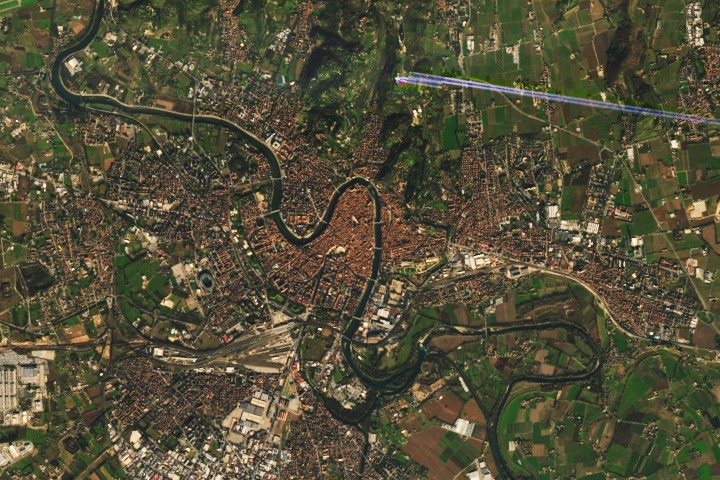
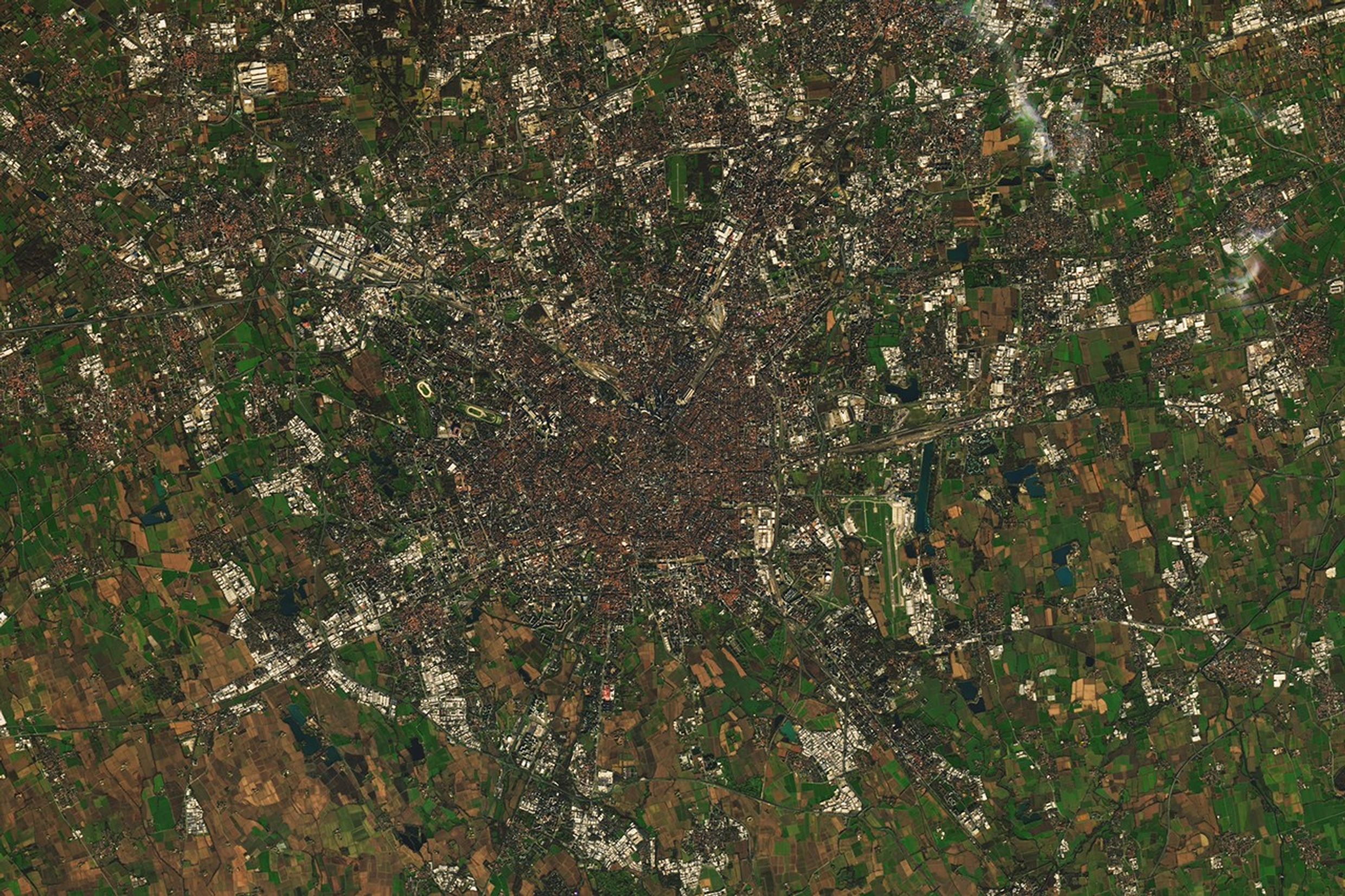
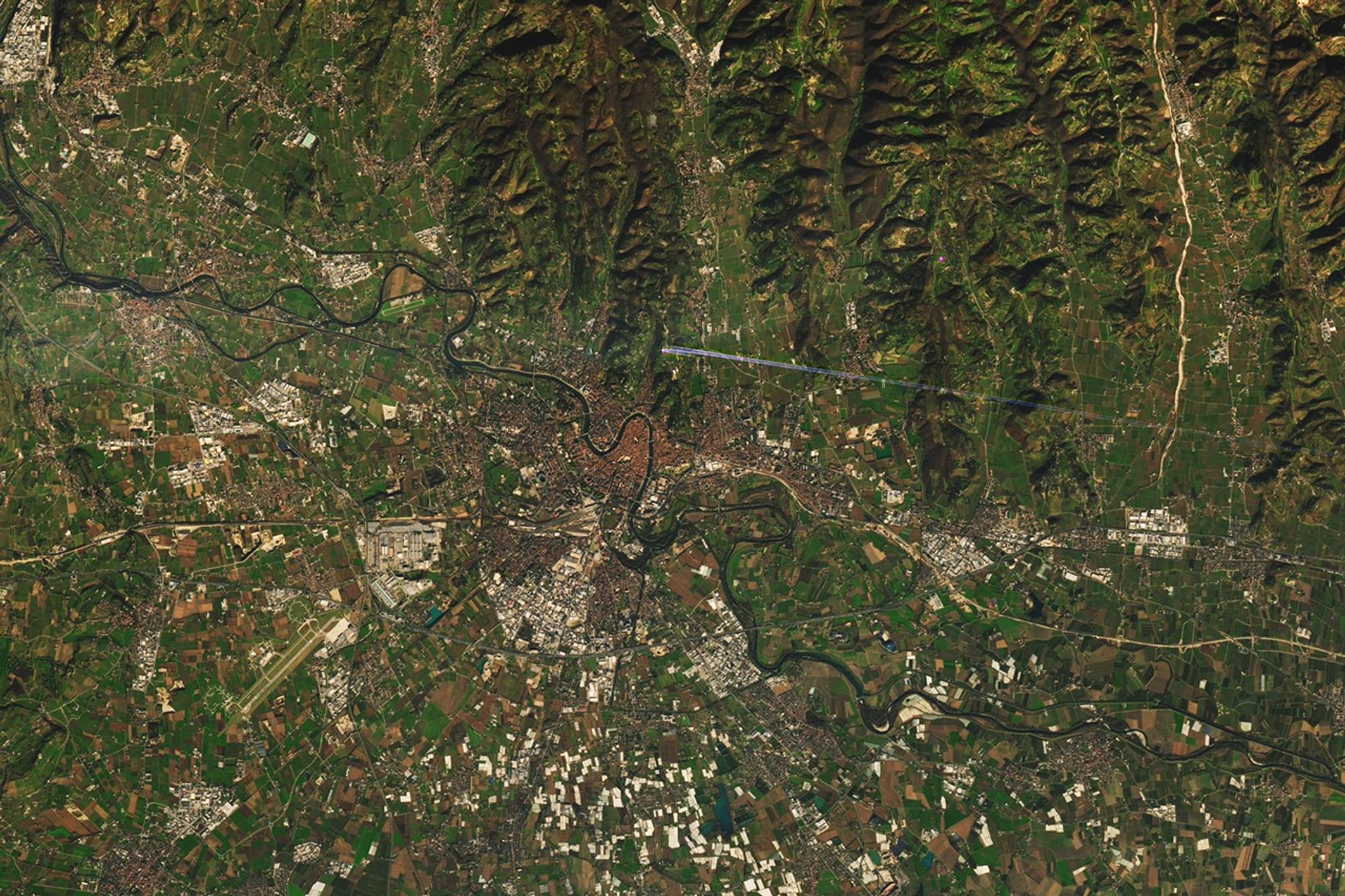
About 2,900 athletes will compete across 116 events over 19 days in 13 venues in what will be the third time Italy has hosted the Games. Several of the key event venues are visible in these satellite images of the two largest host cities—Milan and Verona. The OLI (Operational Land Imager) on Landsat 8 and 9 captured the images on December 8 and 9, 2025, respectively.
Olympic festivities will kick off officially on February 6 at San Siro Stadium with performances by pop star Mariah Carey, classical singer Andrea Bocelli, classical instrumentalist Lang Lang, and Italian singer-songwriter Laura Pausini. Built in 1925, San Siro is Italy’s largest stadium and the longtime home of renowned football clubs AC Milan and Inter Milan.
Milan will mostly host indoor ice events in several other venues around the city. Ice hockey will be spread across two venues, the Milano Santagiulia Ice Hockey Arena and the temporary Milano Rho Ice Hockey Arena. The former, located east of the city in the green and residential Santa Giulia district, is the only new permanent venue constructed for the Games. The latter, in Milano Ice Park, is a temporary transformation of the Fiera Milano Rho exhibition center, a complex of pavilions and a convention center northwest of the city center.
Speed skating and figure skating will be in the Milano Ice Skating Arena, an 11,500-person stadium in Assago, a small town just outside of Milan. Outside of the Olympics, the multisport facility is used by a skating school and basketball team and as a venue for tennis, squash, swimming, and several other sports.
The February 22 closing ceremonies will take place in Verona, a city of about 250,000 people 150 kilometers east of Milan, in Verona Arena, an ancient Roman amphitheater that was built between the 1st and 3rd centuries. What was once used for animal hunts and gladiator battles will serve as the backdrop for musicians, dancers, and artists in a ceremony that organizers say will honor the spirit of athletics and Italy’s rich cultural heritage. The arena, with a seating capacity of about 22,000, is the third-largest surviving amphitheater in Europe and unusually well-preserved.
New events this year will include men’s and women’s ski mountaineering, skeleton mixed team relay, women’s doubles luge, freestyle skiing dual moguls, and women’s large hill ski jumping. The 2026 Olympic mascots are Tina and Milo, a brother-and-sister pair of cheerful, scarf-wearing animated stoats with names inspired by Milan and Cortina. Stoats, also called ermine, are fierce predators in the weasel family known for reportedly mesmerizing prey with energetic dances and for having fur that changes from dark brown in the summer to white in the winter. In Italy, stoats typically live in the mountains above 3,500 meters (11,500 feet).
NASA Earth Observatory image by Lauren Dauphin, using Landsat data from the U.S. Geological Survey. Story by Adam Voiland.


- ArchDaily (2026, February 6) Six Sites Host the Olympic Villages of Milano Cortina 2026 With a Focus on Existing Infrastructure. Accessed February 4, 2026.
- ESPN (2026, January 16) New events at the 2026 Winter Olympics. Accessed February 4, 2026.
- International Olympic Committee (2026, January 29) Key facts and figures about the upcoming Olympic Winter Games. Accessed February 4, 2026.
- International Olympic Committee (2026, January 9) Milano Cortina 2026: Reaching new heights in the heart of the Dolomites. Accessed February 4, 2026.
- International Olympic Committee (2025, October 23) Over 125 years of Olympic venues: post-Games use. Accessed February 4, 2026.
- National Park Stilfser Joch The Stoat or ermine. Accessed February 4, 2026.
- Nicoliello, M. (2024) A New Era for the Olympic Games Following a Sustainability Path: The Case of Milan-Cortina 2026. Business for Sustainability, 22, 163-181.
- Raco, M. & Di Vita, S. (2024) Replacing place with space: the influences and the challenges of the new norm on the Milan-Cortina Winter Games 2026. Planning Perspectives, 39,(3), 710-719.
- SportsTravel (2026, February 3) Olympic Winter Games Preview: Venue Guide. Accessed February 4, 2026.
- The New York Times (2023, July 3) GOATs Are Everywhere in Sports. So What Really Defines Greatness? Accessed February 4, 2026.


