












| Updated:

The controversial redevelopment of Liverpool Street station has been tipped for approval despite receiving thousands of objections.
Planning officers at the City of London Corporation recognised that the plans would cause harm to a number of heritage assets, including the station itself, but said the issues were “clearly and convincingly justified” given the wider benefits of the scheme.
“The proposal would significantly upgrade Liverpool Street Station and deliver density in a suitable and sustainable location,” planning officers wrote in a lengthy report detailing the scheme’s merits and drawbacks.
“It would advance the strategic and business objectives of the City, uniquely so in view of the transformational transport benefits flowing from the proposal,” they concluded.
The City of London’s planning committee will meet next Tuesday to vote on the plans. The proposals have received over 2,300 objections, as well as over 1,100 letters in support, making it an unusually contested development.
Liverpool Street is the country’s busiest station, recording nearly 100m entries and exits last year, with passenger numbers forecast to rise to 158m by 2041. The planning officers described it as a “singularly intensive, complex and sensitive” scheme.
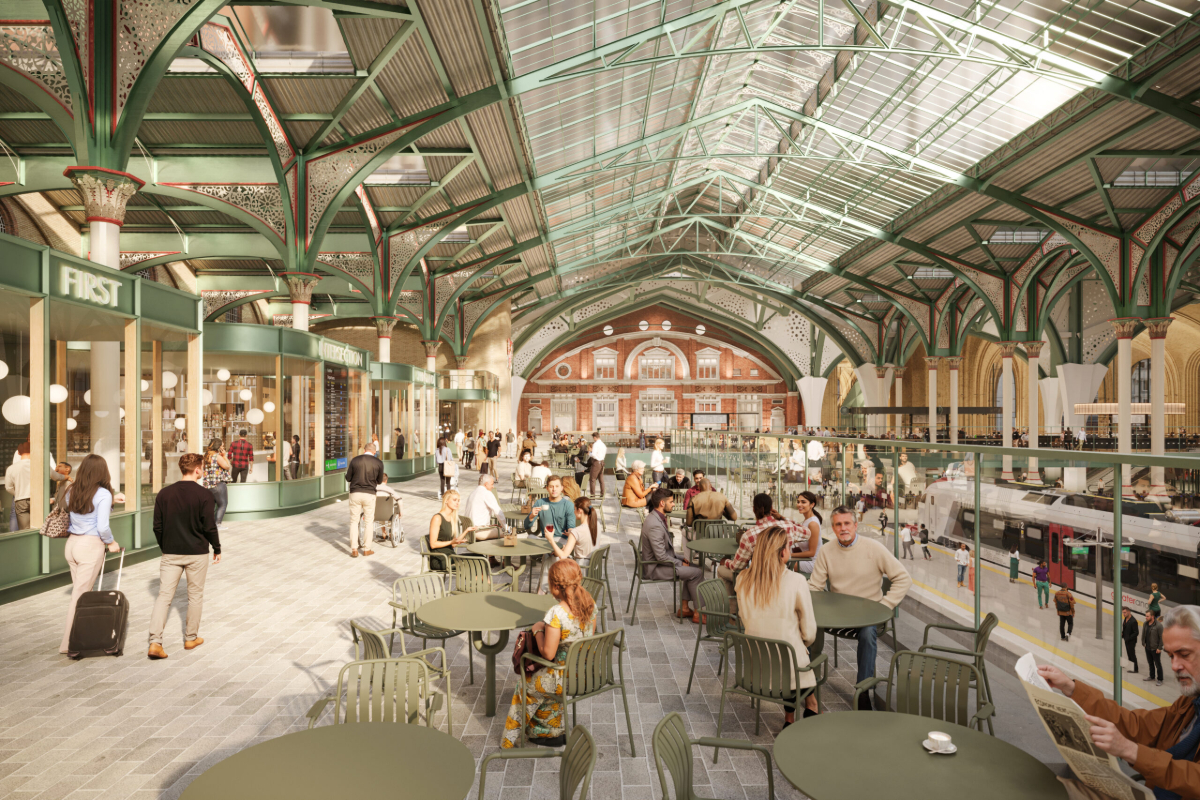
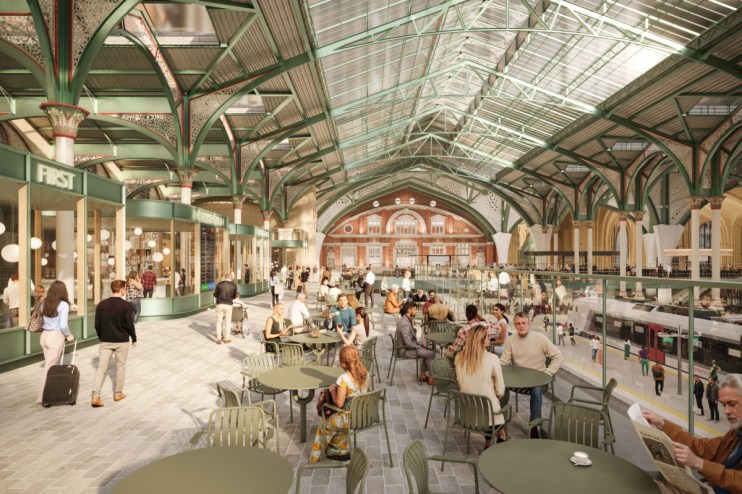
Network Rail’s £1.2bn redevelopment will significantly increase the size of the station concourse, introduce step-free access across all rail and underground platforms, and increase the number of elevators from four to ten.
To help fund the redevelopment, a 19-storey office block will also be constructed over the station’s concourse, the most controversial element of the scheme.
‘Loss of significant historic fabric’
Developers hope this will contribute £500m towards the costs, but the proposals have attracted a lot of criticism from heritage groups given the impact on the surrounding area.
“The location, height and massing of the proposed development would cause considerable harm to heritage assets of the highest importance,” the Georgian Group said.
SAVE Britain’s Heritage objected to the scheme on “the strongest terms on heritage grounds,” arguing that the applicants had not considered proper alternatives to development over the station concourse.
“We acknowledge a need to improve the accessibility and operational functionality of the station. However…we have not seen evidence that alternative options to over-station development were considered, such as providing a baseline minimum harm scheme or considering alternative sites for development to fund the station improvement works.”
St Paul’s Cathedral also objected on the grounds that it would “harm the ability to appreciate the Cathedral as a Strategically Important Landmark”.
The planning officers admitted that the plans would “entail the loss of significant historic fabric, causing harm to the station’s significance,” but still said this was outweighed by the wider positive impacts.
“The range of impacts would result in numerous policy conflicts, but officers consider that there is overall compliance with the Development Plan when read as a whole,” they wrote.
If approved, construction would start in 2028 and last until 2036.
Platforms one and two – largely used by the London Overground – would be closed for up to two years during the works, but Network Rail said they would be able to mitigate the disruption, potentially through ‘service thinning’.
“The scheme has been carefully designed and phased to ensure that the station remains open and operational during the works,” a spokesperson for Network Rail said.


