










| Updated:


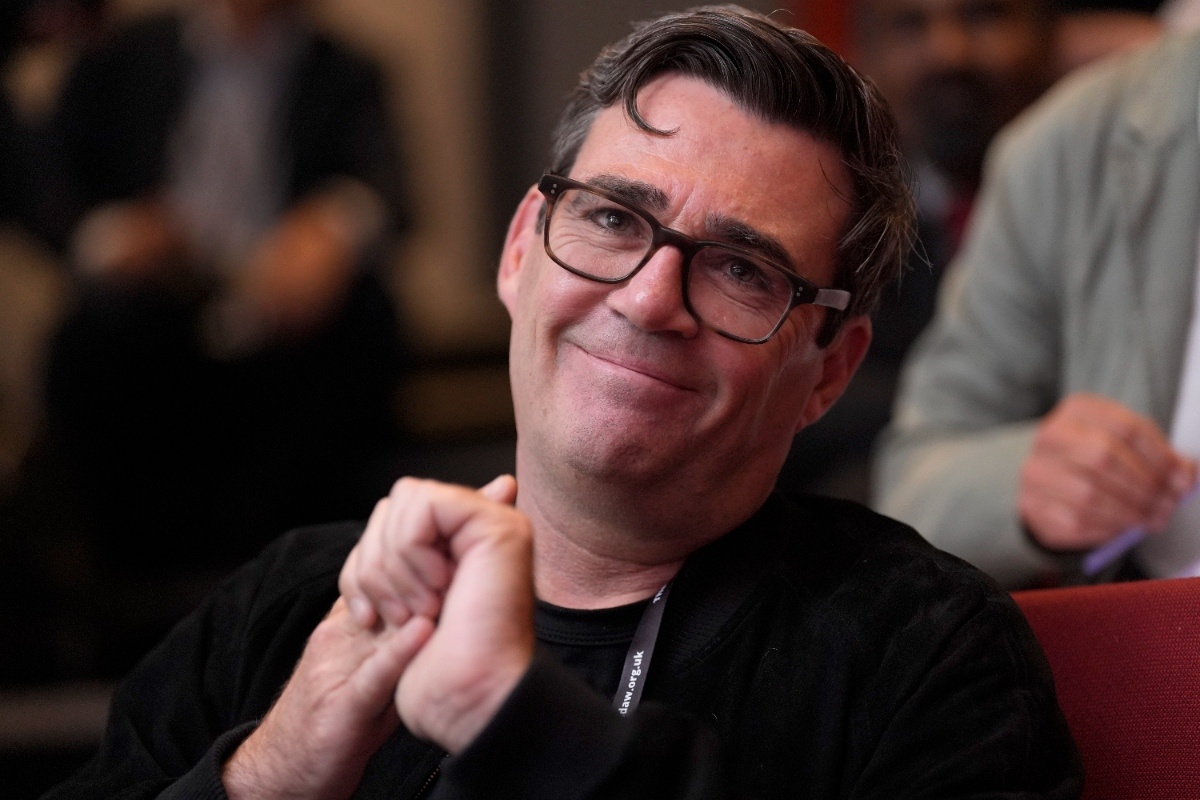
The strategic block of Andy Burnham’s by-election candidacy is a self-inflicted wound that signals weakness, invites challenges from internal rivals, and elevates a local contest into a national stress test of Keir Starmer’s leadership, says Helen Thomas
The starting gun to replace Keir Starmer has been fired. Andy Burnham’s application for a waiver to run in the Gorton and Denton by-election and its subsequent block by a senior NEC subcommittee is not just a procedural skirmish. It will exact a strategic cost to Starmer’s authority.
British voters are not stupid. They know it is Starmer’s vulnerability that has triggered the whole debacle. Ducking another confrontation does not end the fight. It only signals weakness – and weakness invites challenge. Every rival, every internal faction, and every external opponent is now incentivised to test the prime minister’s grip.
Political leaders exert power only if they aggregate it first. Leaders with deeply negative personal ratings, who are blamed for one of the sharpest polling declines of a new government on record, hold remarkably few cards. Pollster Peter Kellner recently noted that four governments have fallen further in the polls and still recovered to win the next election. But Kellner also warned that such turnarounds typically require “change”: either a dramatic external event, like the Falklands, or, perilously for Starmer, a change of leader.
At this particular historical juncture there is a further challenge. Rather than just two large parties fighting it out, we have a fragmented multi-party system, leaving the “agent of change” to fight on multiple fronts. Kellner argues that only risk-taking and belligerence can deliver the kind of “wow” factor that amounts to a political Hail Mary. Months spent mired in internal Labour politics will not deliver that. Nor will procedural skirmishing over selection rules.
Burnham, meanwhile, is already trying to supply the wow. His letter requesting permission to stand reads like a stealth leadership pitch. There is the romantic invocation of the “cotton workers of 1862”, the populist turn against Westminster with “I left… it wasn’t working for people”, a nod to “the progress already made”, and a closing declaration of confidence that “we can win”. Blocking his candidacy will not stop him making the pitch. If anything, it amplifies it.
Manchesterism
Bambi will continue to prosecute his “Manchesterism” message, encouraging other would-be challengers to set out their alternative stall. Whether Streeting, Rayner or Powell, their voices will eclipse a Prime Minister who has never quite mastered the bully pulpit. The barrister who excelled in technical legal argument has always been more comfortable with articles than interviews, and with policy detail rather than rhetorical flourish. In a political moment that demands theatre, Starmer brought a technocratic quill pen to the bloody gladiatorial arena.
Hiding behind Labour’s internal rulebook may secure this procedural victory, but it invites rebellion. Party machines can be subdued, stacked and sutured but never tamed into complete submission. Dissent will be registered, grudges banked, and discipline eroded. The current machinations are the prelude to a deeper fracture which will eventually accelerate the timetable to an early general election.
In the short term, this chaos hands momentum to Labour’s adversaries. One argument against Burnham’s candidacy is that the Manchester mayoralty could fall to Reform. But defining a governing party’s strategy by fear of its opponents is always a losing posture: it cedes initiative and sets the narrative (just ask Hillary Clinton). With rumours that Zia Yusuf could run for Reform, and bookmakers placing the Greens in pole position, the by-election risks becoming a proxy for the next general election: Reform versus Greens, with Labour squeezed into irrelevance.
If the by-election is held before the Scottish, Welsh and local elections, it could generate momentum for Labour’s rivals at precisely the worst possible moment. This will not be a quiet contest. It will be a national referendum on Labour’s direction, Starmer’s authority and the viability of a fragmented left.
Starmer’s attempt to block a rival and draw a line under “psychodrama” has instead deepened it. Kemi Badenoch can benefit from ousting Robert Jenrick because he defected to another party. The leader of the opposition must keep their party together; the Prime Minister must do far more. Starmer should be confident enough to welcome talent to his parliamentary bench, not burn what is left of his political capital fending off rivals. Politics is not won in the rulebook. It is won in narrative, momentum and dominance of the public conversation.
Markets should take note that political instability is building under the surface. The Bank of England is widely expected to leave rates unchanged on Thursday 5 February. Having barely delivered the last cut, policymakers will sit tight while domestic and global political uncertainty plays out. Gilt auctions should pass without incident whilst other countries demonstrate more immediate risk, Japan’s imminent snap election for example. But bond markets remain front and centre for fiscal sustainability.
By blocking Burnham, the Gorton and Denton by-election has been elevated beyond a simple local by-election. It is a national stress test of Starmer himself, posing the inevitable question: if Labour needs change to recover, is Starmer the man to deliver it, or the obstacle that must be removed?
Helen Thomas if founder and CEO of Blonde Money


