











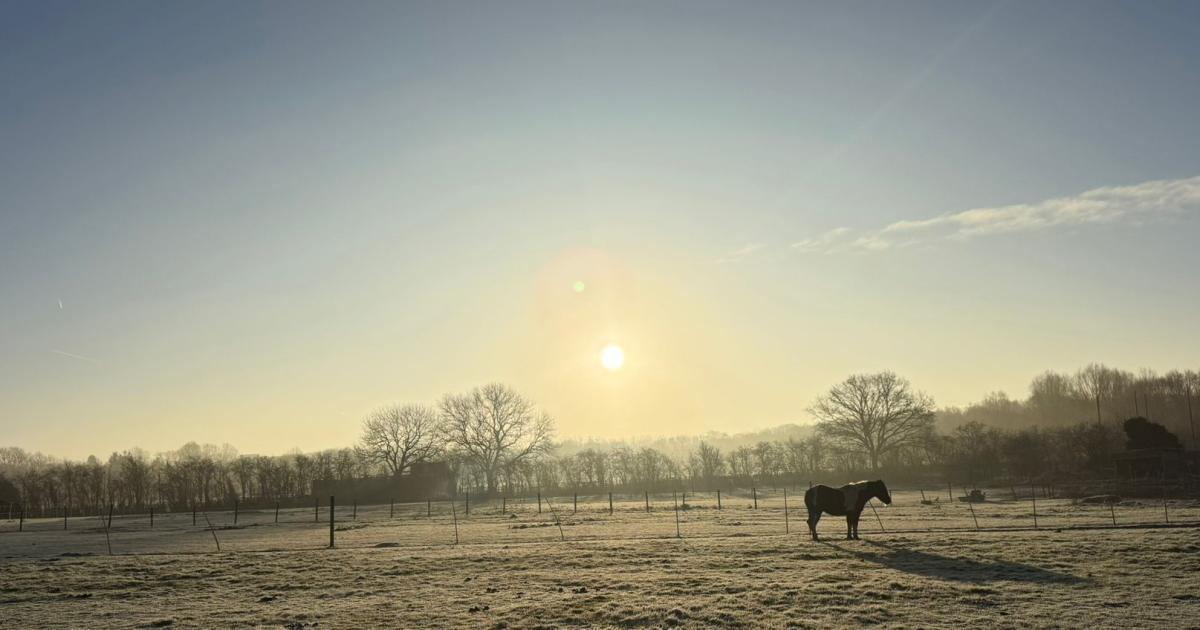
The plans, which were first outlined by developer Berkeley Homes to the community at a public exhibition in late 2025, set out proposals to build on Hayes Farm and the surrounding Norman Park area.
The site covers a large stretch of open countryside between Bromley Common, Hayes and Bromley town centre.
Campaigners have described the area as the “buffer between towns”, helping to prevent urban sprawl while providing space for wildlife, horse grazing and everyday recreational use.
No formal planning application has been submitted.
However, residents say they received leaflets from the developer outlining the proposals, which have sparked “upset and concern”.
Among the main issues raised are fears over the loss of protected green belt land, increased traffic in an area with limited public transport, pressure on schools and GP services, and the potential impact on wildlife and biodiversity on land that campaigners say is already well used by the community.
Resident David Ward said: “This land is exactly what the green belt is there for, it’s a break between Bromley Common, Hayes and Bromley town so it doesn’t just become one continuous urban sprawl.”
The area is known for being a habitat for local wildlife, according to campaigners. (Image: Contributor)
Public transport was also outlined as one of the main concerns, with fears that the increase in occupants would add pressure to the already busy Hayes Lane.
David told News Shopper: “People would be totally reliant on cars, and that’s a huge worry for an area that already struggles with congestion.”
Proposals to build 2,200 homes on green belt land in Bromley has received local opposition. (Image: Contributor)
A new report from the Campaign to Protect Rural England (CPRE) London has highlighted the growing threats to parks and green spaces across the capital, naming Bromley as one of the worst affected boroughs.
The report, Cashing in on London’s Parks and Countryside, warns that more than 50 sites are under threat from development or commercialisation, including green belt land, nature reserves, sports fields and public parks.
Residents have raised serious concerns that services in Bromley would struggle to cope with a development of this scale.
“People are really concerned about the impact this would have on doctors, schools and emergency access, not just the roads,” David said.
“Adding thousands of new residents without proper infrastructure just isn’t realistic.”
Further concerns were also raised about the risks the build may pose to local wildlife.
“This land isn’t just empty space, it’s a home for bats, badgers and horses, and it’s used every day by people walking, running and enjoying nature,” David said.
“Developing it would destroy habitats and disrupt the natural environment, which is exactly what the green belt is meant to protect.”
Berkeley Homes said the site is being brought forward in response to what it describes as a long-term housing and homelessness crisis, and claims that that Bromley has been particularly affected by a lack of new homes.
The developer says the proposals aim to address rising house prices, affordability pressures and demand from families, key workers and younger residents who want to remain in the borough.
It also defended plans to build on land designated as green belt, mentioning the government’s recently introduced “grey belt” policy, which allows certain sites to be considered for development if they no longer fully serve green belt purposes and can deliver clear public benefits.
The developer also told News Shopper it thinks the Ravensbourne Place site is well connected to public transport and local amenities, and that its plans would replace largely fenced-off, low-quality land with publicly accessible open space, improved landscaping and new recreational routes, with no net loss of trees.
According to Berkeley, the proposals would deliver around 2,200 homes, with 50 per cent classed as ‘affordable’, alongside new community facilities, play spaces, walking and cycling routes and a continuous green corridor running along the River Ravensbourne to Norman Park.
A Berkeley spokesperson said: “Bromley is suffering a severe housing and homelessness crisis and our proposals could deliver around 2,000 badly needed private and affordable homes, while opening up largely fenced-off land to create around 50 acres of public green space, which represents a major increase in the amount of recreation space local people can currently access.
“This carefully designed neighbourhood would be sustainably located within walking distance to local train stations and Bromley town centre, offering a mix of new pedestrian routes, parkland, children’s play space and enhanced natural habitats.”
The developer also says traffic, healthcare and school capacity are being assessed through ongoing studies and engagement with the council, Transport for London, the NHS and education providers, with the potential for a new health facility included if required.


