












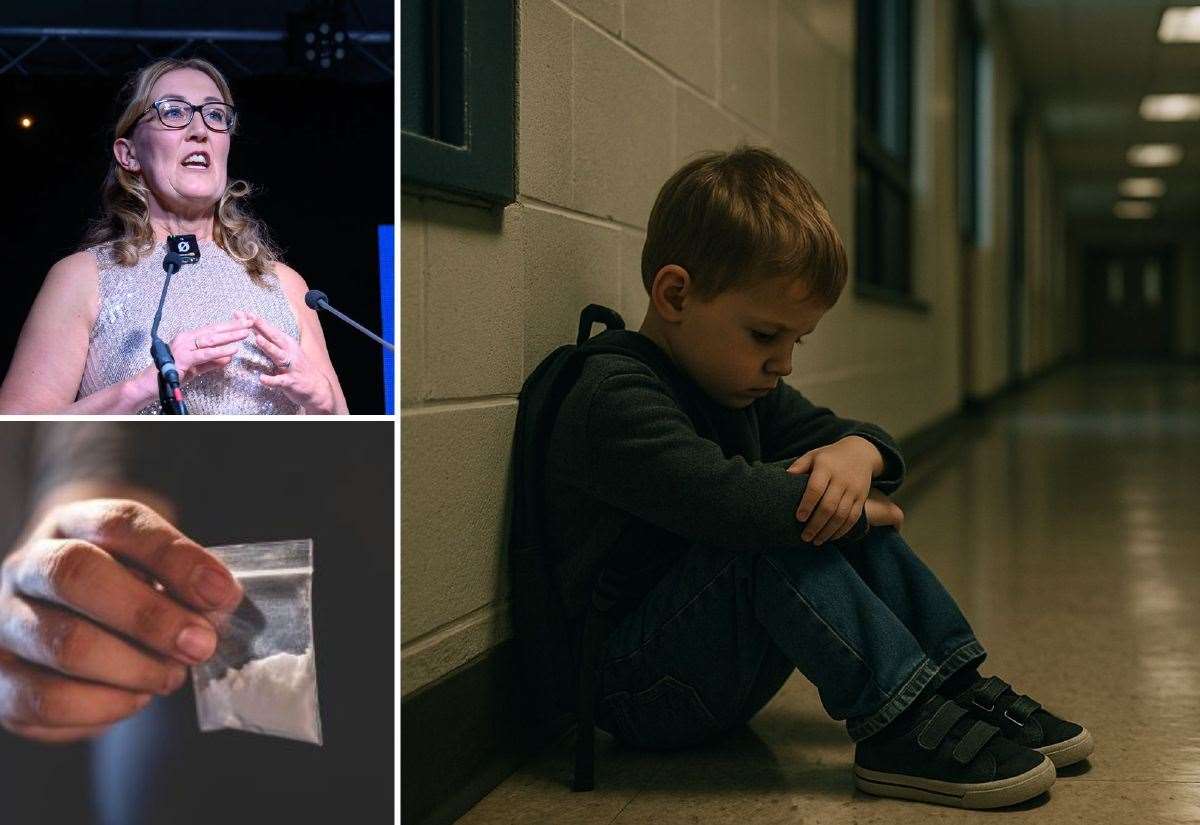
New figures which show even primary school children in Kent are being suspended for substance misuse have been described as “heartbreaking”.
More and more students are being pulled out of the classroom as shock new statistics reveal a significant rise in under-18s being treated for addiction problems — including use of cannabis, ketamine, cocaine, ecstasy, as well as alcohol and nicotine.


Medway saw the fifth largest increase in the country with a 55% uptick in the number of minors being treated for drug-use between 2023/24 and 2024/25 — rising from 110 children being supported to 170.
This was only behind Hull, Stockport, Birmingham and the greatest increase in Essex, which saw a growth of 200 – an 85% rise from the previous year.
The new data, which was pulled together by the BBC Shared Data Unit, shows overall Kent had the 11th highest number of under-18s undergoing treatment in the country at 225 — an increase of 20 from the previous year.
The county also had the third highest number of school suspensions due to drugs and alcohol, with 654 suspensions and 11 exclusions.
Medway had six exclusions and 165 suspensions, with five of the suspensions across both Kent and Medway being for primary school children.
Mum Kim Webster knows first-hand just how devastating the impact can be of young people taking drugs.
Her 17-year-old son, Will Horley, died in 2018 after he suffered a fatal reaction to the drug Tramadol on a night out, plunging his family into despair and grief.
Mrs Webster, from Herne Bay, now dedicates herself to driving home her message through the Kenward Trust, where she works as a youth education executive for its Think Differently programme.
She has visited dozens of secondary schools and colleges across the county to tell her story, speaking to tens of thousands of young people, some of whom have been left in tears.
When asked about the latest figures, she replied: “It’s really shocking that it’s increased so much in Kent.
“It’s scary really. Especially in the last seven years with my campaign since losing Will, sometimes I think, am I just banging my head against a brick wall.


“It’s heartbreaking isn’t it?” I mean what 12 year old really wants to be out with drugs and alcohol?”
Mrs Webster believes more education is needed.
“Teachers can do what they can do. But it definitely needs more investment in our education on drugs and alcohol because it’s so easily available.”
When she goes into schools she says they often request them to talk about the drug Ketamine and the dangers of its use on your body.
KentOnline previously ran a campaign to tackle so-called “legal highs” amid concerns youngsters were also being targeted with over-the-counter drugs being marketed in attractive, colourful packaging.
On this aspect, Mrs Webster said “peer pressure” was also a big factor.
It’s really shocking that it’s increased so much in Kent
“Since Covid, you know, the children haven’t had that regular routine of education and in schools. And since then, they’ve been out in parks and it’s been quite lonely for them.
“So, it could be a way of thinking they’re making a friend online and all the encouragement that comes with it.”
She also thinks social media companies need to step up more.
“I have been in contact with a couple of social media platforms in the past,” she added. “And they say that they are constantly monitoring their platforms.
“But as soon as they take one down, another one will appear straight away. They’re so clever. They’re ready with another page instantly that just goes straight back up again. Your chasing your tail, I’m sure.”
What does the data show about the ages of the children concerned?
Of the children undergoing treatment in Kent, 44% were under the age of 15 and in Medway this was 62% – 18% in Medway were below the age of 14.
This matches a concerning trend across the country, which has seen a 13% rise in England of under-18s undergoing treatment for drug or alcohol problems.
In the UK in 2024/25, 24,500 children were suspended from school for reasons related to drugs or alcohol, and 16,200 used council services related to the issue.


The most common substance identified for treatment was cannabis, with just under 14,000 under-18s being treated for the drug.
The second most common was alcohol, with more than 6,000 children being treated for the addiction, and 3,660 undergoing treatment for cocaine, ketamine or ecstasy.
In Kent and Medway combined, 350 under-18s received treatment for cannabis, 255 for alcohol, 45 for ecstasy, 45 for ketamine, and 35 for cocaine.
What is being done about it and what does the council say about the rise?
In Medway, support for young people in dealing with drug and alcohol issues is provided by Open Road, a subcontractor of Forward Trust which runs the adult version of the service.
Open Road deliver preventative and treatment interventions which include harm reduction, psychosocial intervention, prevention, educational workshops, and outreach.
The service supports children of all levels of need and has a specific focus on as little waiting time as possible, with most people seen within eight days.
A Medway Council spokesperson said: “Ensuring we have support in place for young people is incredibly important, whether that is through education and awareness or having appropriate treatments in place.
“Through Open Road, young people in Medway are provided with a wide-range of support which includes one-to-one support, group sessions, educational workshops in school settings and much more.


“Referrals for support can come from a number places, including our social care and safeguarding teams, schools, families and even self-referral.
“A collaborative approach has to be taken to ensure that people are aware of the support that is in place, and know where to go if needed.
“We are also continuing to invest in our services through additional roles which focus on preventative interventions, which includes education and early intervention to reduce the risk of young people using substances and needing structured treatment.”
They also said the authority had continuing involvement in the Combatting Drugs Partnership and supporting the From Harm to Hope Drug Strategy, which aims to break supply chains and deliver high quality treatment.
They added, in 2025, the service had seen a reduction in the number of referrals made due to expansion of preventative interventions, as well as because of how data were collected.
What’s driving the increase in drug use among minors?
An independent report in 2021 explored the impact of drugs, particularly in relation to violence, and how to ensure effective treatment.
It found the ease of buying drugs online via social media has caused a rise in young people developing substance issues.


Mrs Webster said: “All our children, even at primary school, have phones. And drugs are being sold on the social media platforms daily.
“It’s so easy. And it’s so sad that these children can’t just have their phones and not being tempted by this.”
Consistent cuts to funding have also led to inconsistent support across the country.
This means some areas are less capable and effective of providing quality care to overcome problems.


Dr Will Haydock, chief executive of Collective Voice, a charity which campaigns for better recovery services for those with addictions, said while the rise could mean the system was reaching more people, poor quality treatment would have knock-on consequences.
He added: “The growth of online availability means it’s easier for young people to get hold of drugs via online routes and postal deliveries.”
“And we’re seeing more synthetic drugs where traditionally we’d see drugs like alcohol and cannabis.
“But there can be issues with consistency, what’s on offer and the routes through which people can access treatment.
For more information and details of support offered by the Kenward Trust for those suffering from addiction and substance misuse click here
“We need that consistency and that has to come from the centre, from government.
“If we don’t get prevention and treatment right for younger people, we are potentially storing up problems for later in life, which will affect them, their families and the communities around them.”
Has the government commented?
Professor Dame Carol Black, the government’s independent adviser on drugs who wrote the 2021 report, said it was important high quality treatment is delivered in a way that is accessible to young people.
In a written statement, she said: “The government is very aware services are not equal across the country and is working hard to address the disparities.
“Addiction is a chronic health condition and it needs more than a medical intervention to help treat it.”


